You’re cruising down the Vehicle Vibrations, enjoying the drive, when you notice something unsettling. Your steering wheel starts to hum, your seat begins to thrum, or the entire dashboard starts to rattle as you accelerate. It’s the “car shakes”—a rhythmic vibration that can turn a peaceful commute into a nerve-wracking experience.
In the automotive world of 2026, where vehicles are more refined than ever, a vibration is rarely just a quirk. It is a communication tool. Your car is trying to tell you that something in its spinning, moving, or reciprocating assembly is out of balance. Whether the shake happens only at high speeds, during braking, or while sitting at a red light, identifying the “when” and “where” is the first step toward a fix.
In this “Corner Wrench” diagnostic guide, we will break down the most common reasons your car feels like a paint mixer and how you can narrow down the culprit before heading to the shop.
Tire and Wheel Issues: The Most Frequent Vehicle Vibrations
Since your tires are the only part of the car that actually touches the road, they are usually the primary suspects when things start to shake.
Out-of-Balance Wheels
This is the most common cause of vibrations felt between 90 km/h and 110 km/h. When a tire is mounted on a rim, it is never perfectly weighted. Small lead or zinc weights are added to balance it. If you lose a weight—perhaps by hitting a pothole—the “heavy” spot on the tire will pull outward as it spins, creating a vertical shake that travels up through the steering column.
“Flat Spotting” from Cold Weather
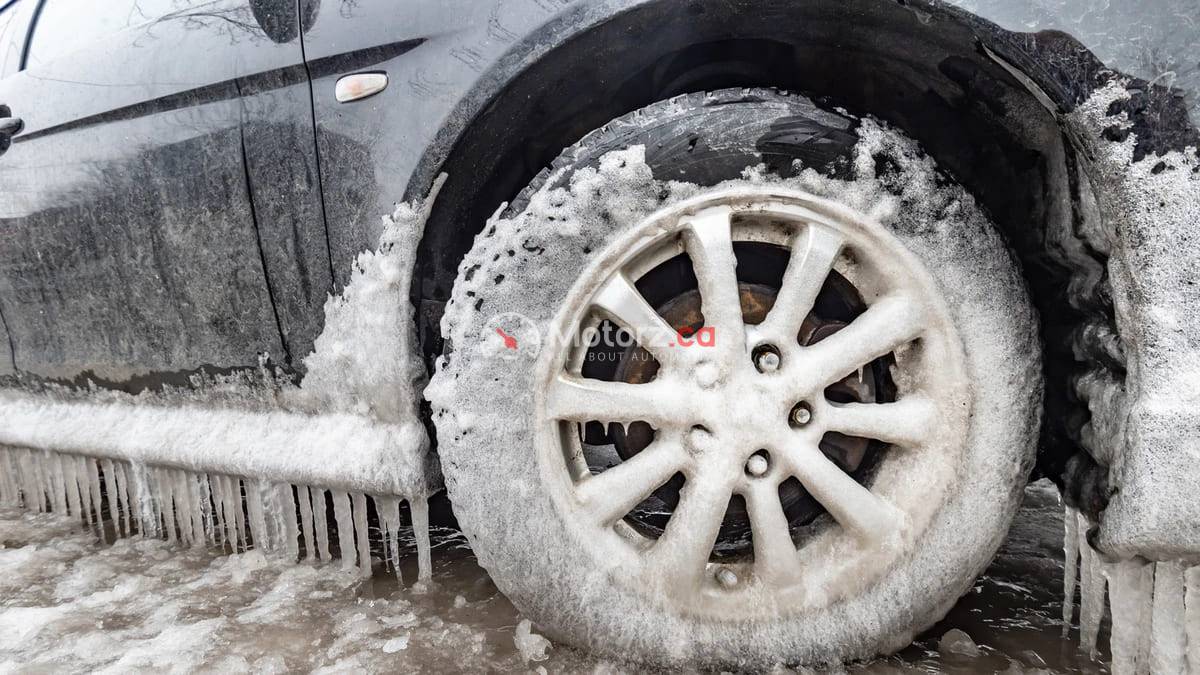
In many parts of Canada, if a car sits for Vehicle Vibrations days in extreme cold, the rubber in the tires can temporarily flatten where it meets the ground. When you first drive away, the car will shake significantly. Usually, this goes away after about 10 kilometers of driving as the rubber warms up and regains its round shape.
Tire Separation or “Out of Round”
If the internal steel belts of a tire break due to age or impact, the tire will develop a bulge. This creates a low-speed “wobble” that feels like the car is limping. If you feel a side-to-side shimmy at low speeds, inspect your tire tread for uneven bumps immediately; a separated tire is a blowout waiting to happen.
Brake System Problems: Vibrations During Stopping
If your car is smooth as silk at 100 km/h but the steering wheel shakes violently the moment you touch the brake pedal, the issue is almost certainly in your braking hardware.
Warped Brake Rotors
Brake rotors are metal discs that spin with your wheels. Over time, extreme heat (from heavy braking or mountain driving) can cause these discs to warp or develop “thin spots.” When the brake pads squeeze a warped rotor, they bounce off the high spots, sending a vibration through the brake pedal and steering wheel.
“Sticking” Brake Calipers
Sometimes a brake caliper (the part that squeezes the pads) doesn’t fully retract. This causes the brakes to stay partially applied, creating immense heat. Eventually, this “drag” causes a steering wheel vibration and a distinct “burning toast” smell.
Suspension and Steering Component Wear
Your suspension is designed to soak up bumps, but when the components that hold everything together get “loose,” the whole car can start to jitter.
Worn Ball Joints and Tie Rod Ends
These are the “joints” of your car’s skeletal system. If a tie rod end gets loose, the front wheels can actually wiggle left and right independently of your steering input. This often creates a “searching” feeling on the road accompanied by a steady vibration that gets worse when you turn.
Worn Out Shocks or Struts
Shocks don’t just provide a smooth ride; they keep the tires pressed firmly against the pavement. If your shocks are “blown,” the tire can begin to “tramp” or dribble like a basketball against the road surface. This creates a high-frequency vibration and causes “cupping” wear patterns on your tires.
Driveline and Axle Issues: Shaking Under Power
If the vibration only happens when your foot is on the gas and disappears the moment you coast, the problem is likely in the parts that transfer power to the wheels.
Failing Constant Velocity (CV) Joints
On front-wheel-drive or all-wheel-drive cars, CV axles have joints protected by rubber boots. If a boot tears and grease leaks out, the joint will wear down. A failing inner CV joint will cause the entire front end of the car to shake side-to-side during hard acceleration but will feel perfectly smooth once you reach cruising speed.
Unbalanced Driveshaft
In rear-wheel-drive trucks and SUVs, a long metal tube (the driveshaft) connects the transmission to the rear wheels. If this tube gets dented or if the “U-joints” at either end begin to seize, it creates a high-speed “drone” or vibration that feels like it is coming from under your seat.
Engine-Related Vibrations: Shaking at a Stop
Sometimes the car shakes even when it isn’t moving. If you’re sitting at a stoplight and the car feels “rough,” the issue is under the hood.
Worn Engine Mounts
Engine mounts are blocks of rubber and metal that bolt your engine to the car’s frame. They are designed to absorb the natural vibrations of a running motor. Over time, the rubber can crack or collapse. When this happens, the engine’s vibrations are transmitted directly into the cabin. A common sign of bad mounts is a car that shakes more when you shift from Neutral into Drive while holding the brake.
Engine Misfires
If your engine is “missing” (one cylinder isn’t firing correctly due to a bad spark plug or clogged fuel injector), the motor will lose its balance. This feels like a rhythmic “stumble” or “shudder.” Usually, this will be accompanied by a blinking or steady “Check Engine” light on the dashboard.
Narrowing Down the Shake
To help your mechanic (or your own “Corner Wrench” diagnosis), pay attention to these three things:
Speed: Does it happen at 20 km/h or 100 km/h?
Action: Does it happen while braking, accelerating, or coasting?
Location: Do you feel it in your hands (steering wheel), your feet (pedals), or your seat?
Most car shakes are “evolutionary”—they start small and get worse over time. By catching an unbalanced tire or a worn joint early, you prevent that vibration from shaking the rest of your car’s expensive components into an early retirement.