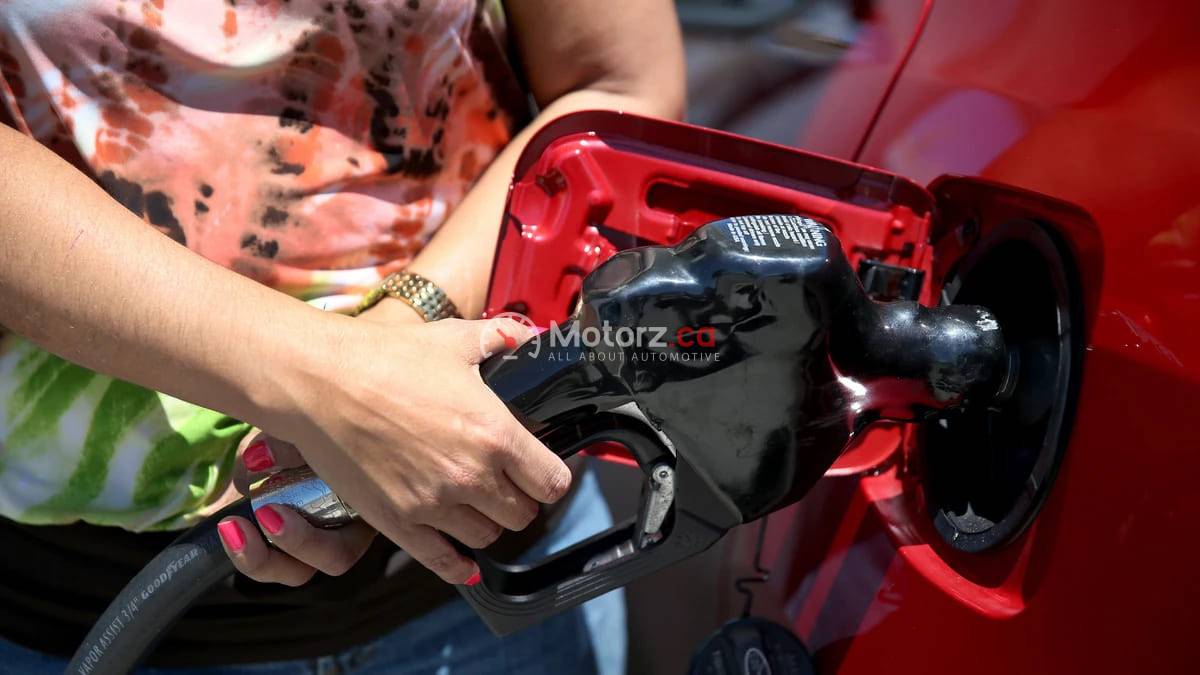
We have all been there. You are at the gas station, the pump Gas Tank off, and you see the total is something like 68.43. You want to round it up to an even 70.00, or perhaps you just want to squeeze in that extra half-gallon of fuel to stay on the road a little longer before your next stop. It seems harmless—even satisfying. But in the world of “The Corner Wrench,” that extra few cents of gasoline is one of the most expensive “favors” you can do for your car.
In 2026, automotive fuel systems are more complex and sensitive than ever. What used to be a simple metal tube leading to a tank is now a sophisticated network of sensors, valves, and charcoal filters designed to keep harmful vapors out of the atmosphere. When you “top off” your tank after the initial click, you aren’t just filling the tank; you are flooding a system that was never meant to hold liquid.
At Motorz, we are all about saving you money and keeping your vehicle out of the shop. Today, Lorraine Explains the mechanical “domino effect” of overfilling your gas tank, why it triggers that dreaded “Check Engine” light, and how this simple habit can lead to repair bills totaling hundreds or even thousands of dollars.
The Science of Gas Tank: How Gas Pumps Actually Work
To understand why overfilling is bad, you first need to understand the technology inside the gas pump nozzle. It is a brilliant bit of mechanical engineering that protects your car automatically.
The Venturi Effect
Gasoline nozzles are equipped with a small sensing tube. As you fill your tank, the air being displaced by the gasoline is sucked back up through this tube. When the fuel level in your tank reaches the nozzle tip, it blocks the air flow. This change in pressure—known as the Venturi Effect—triggers a mechanical link that “clicks” the pump off.
Why the Pump Clicks
The pump isn’t just stopping because the tank is “full.” It is stopping because it has reached the precise level designed by the vehicle manufacturer to leave room for expansion and vapor. Gasoline expands significantly as it warms up. If you fill that expansion space with liquid, the pressure has nowhere to go but into the sensitive components of your emissions system.
The Evaporative Emission System (EVAP): Your Car’s Hidden Lung
Your car has a “breathable” system called the EVAP system. Its job is to capture gasoline vapors before they escape into the air and funnel them into the engine to be burned cleanly.
The Charcoal Canister: The Heart of EVAP
The most critical part of this system is the charcoal canister (also known as the vapor canister). As the name suggests, it is filled with activated charcoal pellets that act like a sponge for gas fumes. It is designed to handle vapor only.
What Happens When Liquid Hits Charcoal
When you top off your tank, the liquid gasoline can travel down the vapor return lines and pour directly into the charcoal canister. Imagine soaking a dry sponge in heavy oil; it loses its ability to “breathe.” Liquid gasoline destroys the charcoal pellets, causing them to break down and clog the lines. This is the primary reason for EVAP system failure, and in 2026, replacing a saturated charcoal canister can cost a fortune in parts and labor.
The Financial Fallout: Why Squeezing Pennies Costs Dollars
You might be trying to save a trip to the station, but the long-term ROI of overfilling is disastrous. Here is where the money goes when the EVAP system fails.
The “Check Engine” Light and Emissions Testing
The moment your charcoal canister is compromised, your car’s computer will detect a “large leak” or “incorrect flow” in the EVAP system. This triggers the Check Engine light. In many regions, you cannot pass a mandatory emissions test or safety inspection with this light on.
Decreased Fuel Economy
A damaged EVAP system cannot properly manage the fuel vapors. This often leads to the engine running “rich” (too much fuel) or “lean” (too much air), which can significantly reduce your fuel economy. You are paying for the extra gas at the pump, only to have your car burn it inefficiently because the sensors are confused.
Damage to Other Components
If the charcoal pellets inside the canister break apart, they can travel through the lines and clog the Purge Valve or the Vent Solenoid. Now, instead of just replacing a canister, you are paying a mechanic at “The Corner Wrench” to blow out the lines and replace multiple electronic valves.
Environmental and Safety Risks of Overfilling
Beyond the mechanical damage, overfilling your tank creates risks for the world around you and your own personal safety.
Ground Contamination
When you force more gas into the tank than it can hold, the excess often spills out of the overflow drain. This gasoline ends up on the pavement, where it eventually washes into storm drains and local water supplies. It also creates a slip hazard for other drivers and a fire risk at the station.
Hazardous Vapors
Gasoline is a highly volatile organic compound. When the EVAP system is flooded, it can no longer filter these fumes. This leads to a strong smell of gasoline inside and around your car. Inhaling these vapors is unhealthy, and they contribute to the formation of ground-level ozone and smog.
The Golden Rules at the Gas Pump
To protect your vehicle and your wallet, follow these simple guidelines every time you fuel up:
Stop at the first click: Trust the pump. When it stops, your car is at its ideal fill level.
Don’t “round up”: Even if you want to reach an even number on the screen, those extra few cents aren’t worth the risk to your charcoal canister.
Listen to your car: If you smell gas after a fill-up, or if your car is hard to start right after getting gas, your EVAP system may already be struggling.
Inspect your gas cap: Sometimes a Check Engine light is just a loose cap, but if the light stays on after tightening it, have a pro check your vapor system.
At Motorz, we believe that the best way to “squeeze every penny” is to avoid unnecessary repairs. By respecting the “click,” you are ensuring your car’s lungs stay clear and your “Corner Wrench” stays in the toolbox for another day.