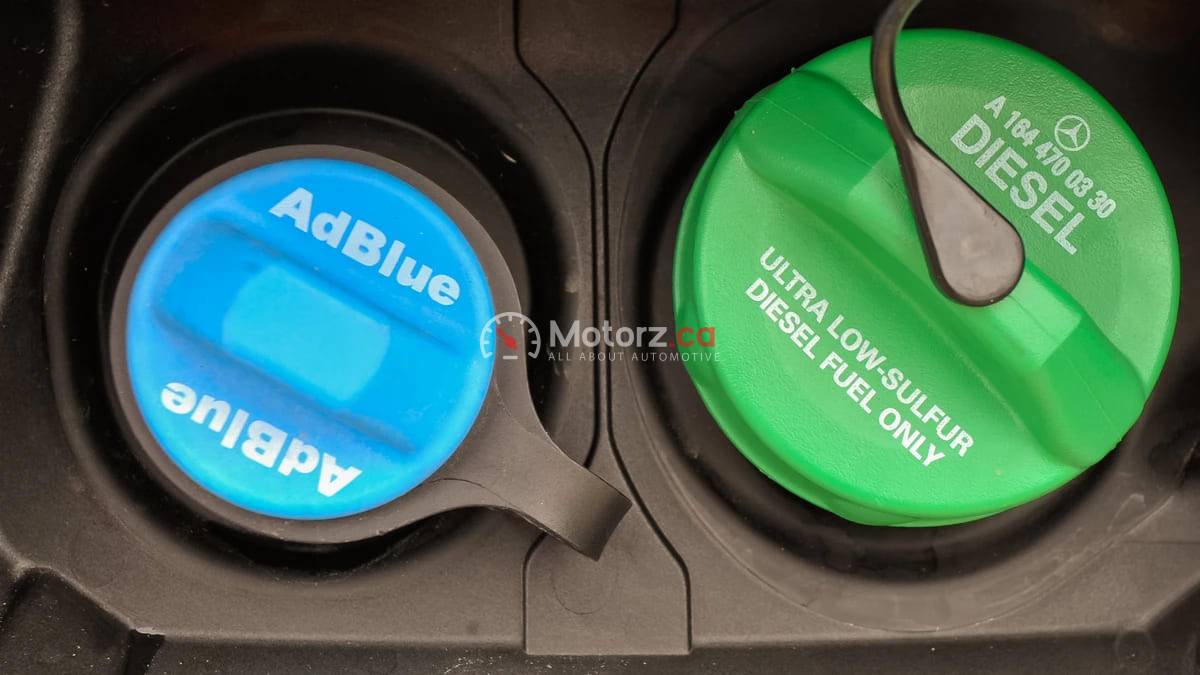
If you have purchased a diesel truck or SUV in the last decade, you have likely encountered a mysterious blue cap located right next to your fuel filler. It leads to a dedicated tank that requires a liquid called Diesel Exhaust Fluid, or DEF. For some drivers, it is just another item on the maintenance checklist. For others, it is a source of confusion, “limp mode” anxiety, and frustration at the gas station pump.
In the world of “The Corner Wrench,” we see plenty of diesel owners who treat DEF as an afterthought—until their dashboard lights up like a Christmas tree. In 2026, with emission standards tighter than ever across North America, understanding this fluid is not just about being eco-friendly; it is about protecting your engine and your wallet.
At Motorz, we want to strip away the mystery. Today, Lorraine Explains what DEF actually is, how the Selective Catalytic Reduction (SCR) system works, and the critical storage tips that prevent a 5,000-unit repair bill.
What Exactly is Diesel Exhaust Fluid (DEF)?
Despite the urban legends, DEF is not diesel truck nor is it a fuel additive. It is a highly specific, standardized solution designed for one job: neutralizing pollution.
The Chemical Breakdown
DEF is a non-hazardous solution made of 32.5 percent high-purity urea and 67.5 percent deionized water. The reason that 32.5 percent concentration is so important is that it provides the lowest freezing point for the solution, which is vital for drivers in cold climates like Calgary or Winnipeg.
How It Works: The SCR System
DEF is used in a process called Selective Catalytic Reduction (SCR). As your diesel engine runs, it produces Nitrogen Oxides (NOx), which are harmful pollutants. Instead of trying to “burn” these away inside the engine (which can hurt performance), the car sprays a fine mist of DEF into the exhaust stream after it leaves the engine.
The Reaction: When DEF hits the hot exhaust, it turns into ammonia. This ammonia reacts with the NOx inside a special catalyst, breaking it down into harmless nitrogen and water vapor. It is essentially a chemistry lab living inside your tailpipe.
The Golden Rules of DEF Handling and Storage
Because DEF is mostly water and urea, it is remarkably sensitive to its environment. If you treat it like engine oil or coolant, you might be in for a rude awakening at the service department.
The Shelf Life Struggle
Unlike a bottle of motor oil that can sit on a shelf for years, DEF has an expiration date. Under ideal conditions (cool and shaded), it lasts about 18 to 24 months. however, if you store it in a hot garage where temperatures consistently exceed 30 Celsius, that shelf life drops to six months or less.
The Corner Wrench Tip: Always check the date code on the box before you buy. If the box looks weathered or sun-bleached, leave it on the shelf.
Contamination: The System Killer
The SCR system is incredibly delicate. Even a microscopic amount of contamination—like dust, dirt, or a drop of tap water—can ruin the DEF injector or the catalyst.
Never use a funnel that has been used for oil or coolant.
Never add water to your DEF tank to “stretch” the fluid. The sensors in the tank measure the concentration of urea; if it drops below 32.5 percent, the computer will trigger an error code.
Winter Woes: What Happens When DEF Freezes?
If you live in a region where the thermometer regularly drops below minus 11 Celsius, you might worry about your DEF tank freezing solid.
Built-in Protection
Automakers are well aware of this. Modern diesel vehicles are equipped with heating elements inside the DEF tank and along the lines. When you start your truck in the morning, the computer allows the engine to run while the heaters thaw the fluid.
Engineering Insight: The SCR system does not start spraying DEF until the fluid is thawed and the exhaust is up to temperature. You don’t need to worry about the ice “clogging” your engine; the vehicle is designed to handle the freeze-thaw cycle automatically.
Expansion Space
Just like a water bottle in the freezer, DEF expands when it turns to ice. This is why you should never “top off” your DEF tank in the dead of winter. Leave a little bit of room at the top of the tank to allow for that natural expansion, preventing the tank or the pump housing from cracking.
The Dreaded “Limp Mode” and DEF Warnings
The most common fear regarding DEF is the countdown timer. If you ignore the “Low DEF” warnings, your vehicle will eventually enter a restricted performance state known as “Limp Mode.”
The Warning Stages
The Gentle Reminder: Usually, around 1,500 kilometers of range remaining, a light will appear on your dash.
The Final Countdown: As you get closer to empty, the car will tell you exactly how many restarts you have left or what your maximum speed will be (often limited to 8 or 10 km/h) if you don’t refill.
The No-Start: If you completely run out, the vehicle may refuse to start after the next time you turn it off. This is a legal requirement for automakers to ensure the vehicle isn’t driving around while over-polluting.
Resetting the Light
In most 2026 models, simply adding at least 5 to 10 liters of fresh DEF will automatically reset the light after a few minutes of driving. If the light stays on after a refill, you may have a failed sensor or “crystallized” DEF buildup in the injector, which requires a professional Corner Wrench diagnosis.
Keeping Your Diesel Running Clean
Diesel Exhaust Fluid isn’t a burden; it is the technology that allowed the diesel engine to survive in a world of strict environmental laws. By following a few simple rules, you can keep your SCR system healthy for hundreds of thousands of kilometers.
Buy Fresh: Only purchase DEF from high-turnover retailers to ensure it hasn’t expired.
Keep it Clean: Use a dedicated, clean nozzle every time you fill up.
Watch the Heat: Store your spare jugs in a cool, dark place.
Don’t Top Off in Winter: Give the fluid room to expand when it freezes.
Listen to the Dash: Never ignore a DEF warning. Refill as soon as the light appears to avoid the “Limp Mode” headache.
At Motorz, we appreciate the torque and efficiency that only a diesel can provide. DEF is simply the small price we pay for that power. Keep your tank full of high-quality fluid, and your diesel will keep pulling long after the pavement ends.