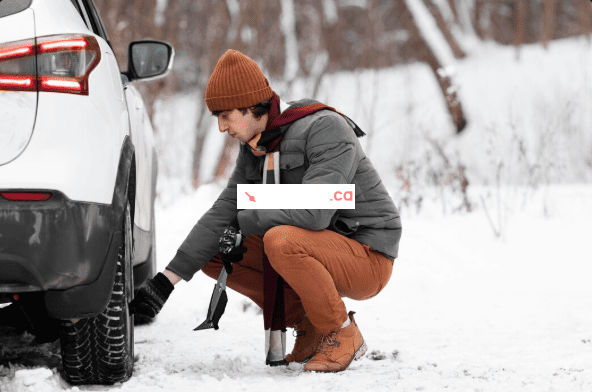
When the first major flurries hit the Don Valley Parkway or slow traffic to a crawl on Highway 401, Greater Toronto Area drivers face a familiar annual dilemma. You look out the window at the slush, glance at your calendar, and realize it is time to make a critical decision about your vehicle’s rubber.
For decades, the choice was binary: you either swapped your standard tires for dedicated winter tires or you cross your fingers and relies on all-season tires. But a third contender has taken over the Canadian market: the all-weather tire.
Promising the year-round convenience of an all-season tire combined with the snow-and-ice certification of a dedicated winter tire, it sounds like the ultimate hassle-free solution. No more biannual garage visits, no more heavy lifting, and no more paying for seasonal tire storage.
But Toronto winters are uniquely unpredictable. One week you are dealing with a mild, rainy January afternoon; the next, you are navigating a freezing rain crisis, black ice on the Gardiner Expressway, or a sudden fifteen-centimeter dump of heavy, wet snow.
Are all-weather tires actually enough to keep you safe in the Greater Toronto Area, or are they a dangerous compromise when Canadian winter shows its true teeth? Let’s break down the science, the regional driving conditions, and the financial reality to find the perfect match for your daily drive.
The Core Confusion: All-Season vs. All-Weather vs. Winter Tires
Before evaluating how these tires perform on the streets of Toronto, it is essential to clear up a massive piece of nomenclature confusion that leaves thousands of drivers poorly equipped every winter. Despite the names sounding nearly identical, all-season and all-weather tires are fundamentally different products engineered for completely different temperature thresholds.
All-Season Tires: The Misnomer of the Century
The term “all-season” is highly misleading for Canadian drivers. These tires are designed primarily for the North American sunbelt and moderate climates.
The rubber compound used in standard all-season tires is engineered to withstand high summer heat without wearing down prematurely. However, this focus on heat resistance comes with a major vulnerability: cold temperatures.
When the ambient temperature drops below 7 degrees Celsius, the rubber compound in an all-season tire undergoes a chemical transition. It hardens, loses its elasticity, and essentially becomes as stiff as a hockey puck.
Once your tire loses its flexibility, it can no longer deform to grip the microscopic imperfections in the pavement. The result is a drastic reduction in traction, extended braking distances, and a high risk of sliding, even on perfectly dry winter asphalt.
All-Weather Tires: The True Year-Round Hybrid
All-weather tires are a completely different animal. They are constructed using a specialized hybrid rubber compound that remains pliable and soft well below the freezing mark, yet possesses enough stability to prevent rapid wear during hot summer highway driving.
The defining characteristic of an all-weather tire is the Three-Peak Mountain Snowflake (3PMSF) symbol stamped directly onto its sidewall. This emblem is a regulated certification indicating that the tire has passed specific, standardized government testing for traction on packed snow.
Unlike all-seasons, an all-weather tire is legally recognized as a winter tire in provinces with mandatory winter tire legislation, such as Quebec and British Columbia’s mountain passes.
Dedicated Winter Tires: Built for Extreme Cold
Dedicated winter tires make no compromises for summer durability. Their rubber compounds are incredibly soft and remain highly pliable even when the thermometer plummets past minus twenty degrees Celsius.
The tread pattern of a winter tire features deep grooves, aggressive blocks, and thousands of microscopic slits called sipes. These sipes act as tiny fingers, biting into ice and packed snow, while the deep channels eject heavy slush to prevent hydroplaning.
The tradeoff is clear: if you drive dedicated winter tires in the summer heat, the soft rubber will wear down rapidly, your fuel economy will suffer, and your high-speed handling will feel vague and spongy.
Decoding Toronto’s Unique Microclimates and Winter Character
To determine if an all-weather tire is sufficient for your needs, you have to look closely at where and how you drive. The Greater Toronto Area does not experience just one uniform type of winter weather; instead, it is a complex mix of microclimates influenced by Lake Ontario, urban heat islands, and geographic elevation shifts.
The Downtown Core and Urban Heat Island
If your daily driving is confined strictly to the downtown core—such as the Annex, Yorkville, the Fashion District, or the Financial District—your winter experience is highly insulated.
The immense concentration of concrete, subterranean heating systems, subway networks, and dense traffic creates a localized heat island effect. Temperatures downtown can easily be two to three degrees warmer than the outer suburbs.
Furthermore, the City of Toronto’s snow removal infrastructure prioritizes core urban streets. Salting trucks and plows clear primary routes almost immediately after a snowfall begins.
For a downtown driver, winter roads are rarely covered in deep, packed snow for more than a few hours. Instead, your primary challenges are wet asphalt, slushy intersections, cold rain, and the occasional patch of black ice in shadowed areas between high-rise buildings.
The Commuter Corridors: DVP, Gardiner, and the 400-Series Highways
If your routine involves commuting from regions like Mississauga, Oakville, Scarborough, or Markham via the major arterial highways, your risk profile changes significantly.
High-speed winter driving introduces unique hazards. At ninety or one hundred kilometers per hour, a sudden patch of black ice on a bridge deck or an overpass can cause an immediate loss of control.
Highway driving also exposes you to blowing snow and sudden visibility drops, where maintaining a straight line and having a predictable braking response is the difference between a safe arrival and a multi-vehicle pileup. Slush build-up between highway lanes during a heavy storm is another notorious hazard, threatening to pull your vehicle sideways during lane changes.
The Northern Suburbs and Snowbelts
As you move north of Highway 407 into Vaughan, Richmond Hill, King City, Newmarket, or out toward Caledon, the terrain and weather patterns shift dramatically.
Here, you lose the protective heat island effect of the lake and the dense city core. Elevation rises, temperatures drop consistently lower, and you begin to encounter the southern fringes of the Ontario snowbelt.
In these areas, residential streets are often left unplowed for twelve to twenty-four hours following a major storm. Blowing snow across open country roads can create severe drifts, and hard-packed snow or glare ice can remain on secondary roads for days at a time.
The Scientific Performance Breakdown: All-Weather vs. Dedicated Winter
To understand how these tires handle real-world emergencies, look at how the engineering translates to performance metrics like braking distances, cornering stability, and slush management.
Braking Distance on Cold, Dry, and Wet Asphalt
A common misconception is that winter tires are only useful when snow is physically touching the ground. In reality, stopping distance on cold, dry, or wet pavement is heavily dependent on temperature.
When the pavement drops to zero degrees Celsius, an all-season tire requires significantly more distance to stop from a speed of sixty kilometers per hour compared to a tire with a winter-certified compound.
Because both all-weather and dedicated winter tires use compounds that stay soft in the cold, their stopping distances on bare, freezing pavement are remarkably close. In fact, on cold wet pavement—a very common Toronto condition—some high-quality all-weather tires actually outperform traditional winter tires because their tread blocks are slightly stiffer, allowing for better water evacuation and a more stable contact patch.
Traction on Hard-Packed Snow and Ice
The gap widens drastically once you introduce hard-packed snow and ice.
On packed snow: A dedicated winter tire utilizes its deep tread depth and high density of sipes to compress snow into its grooves and use that snow-on-snow friction to generate forward drive. An all-weather tire will get moving safely and stop predictably, but it will require a longer distance to come to a complete halt than a dedicated winter tire.
On glare ice or freezing rain: This is where dedicated winter tires show clear superiority. Ice traction requires specialized hydrophilic rubber compounds that actively absorb the microscopic layer of water that forms between a warm tire and cold ice. High-end winter tires are packed with these specialized compounds and advanced multi-cell tread designs. All-weather tires, which must retain enough firmness to survive hot July highways, cannot use these ultra-soft compounds. On an icy patch on the Allen Road, a dedicated winter tire can stop your vehicle up to several car lengths shorter than an all-weather tire.
Slush Planing Resistance
Slush is perhaps the most dangerous substance on Toronto roads. It is heavier than water, incredibly dense, and highly unpredictable. When your tire rolls over heavy slush, the tire struggles to push the material out of the way. If the slush cannot escape, your tire lifts off the pavement entirely—a phenomenon known as slush planing.
Dedicated winter tires feature aggressive, directional tread patterns specifically optimized to sling heavy slush outward away from the vehicle. All-weather tires also feature excellent evacuation channels, often employing an asymmetrical design with one side optimized for summer wet grip and the other optimized for winter snow evacuation. While highly effective, the hybrid design cannot match the sheer volume displacement of a dedicated, single-purpose winter tread.
The Economics of Tires: Upfront Costs vs. Long-Term Value
Many drivers hesitate to purchase dedicated winter tires because of the immediate financial hit. Buying a second set of tires, purchasing a second set of steel or alloy wheels, and paying a shop to swap and balance them twice a year feels like an expensive burden.
Let’s break down the actual lifetime costs to see if all-weather tires really save you money in the long run.
Scenario A: The Single Set All-Weather Strategy
With an all-weather tire setup, you pay one upfront cost for the tires, installation, and balancing.
Initial Investment: Moderate to high. Premium all-weather tires generally cost slightly more than standard all-season or entry-level winter tires due to the complex engineering required to create the hybrid compound.
Ongoing Maintenance: Very low. You only pay for standard tire rotations every eight thousand to ten thousand kilometers to ensure even wear. You entirely bypass the seasonal garage rush in November and April.
Tread Life Expectancy: Because all-weather tires are driven year-round, including through hot summer asphalt temperatures, they wear down continuously. A typical set of high-quality all-weather tires will last between fifty thousand and seventy thousand kilometers before requiring replacement, depending on your driving style and alignment maintenance.
Scenario B: The Dual-Set Strategy (Summer/All-Season + Dedicated Winter)
With this strategy, you purchase two distinct sets of rubber.
Initial Investment: High. You must purchase the winter tires and, ideally, a dedicated set of inexpensive steel rims. Rims save you money over time by allowing you to swap the entire wheel assembly rather than paying a shop to strip and remount rubber onto your factory rims twice a year.
Ongoing Maintenance: Moderate. Twice a year, you must pay for a tire swap, or spend your own time doing it in your garage. If you do not have space in your home, basement, or condo locker, you will also need to pay an annual fee for seasonal tire storage at a local dealership or tire center.
Tread Life Expectancy: While the upfront cost is double, you are dividing your annual mileage between two sets of tires. Your summer or all-season tires are resting in winter, and your winter tires are preserved in summer. A dual-set setup can easily last five to six years before either set runs out of safe tread depth.
The Real Financial Verdict
From a pure cost-per-kilometer perspective, the financial difference over a five-year period is surprisingly small. With all-weather tires, you will likely wear out the entire set and need to buy a brand-new set much sooner than you would if you ran a dual-set system.
Therefore, the primary financial benefit of all-weather tires is not necessarily long-term savings; rather, it is the elimination of seasonal maintenance fees, scheduling hassles, and storage headaches.
Who Are All-Weather Tires Best For?
To help determine if an all-weather tire is safe and practical for your lifestyle, let’s identify the specific driver profiles where this technology truly excels.
The Urban Condo Dweller
Living in a high-rise downtown condo means space is at a premium. If you do not have access to an oversized storage locker or a garage, storing four large, dirty vehicle tires is a massive headache.
Paying a tire shop upwards of one hundred to one hundred and fifty dollars a year just to sit your tires on a rack eats away at your budget. For these drivers, all-weather tires provide structural peace of mind without creating a physical storage conflict.
The Low-Mileage Driver or Remote Worker
If you work from home or have a hybrid schedule where you only commute to the office once or twice a week, your exposure to extreme winter hazards is minimized.
If a severe blizzard drops twenty-five centimeters of snow on Toronto, you have the flexibility to simply stay indoors, work from your kitchen table, and wait for the city plows to clear the roads. If your vehicle stays parked during the absolute worst days of the year, all-weather tires are excellent for handling the cold, wet, or slushy conditions you encounter once the roads clear up.
The Prepared, Budget-Conscious Driver on All-Seasons
If you are currently driving on standard all-season tires throughout the winter because you cannot afford or do not want the logistical hassle of a dual-set system, switching to all-weather tires is a massive, life-saving upgrade. Moving from an uncertified all-season tire to a certified 3PMSF all-weather tire provides a major increase in safety, braking performance, and winter traction.
Who Should Stick with Dedicated Winter Tires?
While all-weather tire technology has come a long way, it cannot defy the laws of physics. There are several categories of drivers in the Greater Toronto Area who should absolutely refuse to compromise and continue using dedicated winter tires.
The High-Mileage Highway Commuter
If your job requires you to drive long distances daily along the 401, the 404, or the QEW—regardless of the weather forecast—dedicated winter tires are a necessary safety tool.
When you are on the highway at 5:00 AM before the plow fleets have cleared the lanes, you need maximum lateral grip, exceptional slush planing resistance, and the shortest possible stopping distance on unexpected ice patches.
Essential Workers and Shift Drivers
If you are a nurse, a doctor, a first responder, a utility worker, or anyone whose employment requires them to report to work regardless of weather conditions, you cannot afford to wait out a storm.
You will often be driving in the absolute worst phases of a blizzard, before roads are salted or plowed. For your safety and the safety of others, dedicated winter tires are the only rational choice.
Drivers in the High-Elevation Outer Regions
If your home or workplace is located in the hilly areas of Caledon, King City, Uxbridge, or up toward Barrie, you are dealing with a different climate than the rest of Toronto.
The colder ambient temperatures mean snow stays on the ground longer, ice sheets form more readily, and snow drifts are common. All-weather tires can quickly become overwhelmed by these sustained, severe winter conditions.
Top All-Weather Tires on the Market for GTA Drivers
If you have decided that an all-weather tire perfectly fits your driving profile, it is critical to select a high-quality model from a reputable manufacturer. Not all all-weather tires are created equal. Here are three of the top-performing premium models currently available that are highly proven for Southern Ontario conditions.
Michelin CrossClimate 2
The Michelin CrossClimate 2 is widely considered the gold standard of the all-weather tire category. It features a highly distinctive, aggressive directional V-shaped tread pattern that looks completely different from traditional tires.
Strengths: Exceptional braking performance on both dry and wet pavement, highly stable handling in cold downpours, and surprisingly strong traction in packed snow. Its tread life is highly rated, and it offers a quiet, smooth ride on the highway.
Best For: Commuters who want premium refinement and maximum safety across wet, dry, and moderately snowy roads.
Goodyear Assurance WeatherReady
Goodyear’s premier all-weather offering uses an asymmetrical tread design that features evolving traction grooves. As the tire wears down, the grooves widen to maintain high water and slush evacuation capabilities over the lifetime of the tread.
Strengths: Excellent performance in heavy slush and wet snow. The tire utilizes specialized soybean oil in its rubber compound to keep the tread highly pliable when temperatures plummet into deep negative figures.
Best For: Drivers who prioritize slush drainage and solid performance during variable, messy freezing rain storms.
Bridgestone WeatherPeak
The Bridgestone WeatherPeak is a highly balanced premium option designed to deliver smooth, quiet ride comfort alongside winter safety certification. It features a dense network of full-depth sipes that provide biting edges throughout the entire lifespan of the tire.
Strengths: Exceptional ride comfort, very low road noise, and highly predictable braking response on cold, hard-packed snow.
Best For: Drivers of sedans, crossovers, and luxury vehicles who do not want to sacrifice quiet highway luxury while gaining winter traction.
Real-World Tips for Navigating Toronto Winters Safely
No matter which tire technology you choose to install on your vehicle, your tires are only as good as the driving habits behind the wheel. Use these essential strategies to maximize your safety on GTA roads this season.
The Seven-Degree Rule
Keep a close eye on your local weather app as autumn transitions to winter. Once consistent daily temperatures drop below 7 degrees Celsius, it is time to make your tire move.
If you use dedicated winter tires, schedule your service appointment before the first forecasted snowflake appears. Waiting for the first major storm results in weeks of backlog at every major tire shop and dealership in Toronto.
Monitor Your Tire Pressure Constantly
For every drop of ten degrees Celsius in ambient temperature, your tires will lose approximately one to two pounds per square inch (PSI) of pressure.
Under-inflated tires suffer from a deformed contact patch, which reduces grip, increases tread wear along the shoulders, and lowers your fuel economy. Check your tire pressure at least once a month using a reliable digital gauge when the tires are cold.
Clear Your Vehicle Entirely
Do not be a “highway ghost car.” Before shifting your vehicle into drive, take the extra five minutes to clear all snow and ice off your hood, windows, side mirrors, and roof.
Leaving a thick layer of snow on your roof is a massive hazard; when you drive at highway speeds, that snow blows off, blinding the drivers behind you. If you brake suddenly, that sheet of snow can slide forward onto your own windshield, completely blocking your view.
Adjust Your Driving Dynamics
Tires provide grip, but they cannot rewrite the laws of momentum. In winter conditions, double your following distance behind the vehicle ahead of you to at least four to six seconds.
Avoid making sudden, jerky inputs to your steering wheel, throttle, or brakes. Smooth, progressive acceleration and gentle braking allow your tires to maintain their grip on slippery surfaces.
Checklist: Making Your Final Choice
Still undecided? Run through this quick checklist to make your final choice with absolute confidence:
Choose All-Weather Tires if: You live in Toronto proper or close suburbs; your annual mileage is low or moderate; you have zero storage space for a second set of wheels; you can stay home during major blizzards; and you want to eliminate the biannual shop visit and storage fees.
Choose Dedicated Winter Tires if: You live in the northern outer regions or snowbelts; you commute long distances daily on high-speed highways; you work shifts or have an essential job that requires driving in active blizzards; or you simply want the maximum possible safety margin on ice and deep snow.