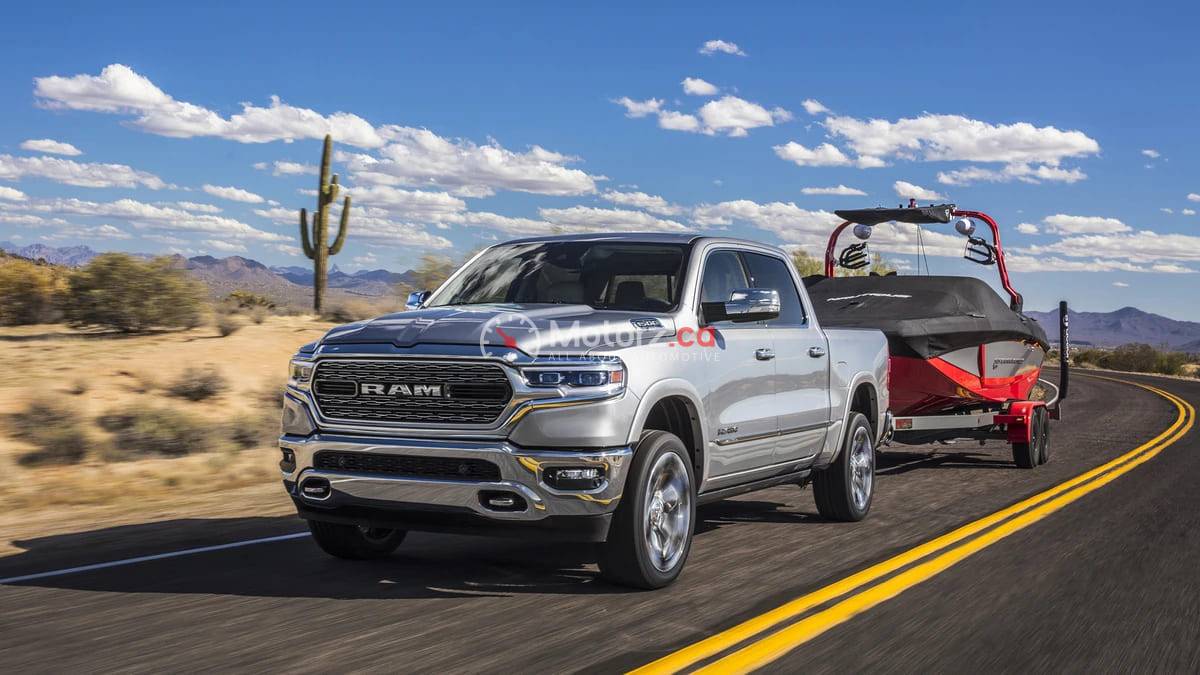
You are standing on the Towing Needs lot, looking at a gleaming 1500-series pickup. The brochure says it can tow over 12,000 pounds. It has a luxurious interior, it fits in your driveway, and it promises reasonable fuel economy for a vehicle of its size. You think about your new travel trailer or that flatbed trailer loaded with construction materials and wonder: Is this half-ton enough car for the job, or am I about to push this truck past its breaking point?
In the world of “The Corner Wrench,” we see the consequences of “over-taxing” a truck every single week. We see warped brake rotors, burnt-out transmissions, and stressed suspension components from owners who took the “Max Towing” number on the sticker as a suggestion rather than a theoretical limit.
In 2026, the gap between a half-ton and a heavy-duty truck has never been more complex. Modern half-tons are more capable than ever, but trailers are also getting heavier and more advanced. Today, Motorz is breaking down the physics of towing to help you decide if a half-ton will “cut it” for your lifestyle, or if you need to step up to a heavy-duty powerhouse.
The Numbers Game: Payload vs. Towing Needs
The biggest mistake we see at The Corner Wrench is owners focusing solely on the “Max Towing Capacity.” In reality, the number that usually stops you first is Payload.
What is Payload?
Payload is the total weight your truck can carry inside the cab and the bed. This includes you, your passengers, your dog, your tools, and—most importantly—the tongue weight of your trailer.
The Half-Ton Trap: A luxury half-ton might have a towing capacity of 11,000 pounds but a payload capacity of only 1,500 pounds. If you have four adults in the truck (800 lbs) and a trailer with a 1,000-pound tongue weight, you are already 300 pounds overweight before you even put a cooler in the bed.
Understanding Tongue Weight
Your trailer tongue weight should be roughly 10 to 15 percent of the total trailer weight. If you are towing a 9,000-pound camper, your truck is “carrying” about 1,100 pounds on the hitch. This weight pushes down on the rear axle, and in a half-ton, that can quickly lead to “squat,” which lifts the front wheels and makes steering dangerous.
Stability and Control: The “Tail Wagging the Dog”
A half-ton truck is designed to be a comfortable daily driver. It has a softer suspension and lighter-duty tires to give you that smooth ride on the highway. However, those same features can become a liability when towing heavy loads.
Wheelbase and Curb Weight
A heavy-duty truck is physically heavier and often has a longer wheelbase than a half-ton. This mass acts as an anchor. When a large gust of wind hits your travel trailer or a transport truck passes you at 110 km/h, a half-ton might feel “twitchy” or prone to sway. A heavy-duty truck has the mass to stay planted, preventing the “tail from wagging the dog.”
Braking and Heat Dissipation
Lorraine Complains frequently about “brake fade” when towing in the mountains. Half-ton trucks have smaller rotors and calipers designed for empty-vehicle performance. When you are descending a steep grade with 10,000 pounds behind you, those brakes get hot fast. Heavy-duty trucks feature massive brakes and integrated “exhaust brakes” (on diesels) that slow the truck down using the engine, saving your service brakes for when you really need them.
The Engine and Transmission Debate
In 2026, you can get a half-ton with a turbocharged four-cylinder, a V8, or even a small diesel. While they all can tow, they don’t all tow with the same ease.
Torque is King
When you are pulling a heavy load up a hill, you aren’t looking for horsepower; you are looking for torque. A small turbocharged engine in a half-ton might have the “peak” numbers to do the job, but it will be screaming at high RPMs to maintain speed. A heavy-duty diesel engine produces massive torque at low RPMs, allowing you to cruise up a mountain pass without breaking a sweat.
Transmission Cooling
Towing creates immense heat inside a transmission. Heavy-duty trucks come standard with massive external oil coolers and heavy-duty torque converters. Many half-tons require a specific “Max Tow Package” to get similar cooling capabilities. If you plan on towing more than five times a year, the heavy-duty cooling system will pay for itself in longevity.
The 2026 Reality: Cost of Ownership
Choosing between these trucks isn’t just about the purchase price; it’s about the long-term “Corner Wrench” maintenance.
Fuel Economy and DEF
A half-ton truck is much cheaper to run when it is not towing. You will get significantly better fuel economy on your daily commute. However, a heavy-duty diesel requires Diesel Exhaust Fluid (DEF) and more expensive oil changes (sometimes 12 to 15 liters of oil per change).
Tires and Components
Heavy-duty trucks use “Load Range E” tires, which can handle higher pressures and heavier weights but are more expensive to replace. Suspension components like ball joints and tie rods are also much beefier on a 2500, meaning they will last longer under towing stress, but will cost more if they ever do need repair.
Which Truck Should You Buy?
At Motorz, we want you to have the right tool for the job. Here is the final breakdown:
Choose a Half-Ton
You tow a boat or a small utility trailer (under 7,000 lbs) a few times a summer.
The truck is your primary daily driver for commuting and groceries.
You prioritize ride comfort and fuel economy.
Choose a Heavy-Duty
You are towing a travel trailer or 5th wheel over 9,000 lbs regularly.
You frequently haul heavy loads in the bed (gravel, lumber, equipment).
You live in a mountainous region where engine braking and cooling are vital.
You want a truck that is “overbuilt” for the task, ensuring a longer mechanical lifespan.
Towing is about safety and confidence. If you find yourself white-knuckled every time you hit the highway with your trailer, you don’t have enough truck. Listen to your vehicle—and your gut—and choose the platform that keeps you in control.