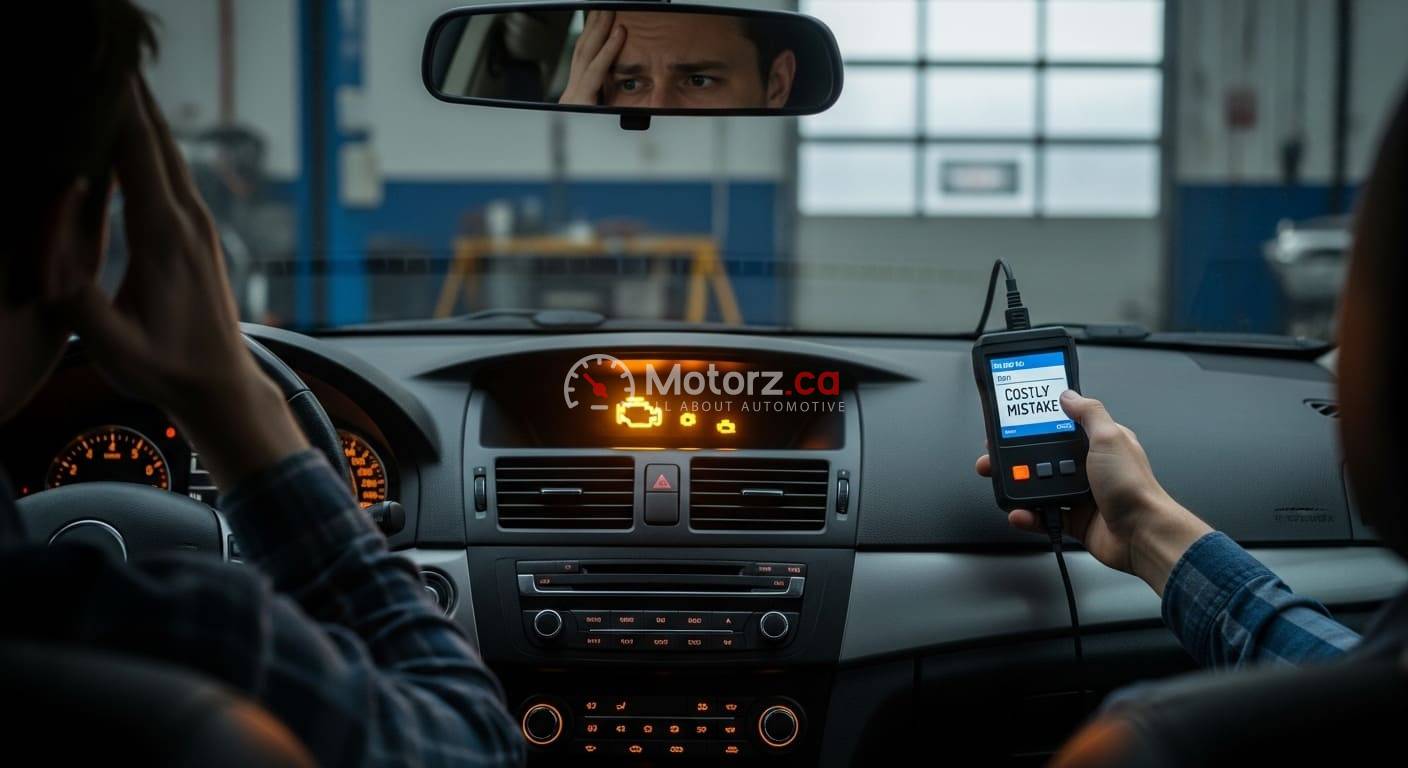
It is a moment every driver dreads. You are cruising down the highway, the radio is playing your favorite song, and your car feels perfect. Then, with a subtle “ding,” a small amber icon illuminates on your dashboard: the Check Engine Light. For some, it triggers immediate anxiety; for others, it is an annoyance to be ignored or, worse, “cleared” with a cheap scanner in the hopes that it never returns.
In the world of “The Corner Wrench,” we see this scenario constantly. As vehicles in 2026 become more technologically advanced, the Check Engine Light (technically known as the Malfunction Indicator Lamp or MIL) has become more sophisticated. It isn’t just a “suggestion” from your car—it is a sophisticated diagnostic SOS.
Ignoring that light or simply resetting the code without a repair is like silencing a smoke alarm while the kitchen is on fire. It might make the noise go away, but the underlying problem is still eating away at your vehicle’s health, your fuel economy, and your bank account. In this comprehensive guide, we explore why that amber glow is your car’s way of saving you money and why “resetting and forgetting” is a gamble you are destined to lose.
Decoding the Glow: What Your Car Is Trying to Tell You
Your vehicle’s system is constantly monitoring hundreds of Engine Light. When the Check Engine Light comes on, it means the computer has detected a “fault code” that it cannot self-correct.
Steady Light vs. Flashing Light
Understanding the “language” of the light is the first step in safety.
Steady Light: This indicates a problem that needs attention soon. It could be something as minor as a loose gas cap or as significant as a failing oxygen sensor. You don’t need to pull over immediately, but you should schedule an inspection.
Flashing Light: This is an emergency. A blinking Check Engine Light typically indicates an “engine misfire” so severe that unburned fuel is being dumped into your exhaust system. This can melt your catalytic converter in minutes. If the light flashes, pull over safely and stop the engine immediately.
The Role of Sensors
Modern cars rely on a delicate balance of air, fuel, and spark. Sensors like the Mass Air Flow (MAF) sensor and Oxygen (O2) sensors act as the car’s nose and tongue, “tasting” the air and exhaust to ensure peak efficiency. When one of these fails, the car enters a “limp mode” or a default map that runs rich, costing you more at the pump every single kilometer.
The High Cost of “Resetting and Forgetting”
With the rise of inexpensive Bluetooth OBD-II scanners, many DIYers think they have found a “hack”: simply hitting the “Clear Codes” button. This is a dangerous misunderstanding of how automotive computers work.
You Aren’t Fixing the Problem
Resetting a code deletes the “symptom,” not the “disease.” If your car threw a code for a “Lean Condition,” resetting it doesn’t fix the vacuum leak that caused it. The computer will eventually re-run its internal tests (called “Monitors”) and the light will come back on—often at the worst possible time, like during a long road trip or a cold winter morning.
The “Emissions Monitor” Trap
If you think you can reset your light just before a vehicle inspection or emissions test, think again. When you clear codes, the computer also resets its “Readiness Monitors.” An inspector’s computer will see that these monitors are “Not Ready,” and your car will automatically fail the test until you have driven it long enough for the fault to reappear.
Common Culprits: From Minor Fixes to Major Overhauls
Not every Check Engine Light means your engine is about to explode. In fact, some of the most common reasons for the light are surprisingly simple to fix if caught early.
The Loose Gas Cap
It sounds like a joke, but a loose, cracked, or faulty gas cap is one of the leading causes of a Check Engine Light. Your car’s Evaporative Emissions (EVAP) system is designed to prevent gasoline vapors from escaping into the atmosphere. A leak as small as a pinhole can trigger the light.
Corner Wrench Tip: Before heading to a mechanic, ensure your gas cap is clicked tight and the rubber seal isn’t cracked.
Failing Catalytic Converters
The catalytic converter is responsible for turning toxic gases into less harmful emissions. It is also one of the most expensive parts to replace. The “peril” of ignoring a light is that a simple 100 sensor failure can eventually lead to a 2,000 catalytic converter failure because the car was running too rich for too long.
Worn Spark Plugs and Ignition Coils
As we move through 2026, many high-mileage vehicles are reaching the end of their original ignition component lifespans. Worn plugs cause poor combustion, which triggers the light and kills your power. Replacing plugs is easy; replacing an engine damaged by pre-ignition is not.
How to Handle a Check Engine Light the “Corner Wrench” Way
If that amber light pops up today, follow this logical, step-by-step process to minimize your stress and maximize your savings.
Check Your Gauges: Look at your temperature and oil pressure gauges immediately. If the car is overheating or has low oil pressure, shut it down.
Tighten the Gas Cap: It is the “Step 0” of automotive diagnostics.
Scan for Codes: You don’t need to be a mechanic to own a basic OBD-II scanner. Plug it in and write down the alphanumeric code (e.g., P0420).
Research, Don’t Guess: Look up the code specifically for your year, make, and model. A “P0171” on a Toyota might have a different common cause than on a Ford.
Schedule a Professional Inspection: Even if you have the code, a professional technician has the tools to perform a “component test.” Knowing a sensor is “bad” is one thing; knowing the wiring harness to that sensor is chewed by a rodent is another.
Modern Tech: 2026 Vehicles and Predictive Maintenance
In 2026, many vehicles now feature “Connected Services” that can email you a diagnostic report the moment the light appears. Some even allow for remote diagnostics where a technician can “see” your car’s data through the cellular link.
Take Advantage of Telematics
If your car offers a mobile app (like MyChevrolet, FordPass, or Toyota App), use it. These apps often provide a more detailed plain-English explanation of why the light is on than the dashboard icon ever could. This empowers you as a consumer, so when you walk into a shop, you are armed with information rather than just worry.
Listen to Your Car
The Check Engine Light isn’t an enemy; it is a sentinel. It is the only way your car’s brain can communicate that something is slightly “off” before that “off” becomes “broken.” Ignoring the light is a gamble with your safety, while resetting it is an exercise in futility.
Treat your dashboard warnings with respect. Catch the small problems while they are still small, and your vehicle will reward you with years of reliable, efficient service. After all, the most expensive repair is always the one that could have been prevented for 50 six months ago.