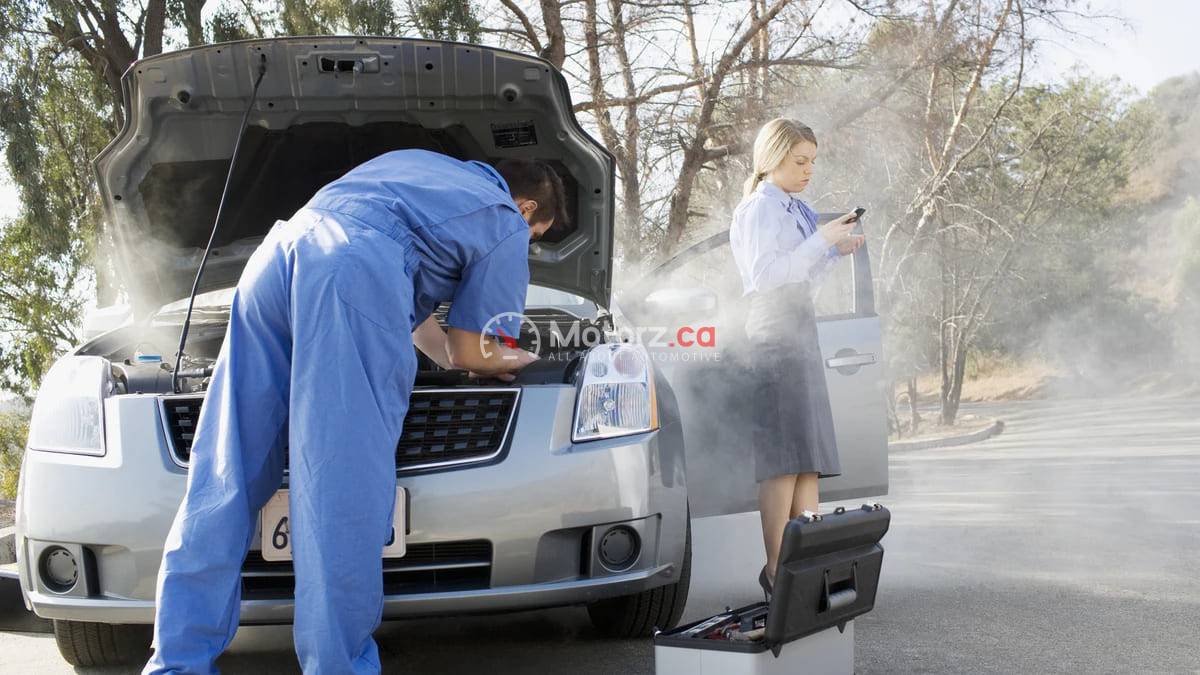
Your car is a Critical Warning Signs, a symphony of thousands of moving parts working in perfect harmony to get you from point A to point B. But just like a musical instrument, it can fall out of tune. Long before a catastrophic breakdown leaves you stranded on the side of a highway in the middle of a Canadian winter, your vehicle will try to talk to you. It uses sounds, smells, and subtle physical sensations to signal that something is wrong.
In the world of “The Corner Wrench,” we often see cars brought in on flatbeds for repairs that would have cost a fraction of the price if the driver had just listened a few weeks earlier. Modern vehicles in 2026 are incredibly resilient, but they are not immortal. Ignoring a small “whisper” today almost always leads to a loud, expensive “scream” tomorrow.
At Motorz, we want to help you become a better listener. Today, Lorraine Explains the five critical warning signs that your car is begging for attention. If you notice any of these, don’t turn up the radio to drown them out—it is time to take action.
The Sudden Change in Critical Warning Signs
Your brakes are arguably the most important safety system on your vehicle. Because brake wear happens gradually over thousands of kilometers, it is easy to become “blind” to the slowly degrading performance. However, certain changes should never be brushed off.
Spongy or Soft Brake Pedal
If you press the brake pedal and it feels like you are Critical Warning Signs on a marshmallow, or if the pedal sinks all the way to the floorboard, you have a serious problem. This often indicates air in the brake lines or a leak in the master cylinder.
The Risk: Braking systems rely on hydraulic pressure. Air is compressible, but brake fluid is not. If air enters the system, you lose the physical ability to stop the vehicle effectively.
High-Pitched Squealing or Grinding
Most brake pads are designed with a small metal tab called a “wear indicator.” When the pad material gets dangerously low, this tab scrapes against the rotor, creating a high-pitched squeal. If you ignore the squeal and it turns into a metal-on-metal grinding sound, you are likely destroying your rotors.
Insight: Replacing brake pads is a standard maintenance cost. Replacing rotors, calipers, and pads because you waited too long is a major repair.
Unexplained Fluid Puddles Under the Car
If you pull out of your driveway and notice a fresh stain on the concrete, your car is literally “bleeding” vital fluids. While some drips are harmless, others are red flags.
The Color Code of Car Leaks
Bright Green, Pink, or Orange: This is usually engine coolant (antifreeze). It has a sweet smell but is highly toxic. A coolant leak can lead to engine overheating in minutes, which can warp your cylinder head or blow a head gasket.
Dark Brown or Black: This is likely engine oil. While a small drip might seem minor, a sudden drop in oil pressure can seize an engine, turning your car into an expensive paperweight.
Red or Pink (Thin Fluid): This is typically transmission fluid or power steering fluid. If your transmission runs low on fluid, the internal gears will overheat and slip, leading to a repair bill that often exceeds the value of an older car.
The Clear Fluid Exception
If you see a puddle of clear, odorless water under your car on a hot day, do not panic. This is simply condensation from your air conditioning system and is a sign that your AC is working correctly to dehumidify the cabin.
New and Unusual Vibrations
A healthy car should feel smooth at highway speeds. When a new vibration develops, it is usually a sign that something rotating has become unbalanced or loose.
Vibration in the Steering Wheel
If the shaking is concentrated in the steering wheel, the issue is almost always in the front end. It could be as simple as a lost wheel weight or as serious as a failing tie rod or ball joint. In 2026, with the prevalence of potholes in many cities, bent rims are a very common cause of this “steering wheel buzz.”
Vibration During Acceleration
If your car feels like it is shivering only when you press the gas pedal, you might be looking at a failing CV (Constant Velocity) joint or a worn engine mount. When engine mounts fail, they allow the engine to move too much within the engine bay, transmitting every vibration directly into the frame of the car and into your seat.
The “Check Engine” or Warning Light Glow
We have all seen the memes about people putting a piece of black tape over their dashboard lights. In reality, the On-Board Diagnostics (OBD-II) system is your car’s most accurate way of telling you exactly what is wrong.
Don’t Wait for the Light to Flash
As we often discuss at Motorz, a solid amber light means “check soon,” but a flashing light means “stop now.” Even if the car feels like it is driving normally, a solid light could be caused by a faulty oxygen sensor. While a bad sensor won’t stop the car, it will cause the engine to burn more fuel than necessary, costing you hundreds at the pump over the course of a year.
Other Critical Dashboard Icons
The Oil Can: This does not mean you are “low” on oil; it often means you have lost oil pressure. If this light comes on while driving, shut the engine off immediately to prevent total engine destruction.
The Thermometer: Your engine is overheating. Pull over and let it cool down. Never open a hot radiator cap, as the pressurized steam can cause severe burns.
Strange Smells Inside the Cabin
Your sense of smell can often detect a problem before a sensor even realizes something is wrong.
The Smell of Burning Toast or Plastic
This is the hallmark of an electrical short. Modern cars are packed with kilometers of wiring. If an electrical component is overheating or a wire is melting its insulation, you will smell a sharp, acrid odor. This is a fire hazard and should be investigated by a professional at “The Corner Wrench” immediately.
The “Maple Syrup” Scent
As mentioned earlier, engine coolant has a very distinct, sweet smell. If you smell this inside the car while the heater is on, your “heater core” (a small radiator behind the dashboard) might be leaking. This can lead to foggy windows that are impossible to clear and a wet carpet on the passenger side.
The Cost of Silence
Ignoring these five signs is like ignoring a toothache—it will not get better on its own, and the eventual fix will be much more painful.
Brakes: Any change in pedal feel or sound is a safety emergency.
Leaks: Color-code your puddles to identify critical fluid loss.
Vibrations: Shaking is a signal of mechanical imbalance or suspension wear.
Lights: Use the dashboard as your guide; never ignore the amber or red glow.
Smells: Your nose can sniff out electrical fires or coolant leaks before they become disasters.
At Motorz, we want to keep your vehicle running smoothly for years to come. By being an attentive driver and catching these “whispers” early, you save money, stay safe, and ensure that your car remains a reliable part of your life.