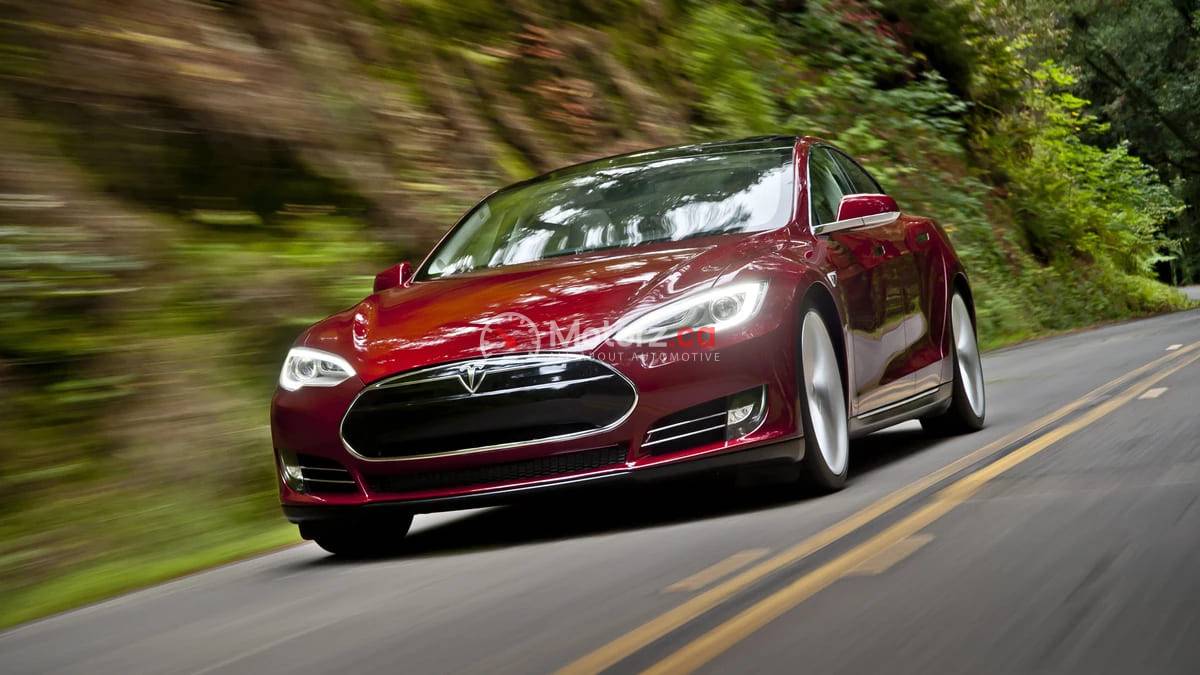
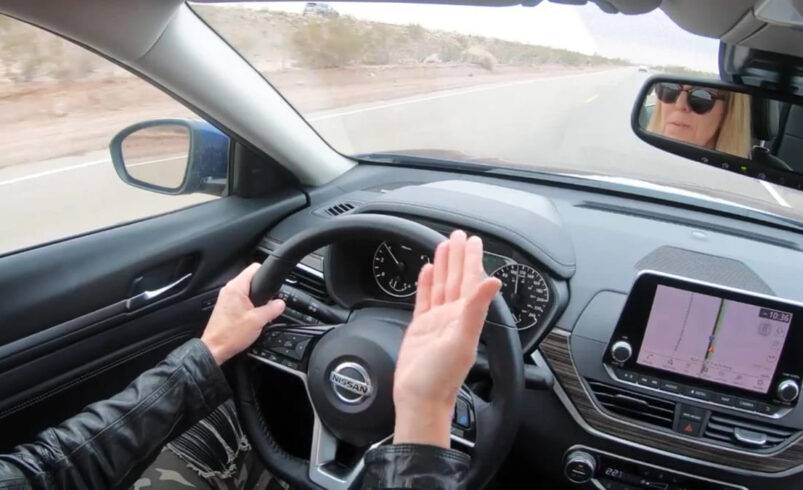

It starts with a soft blue glow on your Self-Driving Tech. You are cruising down a mapped stretch of the 401 in Ontario or the I-5 in Washington, and your car gives you the signal: “Hands-Free Available.” You nervously lift your palms from the rim of the steering wheel, and for a few seconds, it feels like magic. The car stays centered, the speed adjusts to traffic, and you are suddenly a passenger in the captain’s seat.
In 2026, hands-off driving technology has moved from a luxury curiosity to a mainstream reality. Systems like Ford BlueCruise, GM Super Cruise, and Mercedes-Benz Drive Pilot are now common features on everything from electric pickups to family SUVs. But as the technology becomes more accessible, a critical question remains: Just because you can take your hands off the wheel, should you?
In this edition of Lorraine Explains, we’re diving into the fine print of 2026’s driving automation. We will look at the legal traps, the safety data, and the psychological “attention gap” that every driver needs to understand before letting the car take over.
The Self-Driving Tech Hierarchy: Level 2 vs. Level 3
To understand the risks, you first have to understand what your Self-Driving Tech is actually capable of. In 2026, the industry is split between two very different types of “hands-free” driving.
Level 2+: The Hands-Off, Eyes-On Zone
Most “hands-free” systems on the road today, including Ford BlueCruise and GM Super Cruise, are classified as Level 2+.
The Rule: You can take your hands off the wheel, but you cannot take your eyes off the road.
The Watchdog: These cars use infrared driver-facing cameras to track your gaze. If you look at your phone or close your eyes for more than a few seconds, the system will disengage and demand you take control.
Level 3: The “Eyes-Off” Breakthrough
As of 2026, a few manufacturers like Mercedes-Benz and BMW have introduced Level 3 systems in limited regions.
The Difference: At Level 3, the manufacturer legally takes responsibility for the driving task in specific conditions (usually heavy traffic under 60 km/h). In these rare moments, you can actually look away—but you must be ready to take over within seconds if the car alerts you.
The Psychology of the “Attention Gap”
The biggest danger of hands-off driving isn’t a computer glitch; it is human nature. Research from 2025 and 2026 shows that when we remove our hands from the wheel, our brains naturally begin to “disengage” from the environment.
Delayed Reaction Time: Studies suggest it takes a “disengaged” driver up to five times longer to react to an emergency (like a tire carcass in the road) compared to a driver whose hands are on the wheel.
The False Sense of Security: Because these systems are so good 99% of the time, we tend to trust them too much. We stop looking for the 1% “edge case” where the sensors might be blinded by a setting sun or heavy snow.
Legal and Financial Traps in 2026
Laws across Canada and the US have tightened significantly in 2026 to combat the rise in “distracted hands-free” driving.
The 1,000 Fine Rule
In early 2026, Canada introduced strict new penalties for distracted driving. Even if your car is in “Hands-Free” mode, if a police officer (or a traffic camera) catches you holding a mobile device, you face an immediate 1,000 fine and potential license suspension.
The Legal Reality: In a Level 2+ system, you are the driver. If the car hits something while your hands are off the wheel, the insurance company and the law will hold you 100% responsible.
Insurance Premium Spikes
Insurance companies in 2026 are using telematics to see how often drivers are “warned” by their cars to pay attention. If your car frequently has to beep at you to look back at the road, your insurer may flag you as a high-risk driver, leading to a massive spike in your monthly premiums.
When You Should Absolutely Keep Your Hands On
Even if the blue light is on and the car says it’s ready, there are times when “Lorraine Explains” says you should keep your hands firmly at 9 and 3:
Work Zones: Construction barrels and shifting lane markings are the “Kryptonite” of hands-free systems.
Heavy Weather: Rain, fog, or snow can “blind” the cameras and radar sensors, leading to sudden, jerky steering corrections.
High-Density Traffic: If you are surrounded by aggressive drivers or frequent lane-cutters, your human intuition is far superior to an algorithm’s reaction time.
Narrow Lanes or Bridges: The margin for error is zero. Don’t let a computer handle the steering when a six-inch mistake means a concrete barrier.
The Verdict: Is Hands-Free Worth It?
Hands-off driving technology is a magnificent tool for reducing fatigue on long, boring highway stretches. It allows your muscles to relax and reduces the mental “grind” of a six-hour road trip.
However, it is not an invitation to check out. The most successful way to use these systems in 2026 is to treat them like a “Co-Pilot,” not a “Chauffeur.” Keep your eyes moving, stay aware of the cars around you, and be ready to step in at a millisecond’s notice.
The car can hold the lane, but only you can hold the responsibility.