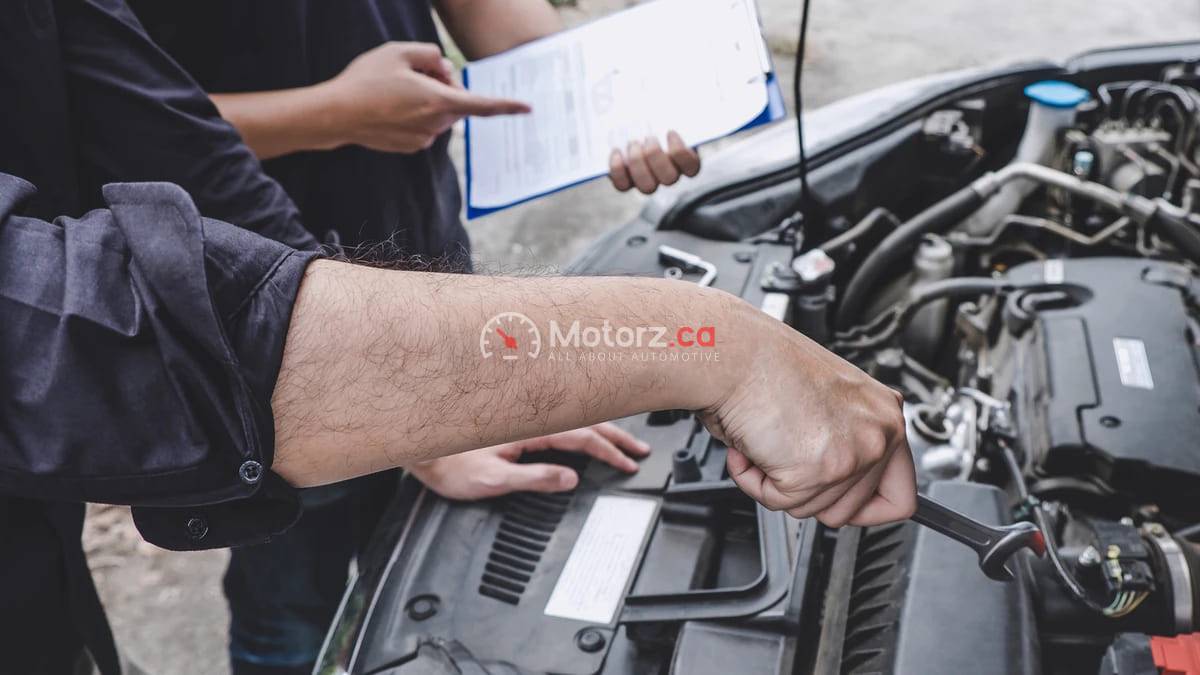
It is a scenario every car owner Unauthorized Repair Charges: You drop your vehicle off for a simple 60-unit oil change, but when you return to pick up the keys, the service advisor hands you an invoice for 1,200 units. They tell you they found a “leaking water pump” and a “cracked serpentine belt” and decided to fix them while the car was already on the hoist.
In the automotive world, this is known as an unauthorized repair, and it is more than just a customer service failure—in most parts of Canada, it is a direct violation of consumer protection laws. As we navigate 2026, where vehicle repairs are increasingly complex and expensive, knowing your rights at the repair counter is your best defense against “bill shock.”
In this comprehensive guide, we will break down the legal requirements for estimates, how to handle a garage that won’t release your car, and the specific steps you can take to dispute a bill you never agreed to pay.
The Golden Rule of Repairs: No Unauthorized Repair Charges
The most important thing to remember is that a mechanic or dealership cannot legally charge you for work you did not authorize. Whether you are in Ontario, Alberta, or Quebec, provincial laws are designed to prevent “surprise” bills by mandating clear communication between the shop and the consumer.
The Power of the Written Estimate
In many provinces, such as Ontario and Quebec, repair shops are legally required to offer you a written estimate if the work is expected to cost more than a certain threshold (usually 100 units).
What an estimate must include: A detailed description of the work, a list of parts (new, used, or reconditioned), the labor rate, and the total expected cost.
The 10% Rule: Once you sign off on a written estimate, the shop cannot charge you more than 10 percent above that quoted price without contacting you first to get additional approval.
Verbal vs. Written Consent
While written estimates are the “gold standard,” verbal authorization over the phone is still legally binding in many jurisdictions. However, the shop must record the date, time, and name of the person who gave the authorization. If they claim you “said it was okay” but you didn’t, the burden of proof is often on the shop to provide evidence of that consent.
Provincial Protections: How the Law Varies
Consumer protection is managed provincially, so your “Corner Wrench” strategy depends on where you live.
Ontario: The Consumer Protection Act
In Ontario, the law is very clear. If a shop performs work without your authorization, or exceeds an estimate by more than 10 percent, you have the right to refuse payment for the unauthorized portion. Furthermore, shops must post signs informing you of your right to a written estimate and the return of your old parts.
Quebec: The Office de la protection du consommateur
Quebec has some of the strongest consumer laws in the country. For repairs over 100 units, a written “evaluation” is mandatory. If a mechanic does work not listed in that evaluation without your explicit consent, they cannot charge you for it. Period.
Alberta: AMVIC and the Consumer Protection Act
In Alberta, the Alberta Motor Vehicle Industry Council (AMVIC) oversees automotive businesses. If a shop charges you for unauthorized repairs, you can file a formal complaint with AMVIC. They have the power to investigate, mediate, and even fine shops that engage in unfair practices.
The “Hostage” Situation: What to Do if They Won’t Release Your Car
The most stressful part of an unauthorized bill is when the shop refuses to give you your keys unless you pay the full amount. This is often called a Mechanic’s Lien.
Paying “Under Protest”
If you absolutely need your car back immediately (for work or family), you can pay the bill “Under Protest.”
Write “Paid Under Protest” clearly on the invoice and the credit card slip.
Tell the manager clearly that you do not agree with the charges and will be filing a formal complaint.
This creates a paper trail showing that you didn’t “accept” the work; you simply paid to regain access to your property.
The Small Claims Court Option
In some provinces, if the dispute is large, you can pay the disputed amount into a local court “in trust.” The court then holds the money, and the shop is legally required to release your vehicle while a judge or arbitrator decides who is right.
Step-by-Step: How to Dispute an Unauthorized Bill
If you find yourself staring at a bill you didn’t authorize, follow this sequence to resolve the issue:
Step 1: Speak with the Service Manager
Don’t start an argument with the technician or the front-desk clerk. Ask to speak with the Service Manager or the owner. Politely but firmly point out that you authorized X, but were charged for Y. Refer to your original estimate or the “10% rule.”
Step 2: Request the “Old Parts”
In many provinces, you have a legal right to see and keep the parts that were replaced (unless they are “core” exchange parts like batteries or alternators). If the shop can’t produce the “old” water pump they claim was leaking, you have a very strong case that the repair was either unnecessary or never happened.
Step 3: Formal Written Complaint
If the manager refuses to budge, send a formal complaint letter via registered mail. Detail the timeline, the lack of authorization, and the resolution you want (usually a refund of the unauthorized labor and parts).
Step 4: Government Mediation
If the letter fails, contact your provincial consumer protection branch (e.g., the Ministry of Public and Business Service Delivery in Ontario or AMVIC in Alberta). These agencies often provide free mediation services that can force a shop to settle without going to court.
Prevention: How to “Wrench-Proof” Your Next Visit
The best way to deal with unauthorized bills is to ensure they never happen.
The “Call Me” Rule: Explicitly state on the intake form: “Do not perform any work beyond [X] without calling me first. I require a written estimate for any additional repairs.”
Avoid “Blank Check” Phrases: Never say “Just fix whatever it needs.” This gives the shop legal cover to perform any repair they deem necessary.
Photograph the Odometer: Take a picture of your mileage when you drop the car off. If the shop claims they did a 20-kilometer road test to diagnose a “vibration” you never reported, you’ll have proof of the actual distance driven.
You Are the Boss of Your Car
Your vehicle is your property, and a mechanic is a service provider, not a decision-maker. While most mechanics are honest professionals trying to keep you safe, the law exists to protect you from the few who aren’t. By demanding a written estimate, knowing your provincial 10 percent limits, and refusing to be intimidated at the counter, you keep control of your “Corner Wrench” and your bank account.