

The legendary Italian marque, Alfa Romeo, stands at a critical juncture. For decades, the brand has been a beacon of passione and cuore sportivo—sporting heart—but its recent trajectory has been a tightrope walk between honoring its rich heritage and navigating the seismic shift to electric mobility. The current lineup, while universally praised for its dynamic excellence, is aging in a market ravenous for new technology.
The next-generation sedan, a spiritual successor to the beloved Giulia and a physical manifestation of a crucial new EV Sedan Concept, is more than just a new car; it is a design blueprint for the brand’s survival. This vehicle must not only be an Alfa Romeo in spirit—beautiful, emotional, and thrilling—but also a technological leader. If any single model can recapture the world’s imagination and secure the brand’s second century of existence, this is it.
The Crucible of Crisis: Why Alfa Romeo Needs a Hero
Alfa Romeo’s history is a magnificent tapestry of triumph and near-tragedy, punctuated by periods of brilliance and stretches of uncertainty. Today is another such pivotal moment. The current Giulia and Stelvio, built on the lauded Giorgio platform, are masterpieces of driving dynamics, yet they struggle to keep pace with rivals from Germany in terms of volume, technology, and—critically—electrification options. The brand’s initial, aggressive commitment to an EV-only future by 2027 was a bold, perhaps too hasty, move.
Recent backtracking in favor of a multi-energy strategy—offering hybrid and combustion alongside electric—shows a necessary dose of market realism, but it also creates a chasm in the product pipeline. The brand desperately needs a halo product to anchor its electric ambitions, a car that emphatically shouts: “Alfa Romeo is here to win the future.” This new electric sedan concept—the next-generation Giulia, built on the advanced STLA Large platform—is the vehicle tasked with this monumental challenge. It must be so overwhelmingly desirable that it transcends the platform discussions and instantly becomes the object of desire for enthusiasts and new luxury buyers alike.
The Weight of Heritage: A Design Philosophy’s Legacy
To understand the new EV sedan concept, one must look back. Alfa Romeo’s design heritage is not just about aesthetics; it’s about “functional beauty.” The Giulietta, the original Giulia, and the breathtaking 33 Stradale were all triumphs of design born from aerodynamic and engineering necessity. The EV concept must draw deeply from this well. The design cannot be a mere pastiche of retro cues; it must be a forward-looking evolution. The core Alfa Romeo DNA demands a few non-negotiables: the iconic Scudetto (shield) grille, a sense of muscular elegance, and perfect visual balance achieved through a dedication to near 50:50 weight distribution.
In the electric age, where a flat battery pack dictates a longer wheelbase and often a higher floor, maintaining those classic Alfa proportions—the long bonnet, the set-back cabin—is the greatest design challenge. The solution proposed by the Concept is an aerodynamic fastback or five-door liftback body style, which cleverly disguises the necessary bulk of the electric platform while offering the practicality the modern luxury buyer demands. It is a design solution that saves the look of the sedan by adapting its function.
Concept Unveiled: The Design That Reimagines the Quadrifoglio
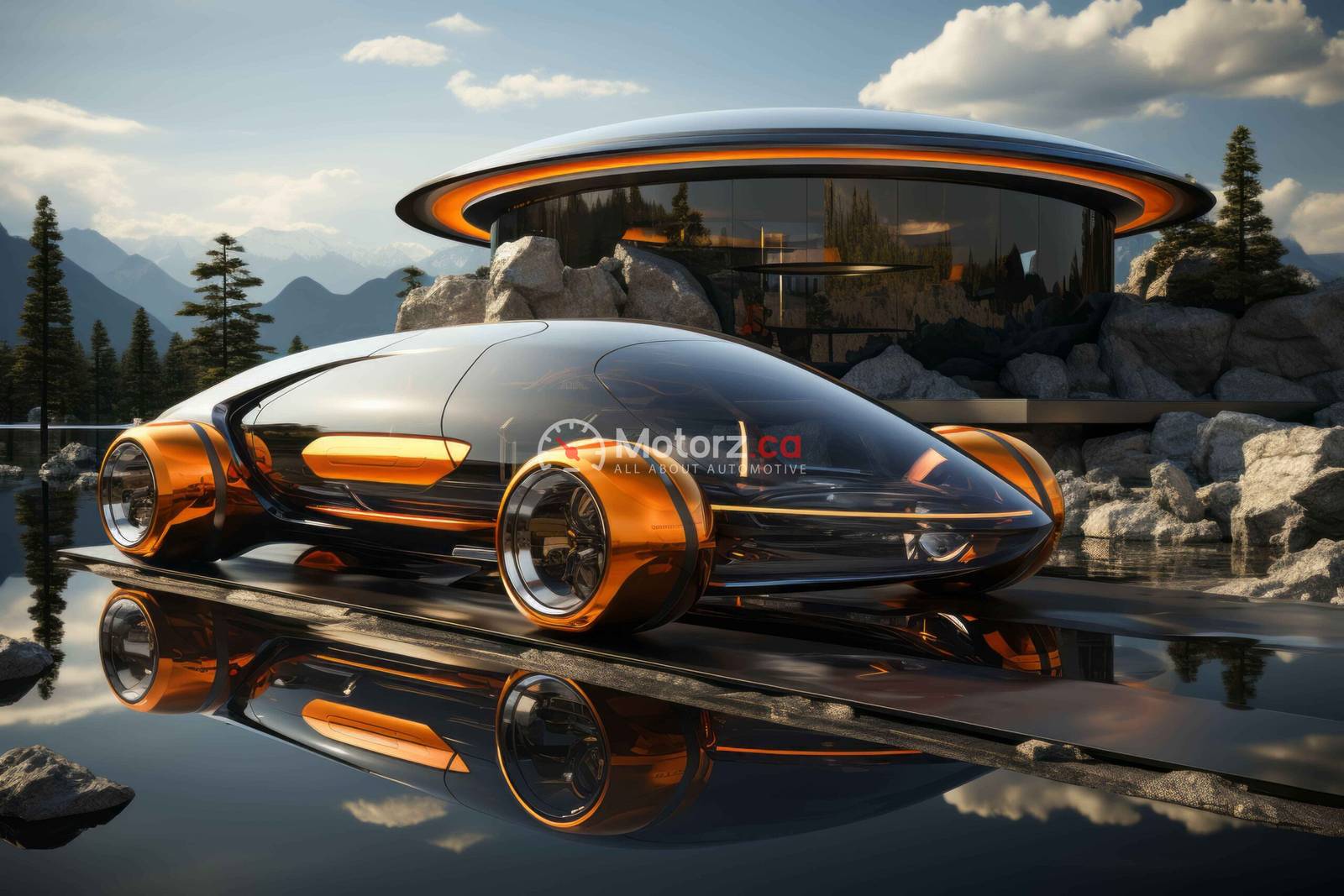
The hypothetical reveal of the new Alfa Romeo EV Sedan Concept would be a masterclass in controlled drama. Imagine a sleek, low-slung form emerging from the darkness. The key to its success lies in its adherence to the core elements while radically transforming them for an electric future.
The Scudetto V-shield is the centerpiece. Traditionally an air intake, its new electric function is to act as a light signature. In the EV Concept, the Scudetto is reimagined as a three-dimensional, illuminated element, possibly incorporating a network of finely-etched glass or acrylic that glows with the brand’s new light signature. It remains the anchor of the design, yet it breathes new life.
The vehicle’s profile is a celebration of its new, expansive proportions. Built on the STLA Large platform, the Concept enjoys a much longer wheelbase than the current Giulia, which translates into a visually stretched, more substantial road presence. The body sides are muscular, taut surfaces—a direct rejection of the over-creased, aggressive lines favored by some German rivals. This is Italian sculpture: functional beauty achieved through sinuous curves. The classic Alfa rear-wheel-drive haunches, suggesting power ready to be unleashed, are enhanced, emphasizing the instantaneous torque delivery of the EV powertrain.
Lighting technology is another key differentiator. The Concept employs ultra-slim, advanced LED Matrix headlights that integrate seamlessly into the fender line, perhaps echoing the triple-LED signature seen on the Tonale, but executed with greater subtlety.
At the rear, the taillight bar stretches across the entire width of the car, a contemporary luxury trend, but here it is given an unmistakable Alfa identity with a deeply sculpted, dark lens that becomes a bright, dramatic ribbon of light when activated. The overall effect is sophisticated, aggressive, and undeniably Italian. The design’s boldness will be its major selling point, distinguishing it from the often-clinical precision of its electric rivals. This is a car designed to be felt, not just driven.
Form and Function: The Aerodynamic Imperative
The move to electric mobility makes aerodynamics a paramount design concern, as every tick of the drag coefficient directly impacts the all-important electric range. The original Giulia was praised for its focus on low drag, a legacy the EV Concept must amplify. The seamless bodywork, flush door handles, and a nearly closed-off front fascia (save for strategically placed active vents for battery cooling) all contribute to a dramatically low drag coefficient—a number that must be competitive with best-in-class EVs to deliver the promised 500-mile range target for the top-spec model.
The Concept’s wheels are a major statement. Large, aerodynamically optimized, but retaining the classic Alfa “telephone dial” or five-hole pattern. The design integrates form with function: the wheels slice through the air efficiently while still paying tribute to the brand’s sporting heritage.
Furthermore, the underbody is entirely flat, a necessary EV feature that is expertly managed to channel airflow, creating genuine downforce rather than just reducing lift. The cumulative effect of these aerodynamic enhancements is a vehicle that appears to be sculpted by the wind, perfectly aligning with Alfa Romeo’s deep-seated philosophy of functional beauty. This synergy is critical: the Concept’s design is beautiful because it is efficient.
The Electric Heart: Engineering the Cuore Sportivo for the EV Era
The true core of the Alfa Romeo EV Concept lies beneath the exquisite bodywork. The successful adoption of the STLA Large platform is the single most important technical decision, offering the flexibility for both all-wheel drive and pure rear-wheel drive configurations and, most importantly, the ability to support the required performance targets.
The EV Concept will leverage an 800-volt architecture. This is a non-negotiable feature for any luxury-performance EV launching in the late decade, as it enables ultra-rapid charging speeds that drastically reduce downtime. Imagine adding hundreds of miles of electric range during a brief coffee stop—this level of convenience makes long-distance travel a non-issue, effectively mitigating range anxiety and making the shift to electric seamless for the passionate driver.
Performance must be brutal, yet refined. The base model is rumored to produce around 350 horsepower—enough to make it engaging—but the flagship Quadrifoglio variant is the one that will make headlines and justify the “Save the Brand” mantle. Speculation suggests the EV Quadrifoglio could deliver upward of 1000 horsepower. This immense power, delivered instantaneously by dual electric motors for all-wheel drive traction, promises a zero to 60 time well under three seconds.
But raw speed is not enough for an Alfa. The engineering must ensure that the vehicle retains the brand’s characteristic dynamic handling. The heavy battery pack, mounted low in the chassis, inherently aids in creating a very low center of gravity. Paired with Alfa Romeo’s famously direct steering ratio and an advanced, electronically controlled Active Suspension system, the Concept’s performance will be defined not just by its straight-line speed but by its ability to carve through corners with the same balletic grace as its Giulia predecessor. This emotional, connected driving experience is the true cuore sportivo of the electric age.
The Driver-Centric Cockpit: Italian Luxury Meets Digital Immersion
The interior of the EV Sedan Concept is where Alfa Romeo can truly stand apart from its rivals, rejecting the cold, screen-dominated cabins of so many modern EVs. The design philosophy is clear: the driver remains the absolute center of the universe.
The Concept’s cockpit is directly inspired by the limited-edition 33 Stradale supercar, which deliberately minimized touchscreen clutter in favor of tactile controls. While the EV Sedan must incorporate modern connectivity, it will do so thoughtfully.
The instrument cluster retains the classic Alfa Romeo Cannocchiale (telescope) design—a hooded, deeply recessed twin-dial layout—but is fully digitized, offering various customizable layouts, including a faithful Heritage mode that pays tribute to classic analog dials. The main infotainment screen is neatly integrated into the dashboard, oriented toward the driver, and operates on a streamlined, widget-based user interface designed for speed and clarity. Crucially, essential driving functions—like drive mode selection and climate control—are managed through beautifully crafted, tactile physical controls, providing a sense of premium interaction that digital interfaces often lack.
The materials selected for the interior are pure Italian luxury: sumptuous, sustainably sourced leather, Alcantara, and carbon fiber accents. The seats are high-performance thrones, designed not just for comfort but for serious lateral support during spirited driving.
The cabin’s atmosphere is enhanced by a subtle, multi-color ambient lighting system that highlights the sculptural lines of the dash and door panels, creating an environment that is both luxurious and focused. This interior is a conscious effort to restore the emotional, hand-crafted feeling to the electric vehicle experience. It’s an Italian living room built for the autobahn.
The Salvation Strategy: Market Impact and Brand Resurrection
The New Alfa Romeo EV Sedan Concept, when realized as the next-generation Giulia EV, is poised to be the brand’s most important global product launch in decades. Its impact will be felt on multiple fronts.
First, it instantly elevates the brand’s standing in the lucrative premium EV segment. A 1000 hp, 500-mile range electric sedan built on an advanced 800-volt architecture gives Alfa Romeo a credible, performance-oriented challenger to the Porsche Taycan, Audi e-tron GT, and the high-end variants of the Tesla Model S.
Second, the striking, emotive design is a crucial differentiator. In a world of increasingly homogenous electric “blobs,” the Alfa Romeo Design will be the emotional hook, the raison d’être for choosing Italian flair over Teutonic efficiency. This focus on functional beauty will attract a new, younger demographic of luxury buyers who value style and performance equally.
Third, its presence on the flexible STLA Large platform enables a more rationalized, profitable global strategy. The platform allows for multiple body styles (including the next Stelvio EV) and the brand’s multi-energy pivot, ensuring that Alfa Romeo can serve markets with varying rates of EV adoption without costly, bespoke engineering. This financial and strategic stability is essential for the brand’s long-term health. The Concept’s success will prove that passion and profitability can, in fact, co-exist. It will show the parent company, Stellantis, that Alfa Romeo is a vital, high-value asset worth nurturing.