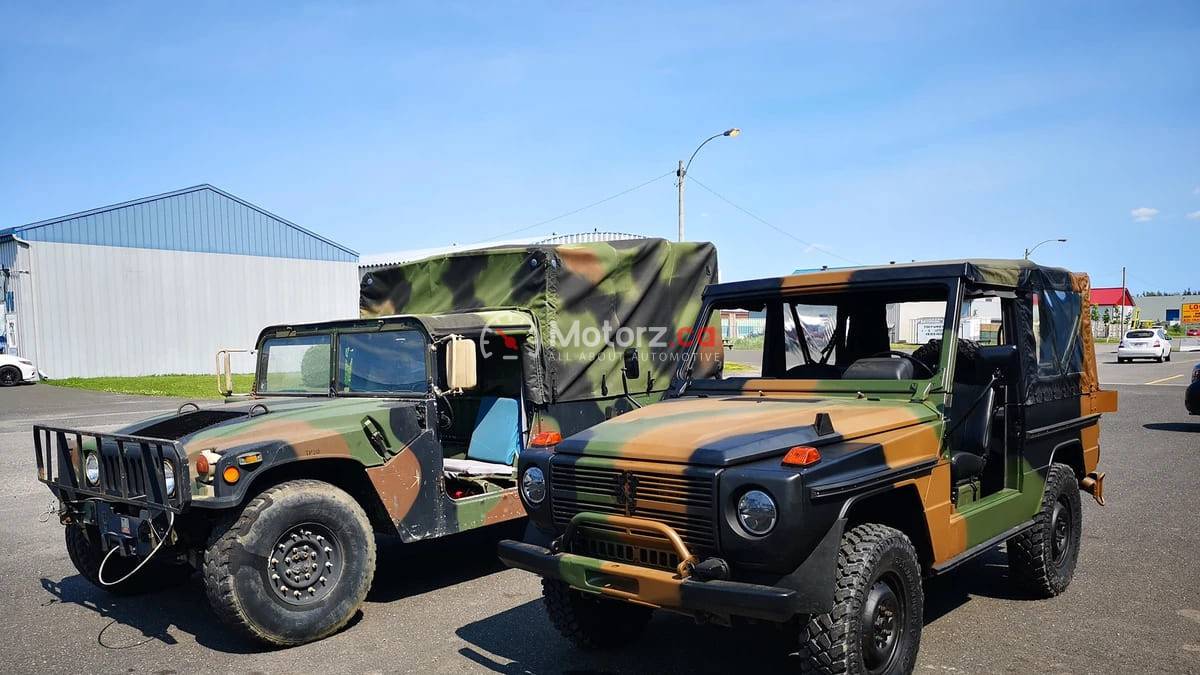
For years, the Military-Type Vehicles community in Quebec has been locked in a tug-of-war with provincial regulators. If you were the proud owner of a decommissioned Willys Jeep, a rugged Iltis, or a heavy-duty deuce-and-a-half, your road ahead was often blocked by red tape. For a long time, the Société de l’assurance automobile du Québec (SAAQ) maintained strict, often confusing barriers that prevented these historic machines from being driven on public highways, citing everything from “unconventional lighting” to “aggressive” silhouettes.
However, as we move through 2026, the tide has finally turned. In a significant win for automotive historians and military vehicle enthusiasts, Quebec has begun backing off many of the sweeping road restrictions that once marginalized these vehicles. This shift isn’t just about letting old trucks on the road; it’s about recognizing the cultural and historical value of military-type vehicles while finding a common-sense balance for modern safety.
In this deep dive, we are exploring the new landscape for military vehicle ownership in Quebec, why the SAAQ changed its stance, and what you need to know if you are planning to take your “olive drab” beauty out for a cruise this summer.
The Policy Pivot: From “Banned” to “Balanced”
The core of the issue in Quebec was a long-standing interpretation of the Highway Safety Code that viewed military vehicles—even those with no weaponry and standard lighting—as inherently “off-road” equipment.
What Changed in 2026?
The SAAQ has moved toward a more individualized assessment model. Rather than a blanket ban based on the “military” origin of the chassis, regulators are now focusing on a checklist of functional civilian safety standards. If a vehicle can prove it meets the fundamental requirements for visibility, braking, and steering, its military DNA is no longer an automatic disqualifier for a license plate.
The Influence of Heritage Organizations
This policy shift didn’t happen in a vacuum. Organizations representing military vehicle collectors across Canada—and specifically within Quebec—worked tirelessly to demonstrate that these vehicles are often maintained to a higher standard than the average 20-year-old passenger car. By showcasing the reliability and the “slow and steady” driving habits of collectors, they convinced the Ministry of Transport that these vehicles pose a minimal risk to public safety.
Navigating the New Registration Process
While the restrictions have eased, it is not quite a “free-for-all.” You still need to follow a specific path to get your “V” or “C” series plates.
The Enhanced Mechanical Inspection
To get on the road, your military-type vehicle must undergo a specialized mechanical inspection at an SAAQ-mandated center. This inspection focuses on:
Lighting and Signaling: Headlights, turn signals, and brake lights must meet the height and brightness requirements of the Highway Safety Code. (Retrofitting modern LEDs is often allowed as long as they aren’t “dazzling”).
Braking Systems: Because military vehicles often use air brakes or complex hydraulic systems, the inspector will require a functional test that proves the vehicle can stop within a safe distance.
Tire Compliance: You must use tires that are DOT-approved. Many original “NDT” (Non-Directional Tread) military tires are not approved for high-speed highway use, so you may need to swap them for modern equivalents.
The “Restricted Use” Option
For truly historic vehicles that cannot meet every modern standard (like those lacking three-point seatbelts or side-impact protection), Quebec has expanded the “Special Purpose” or “Exhibition” registration category. This allows you to drive to events, parades, and specialized mechanics, giving you the freedom to enjoy the hobby without needing to modernize a 1944 museum piece.
Insurance: The Final Frontier for Collectors
Registration is only half the battle. Even with the SAAQ’s blessing, getting a traditional insurance company to cover a 10,000-pound military truck can be a challenge.
Specialized Collector Insurance
Fortunately, the easing of road restrictions has encouraged more specialty insurers to enter the Quebec market. These companies offer “Agreed Value” policies specifically for military-type vehicles. They understand that a 1970s Iltis isn’t being used for a daily commute into Montreal; it is being driven 500 kilometers a year to local car shows.
The “Veteran” Plate Connection
In Quebec, veterans who own these vehicles can apply for the Veteran’s Licence Plate. While this doesn’t bypass safety rules, it serves as a mark of distinction that often makes it easier to work with specialty insurers, as it reinforces the “heritage and respect” aspect of the vehicle’s use.
Modern Military Convoys and Public Awareness
The easing of restrictions comes at a time when military vehicle visibility is high. In early 2026, large-scale training exercises (like Exercise Wolf Ambush) saw hundreds of active-duty Canadian Armed Forces (CAF) vehicles moving across Ontario and Quebec highways.
Sharing the Road
The SAAQ is using this increased visibility as an educational moment for the general public. Modern military vehicles and “type” vehicles have different sightlines and slower acceleration than a 2026 electric SUV. Part of the new “backing off” strategy includes public awareness campaigns reminding drivers to give these heavy vehicles extra space, especially during “Spring Thaw” periods when road surfaces are fragile.
Tips for the Military Vehicle Owner in Quebec
If you are ready to take advantage of these relaxed rules, keep these “Corner Wrench” tips in mind:
Keep it Clean: A vehicle that looks like it just rolled out of a swamp is more likely to be flagged by police. A clean, well-maintained exterior shows that the vehicle is a collector’s item, not a hazard.
Modern Mirrors are Your Friend: Military vehicles are notorious for blind spots. Adding a set of discrete, removable convex mirrors can save your fenders and improve your safety score during inspection.
Document Everything: Carry a folder with your mechanical inspection certificate and a copy of the latest SAAQ guidelines. If you are pulled over, being able to calmly show that your vehicle is compliant can save you a lot of time.
A New Era for Quebec’s “Olive Drab” Enthusiasts
Quebec’s decision to back off road restrictions for military-type vehicles is a landmark victory for the hobby. It honors the mechanical history of these machines while bringing them safely into the 2026 regulatory framework. By moving from a “No” to a “Yes, if,” the province has opened the door for a vibrant community of collectors to finally share their passion with the public.
Whether it’s a vintage Jeep or a heavy-duty transport, these vehicles are now more welcome on the road than they have been in decades. It is time to clear out the garage, check your fluids, and get that historical iron back on the asphalt.