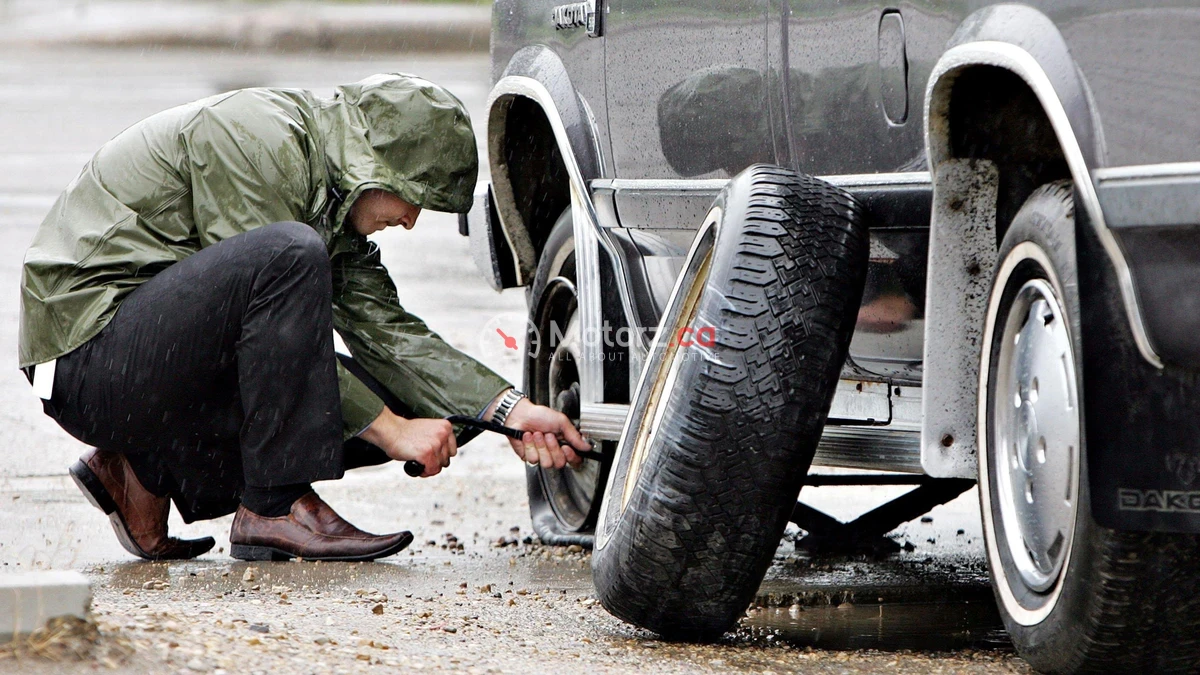
It is a Repairing vs. Replacing a Leaky Tire, you are already running five minutes behind schedule, and as you approach your vehicle, you see it: the dreaded “rim on rubber” look. A flat tire is perhaps the most universal automotive headache. It is inconvenient, messy, and always seems to happen at the worst possible time.
In the world of the “Corner Wrench,” we are all about making smart, safe, and cost-effective decisions. But when it comes to a leaky tire, the choice between a simple repair and a full replacement isn’t just about saving money—it is about the structural integrity of the only four points of contact between your car and the road.
As we navigate the driving conditions of 2026, tire technology has advanced, but so have the stakes. High-performance compounds, run-flat sidewalls, and integrated pressure sensors mean that a “simple” hole isn’t always so simple. In this comprehensive guide, we will break down the geometry of a safe repair, when a tire is officially “dead,” and how to tell if a shop is giving you straight talk or a sales pitch.
The Repairing vs. Replacing a Leaky Tire: The “Tread Zone” Rule
Not all areas of a tire are created equal. To understand if your tire can be saved, you need to look at where the damage is located. Industry standards from the U.S. Tire Manufacturers Association (USTMA) and major Canadian safety groups have strict “no-go” zones for repairs.
The Repairable Crown
The “crown” is the center part of the tire tread, usually defined as the area between the two outermost circumferential grooves. If you pick up a nail or a screw in this middle section, you are in luck. Because this area is supported by steel belts and has the thickest rubber, a professional “plug-patch” can often restore the tire to its original strength.
The Danger Zone: Sidewalls and Shoulders
If the puncture is on the “shoulder” (where the tread curves down) or the “sidewall” (the vertical side of the tire), it is unrepairable. The sidewall is designed to flex constantly as you drive, turn, and hit bumps. A patch cannot maintain a seal on a surface that is constantly bending. Furthermore, there are no steel belts in the sidewall to hold a plug in place. Repairing a sidewall puncture is a recipe for a high-speed blowout.
When the Tire Must Go: 5 Signs Your Tire is Unrepairable
Sometimes a hole is in the “safe” zone, but the tire is still a total loss. Before you ask for a patch, check for these five deal-breakers.
The Hole is Too Big
Standard tire repairs are only rated for punctures up to 1/4 inch (about 6mm) in diameter. If you ran over a large bolt, a piece of rebar, or a jagged shard of metal that tore a gash rather than a round hole, the structural integrity of the steel belts is compromised. No amount of rubber cement will make that tire safe again.
Run-Flat” Damage (The Gray Ring)
If you drove on the tire while it was flat—even for just a few hundred meters—you may have ruined it from the inside out. When a tire loses air, the weight of the car crushes the sidewall against the rim. Look for a “ring of heat” or a gray, scuffed circle on the inner sidewall. This indicates that the internal structure has been “chewed” up. If a technician finds handfuls of black rubber “crumbs” inside the tire when they take it off the rim, the tire is garbage.
Long-Term Dry Rot and Age
In 2026, we are seeing more cars being driven less frequently, which leads to “dry rot.” If your tire has plenty of tread but shows tiny spider-web cracks in the grooves or on the sidewall, the rubber is brittle. Attempting to patch a dry-rotted tire is like trying to sew a button onto tissue paper; the material simply won’t hold.
Overlapping Repairs
Safety guidelines state that you should never repair a tire in the same spot twice, nor should you have more than two or three repairs in a single tire. If a new puncture is within a few inches of an old patch, or if the repairs would overlap, the tire’s internal structure is too weakened to be trusted at highway speeds.
Low Tread Depth
If your tire is already at or near the wear bars (typically 2/32 of an inch), it is a waste of money to repair it. You are essentially paying to fix a tire that you will need to replace in a few weeks anyway. Spend that money toward a new set instead.
Plug vs. Patch vs. “Plug-Patch”: What’s the Difference?
If you go to a shop for a repair, you need to know what they are actually doing to your tire. Not all repairs are “legal” by industry safety standards.
The On-the-Wheel Plug: This is the “string” repair you can buy at an auto parts store. While great for emergencies to get you to a shop, a plug alone is not a permanent fix. It doesn’t seal the inner liner, and it allows moisture to reach the steel belts, which can cause them to rust and delaminate over time.
The Internal Patch: This is a rubber disc glued to the inside. While it seals the air in, it leaves the physical hole in the tread open to the elements.
The Professional “Plug-Patch”: This is the gold standard. The tire is removed from the rim, the hole is cleaned/reamed, and a mushroom-shaped rubber piece is pulled through from the inside. This fills the hole and seals the inner liner. If a shop offers to fix your tire without taking it off the rim, walk away.
The “Corner Wrench” Cost-Benefit Analysis
In 2026, a professional tire repair typically costs between 30 and 60 units of currency, depending on your location and whether a balance is included. A new tire, depending on the vehicle, can range from 150 to over 400.
When to Repair:
The tire is relatively new (less than 2 years old).
The tread is deep and healthy.
The puncture is a clean hole from a nail or screw in the center tread.
You have a matching set of tires and don’t want to replace two or four tires to keep the tread depths even.
When to Replace:
The tires are more than 5 or 6 years old (check the DOT date code).
You are planning a long road trip or do significant highway driving.
The repair would be the third patch in that specific tire.
You have an All-Wheel Drive (AWD) vehicle where mismatched tread depths can damage the drivetrain.
Maintenance Tips to Avoid the “Slow Leak”
Preventing a flat is always cheaper than fixing one. Use these “Corner Wrench” tips to keep your rubber in top shape:
Check Pressure Monthly: Under-inflated tires run hotter and are more prone to “pinch flats” and internal damage.
Visual Inspections: Once a month, run your hand (carefully!) over the tread to feel for snags or see if any shiny metal objects are hitching a ride.
Watch the “Curb Rash”: Hitting curbs doesn’t just scratch your rims; it weakens the sidewall, making it more likely to fail when you hit a pothole later.
Rotate Every 8,000 KM: Regular rotation ensures even wear, making it easier to spot punctures and ensuring that when you do have to replace tires, you get the maximum life out of the set.
Safety First, Savings Second
A leaky tire is an invitation to slow down and assess your vehicle’s health. While we all want to save a few bucks, a “dodgy” repair on a shoulder puncture or a tire with internal damage is a high-stakes gamble. If the hole is small and central, go for the professional plug-patch. If there is any doubt about the sidewall or the age of the rubber, invest in a new tire.