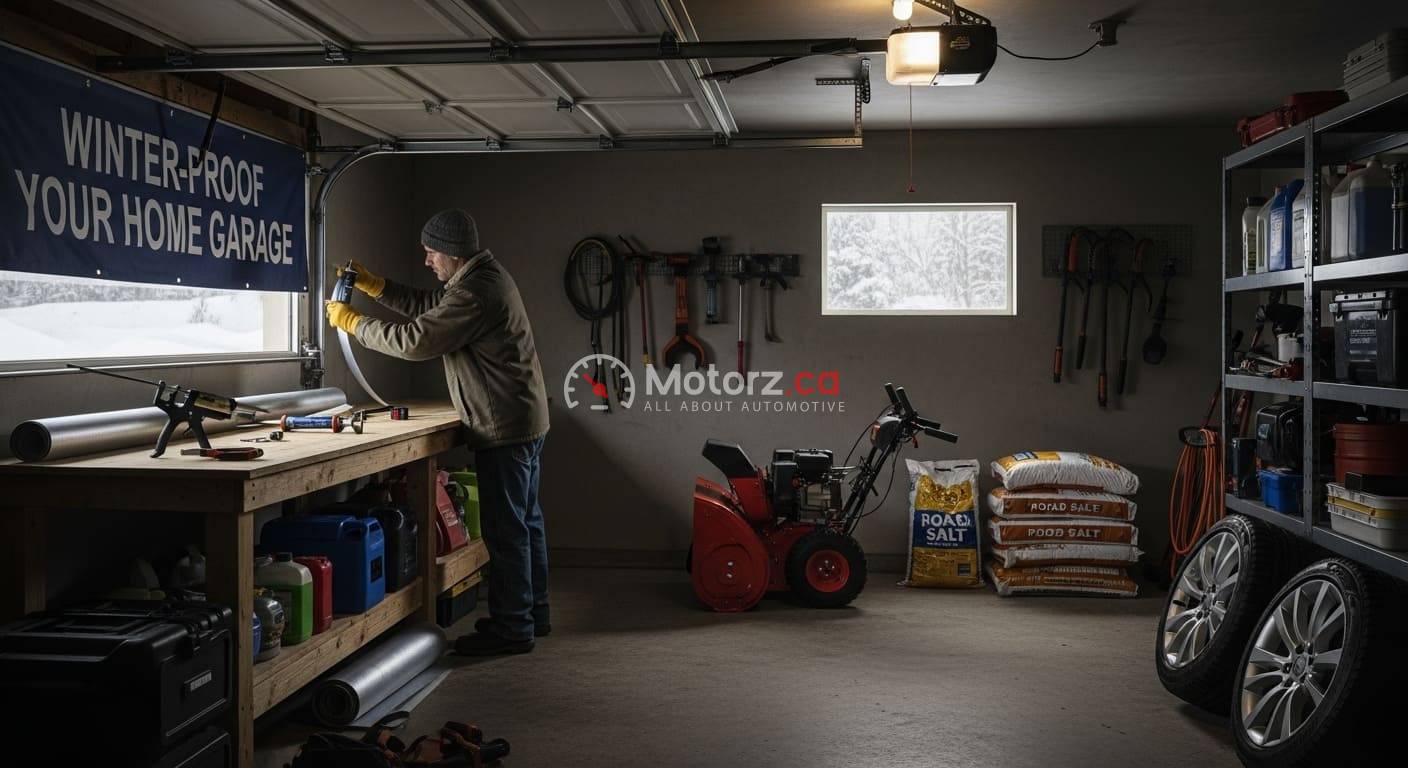
Before you even think about Winter-Proof Your Home Garage, you must address the three biggest enemies of a warm garage: poor insulation, air leaks, and the massive thermal bridge that is your garage door. Think of this as putting on your winter parka before turning up the thermostat. Effective insulation is the most critical long-term investment for any Winnipeg garage owner.
Wall and Ceiling Insulation: Winter-Proof Your Home Garage
In Winnipeg, you need a high R-Winter-Proof Your Home Garage—the measure of thermal resistance—to truly combat the extreme cold. For walls, a minimum of R-20 is often recommended, but if you have the depth, pushing for R-40 or R-60 in the ceiling is smart, as heat rises.
- Fibreglass Batts: A common and cost-effective Winter-Proof Your Home Garage for existing construction, easy for a DIY project in open stud bays. However, installation must be perfect to avoid cold spots.
- Spray Foam Insulation: The premium choice. While more expensive, closed-cell spray foam provides superior R-value per inch and, more importantly, acts as an impeccable air and vapour barrier, perfectly sealing every nook and cranny. This is highly effective against Manitoba’s moisture and deep cold.
- Insulating the Header: The rim joists Winter-Proof Your Home Garage above the foundation where the walls meet the roof are massive areas for air leaks and cold transfer. Sealing and insulating this area with cut-to-fit rigid foam or spray foam is an often-overlooked necessity.
The Garage Door: Your Thermal Achilles’ Heel
Your garage door is likely the largest uninsulated surface in your space. A metal, single-panel door is practically a giant heat sink.
- Upgrade to an Insulated Door: If your budget allows, replacing an old door with a modern, high-quality insulated steel door (R-value of at least 12 or higher) is a game-changer. Look for models with thermal breaks between the steel Winter-Proof Your Home Garage.
- DIY Insulation Kits: For a cheaper fix, you can buy polystyrene or reflective foil insulation kits to attach to the inside panels of your existing door. While it’s not as good as a factory-insulated door, it offers a significant improvement and reduces radiant heat loss.
- Weather Stripping and Seals: Critically important. Replace worn-out bottom seals, and install or refresh vinyl or rubber seals around the door jambs (sides and top). Sealing these gaps stops drafts—the biggest thief of heat. Air Winter-Proof Your Home Garage is often more important than the insulation itself!
Windows and Man Doors
If your garage has windows or a separate pedestrian door, ensure they are also energy-efficient. Look for double or triple-pane glass on windows, and ensure the man door has a tight seal and is either solid core or insulated. Expanding foam sealant is your best friend for sealing gaps around all frames.
The Heart of the Shop: Choosing the Right Heating System
Once your fortress is sealed, you Winter-Proof Your Home Garage a reliable heating source to make it a functional workspace. For a Winnipeg winter, portable space heaters simply won’t cut it for a full-sized garage. You need something robust and designed for the climate.
Natural Gas/Propane Unit Heaters (Forced Air)
These are the most popular and often most efficient way to heat a dedicated shop or garage. They hang from the ceiling, saving floor space, and can quickly bring a large area up to temperature.
- Natural Gas (NG) vs. Propane (LP): NG is generally cheaper to run if you have a gas line run to the garage. LP offers flexibility but requires tank Winter-Proof Your Home Garage. For safety, ensure proper venting is installed for any combustion heater.
- Sizing: Don’t skimp on BTUs. For Winnipeg’s climate, aim for a unit that provides ample heat (often 45,000 BTUs or more for a standard two-car garage, depending on insulation). Consult an HVAC professional in Winnipeg for accurate sizing based on your R-value and square footage.
Electric Heaters (Ceiling or Wall Mounted)
If running a gas line is impossible or too costly, a 240V electric heater is your next best option.
- They are clean, require less Winter-Proof Your Home Garage, and have no combustion fumes.
- The Caveat: Electricity can be more expensive than natural gas for consistent, high-heat output, so excellent insulation is absolutely non-negotiable if you choose this route.
Radiant Tube Heaters
These are often seen in commercial shops and are excellent. They heat objects (like your tools, workbench, and car) rather than the air. They work by emitting infrared radiation, making the heat feel very comfortable, much like standing in the sun. This is an efficient option, especially for high ceilings or drafty garages, as the heat isn’t immediately lost to the Winter-Proof Your Home Garage.
Protecting the Floor: The Salt and Slush Battle
The biggest threat to your concrete floor in a Winnipeg winter isn’t the cold itself, but the relentless cycle of road salt, melting snow, and freezing/thawing. This can cause concrete spalling (flaking) and pitting. Protecting your slab is crucial.
High-Performance Floor Coatings
The gold standard for winter protection is a durable coating that makes the floor non-porous and resistant to salt and chemicals.
- Epoxy or Polyaspartic Coatings: Winter-Proof Your Home Garage coatings are a modern, often superior choice, as they are UV-stable, more flexible, and cure faster. Both create a seamless, non-porous barrier that prevents water and salt from penetrating the concrete, drastically extending the life of your floor. They also make cleanup a breeze—just squeegee the mess outside.
Modular Floor Tiles
These interlocking plastic tiles snap together over the concrete.
- Advantages: They allow water and slush to drain underneath the surface to evaporate or be channeled out, keeping the walking surface dry. They are also easy to install and replace if damaged.
Rubber Mats and Containment Systems
For a budget-friendly and immediate Winter-Proof Your Home Garage, lay down large, heavy-duty rubber mats or specialized garage floor containment mats that have raised edges. These capture the messy puddle of saltwater and slush that falls off your car, allowing you to easily squeegee or shop-vac it up. This is essential for protecting the concrete and preventing slips.
Moisture Management: Fighting Humidity and Rust
A warm garage can create a high-humidity environment when a snow-covered car is pulled in and melts. High humidity leads to rust on tools and vehicles, and mould/mildew growth.
Ventilation is Key
Proper ventilation is vital. For combustion Winter-Proof Your Home Garage, this is mandatory, but even with electric heat, you need to manage moisture.
- Exhaust Fan: Install a powerful, humidity-sensing exhaust fan (similar to a bathroom fan, but stronger) to vent humid air outside after you pull in a wet vehicle. Run it for an hour or so after the snow melts.
- Controlled Air Exchange: Some high-end systems use an HRV (Heat Recovery Ventilator) to bring in fresh, dry air while recovering some heat from the outgoing stale air, a very efficient solution for Manitoba’s deep cold.
The Dehumidifier
While a good ventilation system handles the big moisture events, a dedicated dehumidifier is excellent for maintaining a consistent, low humidity level throughout the winter, protecting metal tools and stored items from rust.
Essential Gear and Tools for the Winter Motorhead
Your work doesn’t stop just because it’s Winter-Proof Your Home Garage. Having the right tools and supplies makes those necessary winter tasks—like battery boosting or swapping to your winter tires—significantly easier.
The Winter-Ready Tool Kit
- Battery Maintainer/Tender: Winnipeg weather is notorious for killing batteries. Keep your project car’s or rarely-used vehicle’s battery hooked up to a quality battery maintainer at all times.
- Heavy-Duty Jumper Pack: For the inevitable cold-start emergency, a high-amp lithium jump starter is safer and more convenient than traditional jumper cables.
- Quality Shop Lighting (LED): Working in a dark garage on a dark winter day is brutal. Upgrade to bright, daylight-spectrum LED lighting. Good lighting makes everything safer, more pleasant, and more accurate.
- Air Compressor Management: If you use an air compressor, ensure you have a dedicated air dryer or water separator installed. Cold air holds less moisture, and any water in your lines can freeze and damage your tools or equipment.
Organization and Storage
- Winter Tire Racks: Get your summer Winter-Proof Your Home Garage up and out of the way on a wall-mounted rack. Clear floor space is crucial for keeping your work area safe and clean from slush and snow.
- Chemical and Fluid Storage: Antifreeze, oil, and chemicals should be stored in sealed cabinets or on sturdy shelving off the ground, well away from any heat source.
Safety First: Carbon Monoxide and Fire
With gas heaters and running cars Winter-Proof Your Home Garage, safety is paramount. Never compromise here.
Carbon Monoxide Detector
If you have any gas or fuel-burning appliance or Winter-Proof Your Home Garage on running a vehicle for even a moment inside, you must have a certified, reliable, and properly placed Carbon Monoxide (CO) detector. Check and replace the batteries (or the unit itself if expired) every year.
Fire Extinguisher
Working with fuel, chemicals, and Winter-Proof Your Home Garage in a contained space is a risk. Have a readily accessible, rated fire extinguisher (ABC or better) and ensure it’s not buried behind a pile of winter gear.
A Winnipeg winter may be harsh, but your passion for motors should be stronger. By investing in proper insulation, air sealing, and a robust heating system, and equipping your shop with the right tools and protective coatings, you transform a cold storage unit into a comfortable, all-season workshop. Get started now—before the first true polar Winter-Proof Your Home Garage hits!