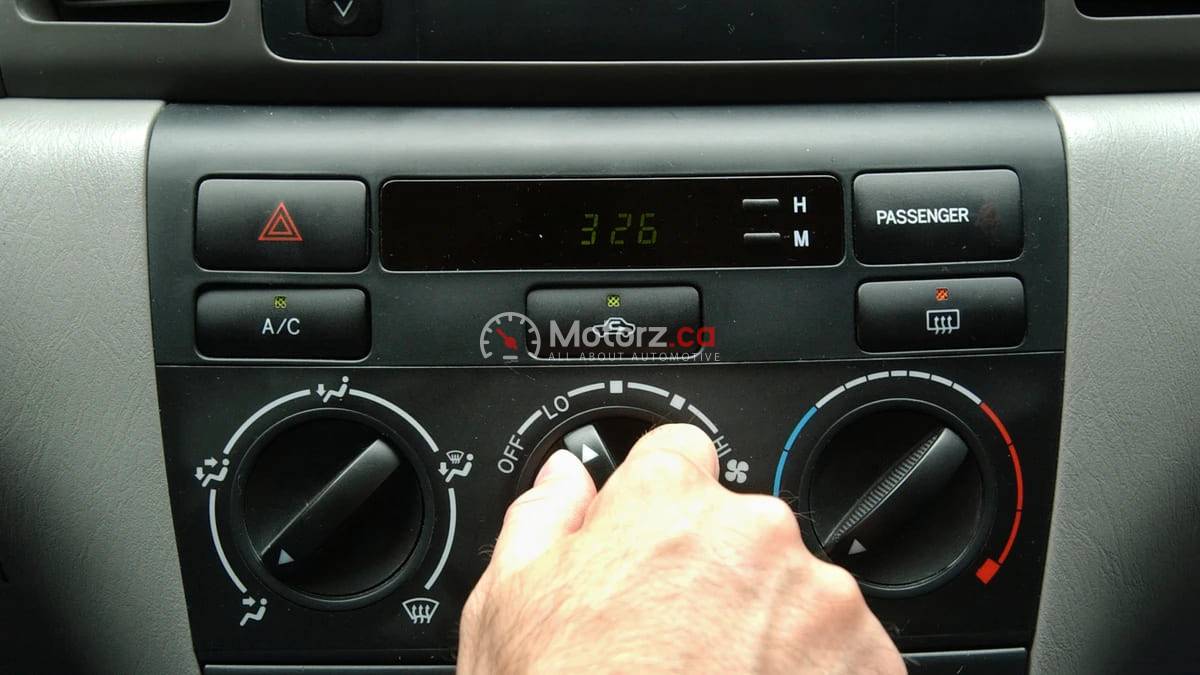
There is nothing Car AC on the Fritz like the feeling of stepping into a scorching car after a long day, hitting the “Max AC” button, and being greeted by… a blast of lukewarm air. In the middle of a Canadian summer, a functioning Air Conditioning (AC) system isn’t just a luxury; it is a vital safety feature that prevents driver fatigue and heat exhaustion.
In the world of “The Corner Wrench,” we see an influx of sweating, frustrated drivers every time the thermometer hits 25 Celsius. Most people assume that a warm AC system just needs a “quick top-up” of refrigerant, but the reality of modern automotive climate control is much more complex. In 2026, with the introduction of new, environmentally friendly refrigerants and high-tech variable displacement compressors, your AC system is a precision machine that requires a delicate touch.
At Motorz, we want to help you understand what is happening behind your dashboard. Today, Lorraine Explains why your AC might be failing, which “hacks” actually work, and how to maintain your climate control system so you never have to drive in a portable sauna again.
How Your Car AC on the Fritz Works
To fix the cold, you first have to understand the heat. A common misconception is that your AC “creates” cold air. In reality, it removes heat from the cabin and dumps it outside.
The Refrigerant Cycle
Your system uses a chemical called refrigerant (like R-134a or the newer R-1234yf). The process begins with the AC Compressor, which squeezes the refrigerant into a high-pressure gas. This gas travels to the Condenser (the mini-radiator at the front of your car), where it sheds heat and turns into a liquid.
The Cold Zone
The liquid then passes through an expansion valve into the Evaporator, located deep inside your dashboard. As it expands, it becomes incredibly cold. Your blower motor pushes cabin air across this cold evaporator, and the heat in your cabin is absorbed by the refrigerant. The cycle then repeats. If any one of these components fails, the heat stays inside with you.
Common Culprits: Why Your AC is Blowing Warm Air
If you are currently sweating through your shirt, one of these four issues is likely the cause.
Refrigerant Leaks
The most common problem is a lack of refrigerant. Unlike your home refrigerator, which has solid copper lines, your car uses flexible rubber hoses and O-rings that vibrate constantly. Over time, these seals dry out and develop microscopic leaks. Because the system is under pressure, even a pinhole leak will eventually drain the system.
A Failing Compressor
The compressor is the heart of the system. If you turn on the AC and don’t hear a “click” from the engine bay, or if you hear a loud screeching or grinding noise, the compressor may have seized. This is often the most expensive repair in the AC system, frequently caused by a lack of lubrication (the oil is carried by the refrigerant).
The Clogged Condenser
The condenser sits right at the front of your vehicle, making it a magnet for bugs, road salt, and debris. If the fins are clogged, the refrigerant cannot shed its heat. This often results in an AC system that works fine at highway speeds (where there is lots of airflow) but blows warm air the moment you stop at a red light.
Electrical and Sensor Failures
In 2026, your AC is controlled by sensors that monitor cabin temperature, humidity, and even the sun’s position. A faulty “blend door actuator”—the little motor that moves the flaps inside your vents—can get stuck, mixing cold air with hot air from the heater core and leaving you with a lukewarm breeze.
The DIY Myth: Why “Recharge Kits” Can Be Dangerous
You have seen them in every auto parts store: a can of refrigerant with a plastic gauge. While tempting, these “quick fixes” can lead to much larger bills at “The Corner Wrench.”
The Danger of Overcharging
More is not better when it comes to AC. Modern systems are sensitive to the exact gram. If you add too much refrigerant, you increase the pressure to dangerous levels, which can blow out seals or “slug” the compressor with liquid, destroying it instantly.
The Problem with “Stop-Leak”
Many of these DIY kits contain a sealant designed to plug holes. While it might stop a tiny leak, it can also clog the tiny passages in your expansion valve and evaporator. Most professional mechanics will refuse to work on a system that has “stop-leak” in it because it can contaminate and damage their expensive recovery machines.
Maintenance Tips: Keeping the Cold Air Flowing
Prevention is the best way to avoid a summer meltdown. Here is how the pros keep their systems running for years.
The “Winter Run” Hack
One of the best things you can do for your AC is to run it during the winter. You don’t have to turn it to “Blue”—simply using your defroster usually engages the AC compressor to dehumidify the air. Running the system once a week for ten minutes keeps the internal seals lubricated and prevents them from drying out and leaking.
Change the Cabin Air Filter
If your AC feels weak, the problem might not be the refrigerant; it might be a lack of airflow. A clogged cabin air filter (usually found behind the glove box) can restrict air so much that the evaporator actually freezes over into a block of ice. Replace this filter every 20,000 kilometers for optimal performance.
Keep the Condenser Clean
Next time you wash your car, take a moment to spray water through the front grille. Removing the layer of “bug cemetery” from the condenser fins will help the system shed heat much more efficiently, especially during those humid Montreal or Toronto afternoons.
Know When to Call a Pro
At Motorz, we are all for a bit of DIY, but the AC system is one place where professional tools make a huge difference.
Check the airflow: Start with the cabin filter; it is the easiest and cheapest fix.
Listen for the click: No sound usually means an electrical issue or a total lack of refrigerant.
Smell the vents: A musty smell usually means mold on the evaporator, which requires a specialized cleaning foam.
Professional Vacuum: If your system has been opened or is completely empty, a pro must “pull a vacuum” on the system to remove moisture before refilling it. Moisture in an AC system turns into acid and eats your components from the inside out.
Don’t spend your summer driving with the windows down and the sweat pouring. A well-maintained AC system is your best friend during a Canadian heatwave. Keep your fluids topped up, your filters clean, and your compressor running, and you will stay cool no matter what the weather report says.