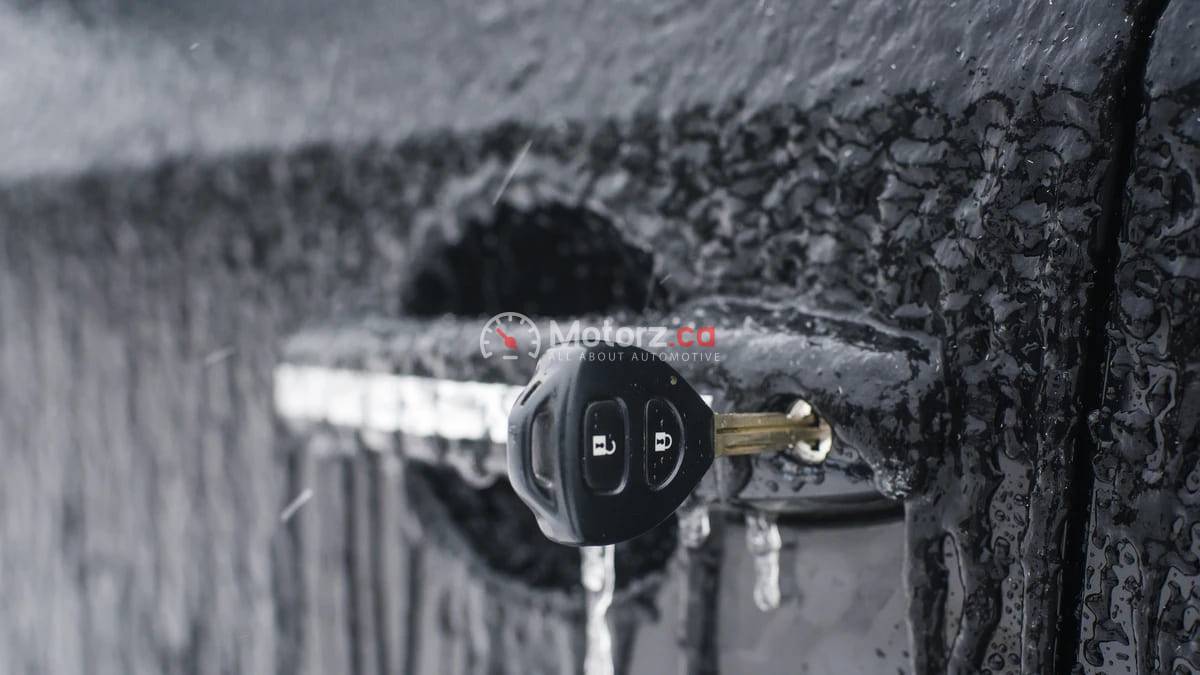
It is a scenario that Car’s Physical Key out in parking lots across Canada every winter. You walk up to your car, press the “unlock” button on your key fob, and… nothing. You press it again, harder this time. Still nothing. Perhaps your fob battery has finally died, or maybe your car’s 12-volt battery has succumbed to a deep freeze. No problem, you think, as you pull the hidden emergency key out of your fob.
But when you slide that metal key into the door lock cylinder and try to turn it, it won’t budge. It feels like it is welded shut. You are officially locked out of your own vehicle, not because of a computer glitch, but because of a tiny, neglected mechanical cylinder.
In the world of “The Corner Wrench,” we call this “digital dependency.” In 2026, we are so used to proximity sensors and smartphone apps that we have completely forgotten that our cars still have physical lock cylinders. Because we never use them, they sit exposed to road salt, dust, and moisture for years until they seize up entirely.
Today, Motorz is shining a light on the most overlooked maintenance item on your vehicle. We are going to show you how to keep those “emergency” locks functional, why traditional oils can actually ruin them, and how to save yourself from a 500 towing and locksmith bill.
The Car’s Physical Key of a Seized Lock: Why They Fail
Your car’s door lock is a precision instrument made of small brass Canada every winter and springs. These components have incredibly tight tolerances.
The Road Salt Injection
In regions like Ontario, Quebec, and the Maritimes, road salt is pulverized into a fine mist that hangs in the air. This mist finds its way into the key slot. Over time, the water evaporates, leaving behind salt crystals that act like glue. When combined with road grime and aluminum oxidation, the internal wafers become stuck in place, making it impossible for the key to slide in or turn.
The Lack of Exercise
Mechanical parts need movement to stay healthy. Because we use remote entry 99 percent of the time, the lock cylinders never get “exercised.” This lack of movement allows the internal springs to lose their tension and the lubrication to dry out or attract dirt, turning it into a thick, abrasive paste.
The Maintenance Routine: Keeping the Entry Clear
At “The Corner Wrench,” we recommend a simple “lock audit” twice a year—once in the spring and once in the autumn.
Step 1: The Mechanical Test
Don’t wait for an emergency. Every few months, take the physical key out of your fob and manually lock and unlock every door that has a keyhole (don’t forget the tailgate or trunk). If you feel even a slight resistance or “grittiness,” the lock is already starting to seize.
Step 2: Choosing the Right Lubricant (The Dry Rule)
This is the most critical advice we can give: Never use WD-40 or heavy grease in a door lock. While these products provide temporary relief, they are “wet” lubricants. They act as a magnet for dust and pocket lint. Over time, they create a “sludge” that will permanently seize the lock.
The Solution: Use a dry graphite lubricant or a specialized PTFE (Teflon) spray. These are “dry” to the touch and provide a slippery surface that won’t attract grit.
How to Revive a Sticky Lock Without Breaking the Key
If you have already discovered a stuck lock, do not try to force the key with a pair of pliers. You will snap the key off inside the cylinder, turning a maintenance task into an expensive extraction.
The Gentle Flush
If the lock is gritty, use a dedicated electrical contact cleaner or a “lock de-icer” to flush out the debris. Spray it into the keyhole and then gently slide the key in and out repeatedly (the “in-and-out” motion is better than the “twisting” motion for clearing debris). Once the key moves smoothly, follow up with a puff of dry graphite.
Dealing with Ice
If the lock is frozen rather than seized, do not use a lighter to heat your key; modern keys have sensitive transponder chips inside that can be destroyed by heat. Instead, use a commercial de-icer spray or hold your thumb over the keyhole for a minute to transfer body heat into the cylinder.
The 2026 Reality: Hidden Locks and Proximity Fobs
Manufacturers are making locks harder to find to improve the “clean” look of modern cars.
The Hidden Cap
On many 2026 models, the keyhole is hidden behind a plastic cap on the door handle. You often have to use the physical key to “pop” this cap off to access the cylinder. Check your owner’s manual now to find out where yours is located. If that plastic cap hasn’t been moved in five years, it might be stuck, too.
The Trunk/Tailgate Cylinder
Many SUVs and trucks have a manual override for the tailgate. This is often located in an area that gets “salt-blasted” by the rear tires. This is usually the first lock to fail. At Motorz, we suggest giving this lock extra attention during your spring cleaning.
Your Lock Maintenance Checklist
A little bit of foresight can prevent a massive headache. To keep your “emergency” entry working:
Locate your physical locks: Know where they are hidden before you need them.
Exercise the keys: Manually turn the locks at every oil change.
Use Dry Lubricants: Graphite or PTFE only—no WD-40 or oil.
Clean the key: If your physical key is covered in pocket lint, wipe it off before inserting it into the lock.
At Motorz, we believe in being prepared for the “what if.” Your car might be a high-tech marvel, but when the battery dies, it is that 100-year-old mechanical technology that will get you home. Keep the “snakes” out of your locks and keep your entry clear.