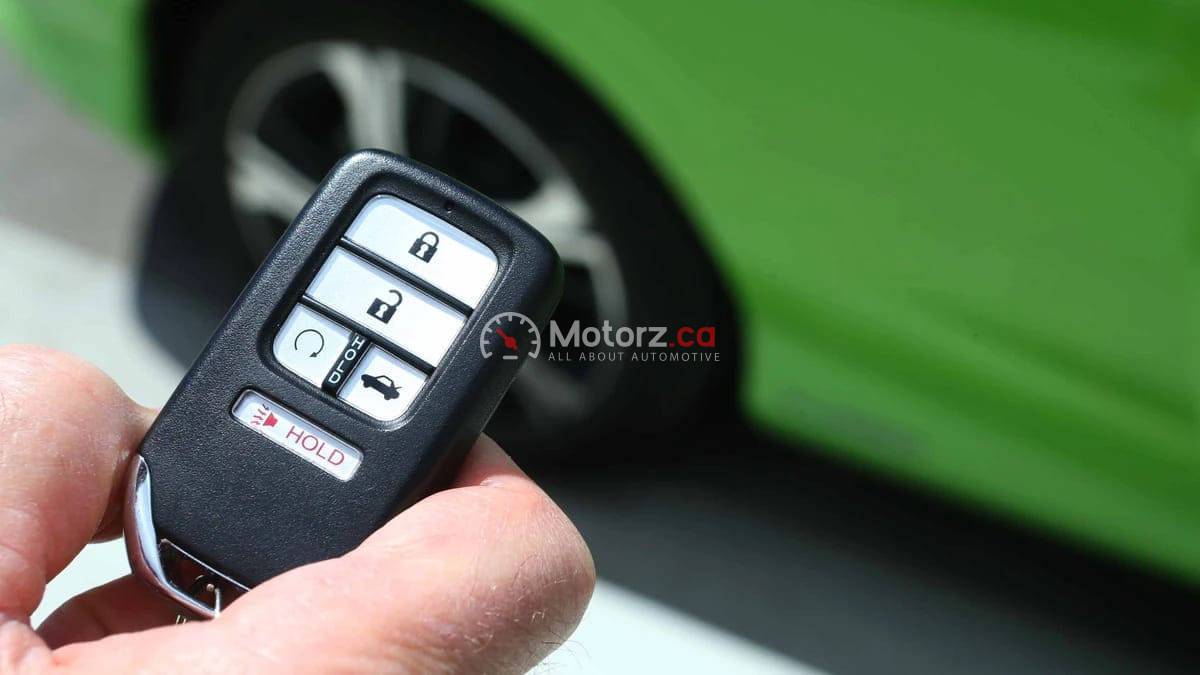
It starts with a viral Car Key Fob in the Freezer or a tip from a well-meaning neighbor. The advice sounds logical at first: “To protect your car from high-tech thieves using relay attacks, just toss your key fob in the freezer at night.” The idea is that the thick metal walls and insulation of your kitchen freezer will act as a shield, blocking the radio signals that car thieves use to unlock and steal modern vehicles right from your driveway.
In the world of “The Corner Wrench,” we have seen some creative DIY security solutions, but this is one “hack” that can leave you stranded with a very expensive repair bill. While the intention is to save your car, the execution can destroy the delicate electronics inside your remote. In 2026, a replacement key fob for a modern vehicle can cost anywhere from 300 to 600 units once you factor in the hardware and the professional programming required.
At Motorz, we want you to keep your car secure without sacrificing your hardware. Today, Lorraine Explains why the freezer is the worst place for your keys, the science of what happens to batteries in the cold, and the much better ways to protect yourself from relay theft.
The Car Key Fob in the Freezer: What Freezing Does to Electronics
Modern key fobs are not just pieces of plastic; they are sophisticated, low-power radio transmitters. They contain a circuit board, a microchip, and a lithium-ion coin cell battery. None of these components are designed to live in a sub-zero environment.
Condensation: The Silent Destroyer
The biggest threat isn’t actually the cold itself—it is the moisture. When you take a cold key fob out of the freezer and into a warm house, condensation forms instantly inside the plastic housing. This moisture settles directly onto the circuit board. Over time, this leads to corrosion or a short circuit. One morning, you will go to start your car, and the fob will be completely dead due to water damage.
Battery Chemical Failure
Most key fobs use CR2032 or similar lithium-ion batteries. Extreme cold slows down the chemical reaction inside these cells. While the battery might “recover” once it warms up, repeated freezing and thawing cycles significantly shorten the total lifespan of the battery. You may find yourself replacing your key fob battery every month instead of every two years.
Brittle Plastic and Sealing
The plastic casing and the rubber buttons on your fob are designed to withstand a wide range of temperatures, but the extreme, dry cold of a freezer can make them brittle. Pressing a button on a “frozen” fob can cause the plastic internal clips to snap or the rubber seal to crack, compromising the water resistance of the device.
Understanding Relay Attacks: The Myth of the Freezer Shield
The reason people put their keys in the freezer is to create a “Faraday Cage”—a container that blocks electromagnetic fields.
Does the Freezer Actually Block Signals?
The answer is: sometimes, but not reliably. While a freezer has metal walls, it isn’t designed to be a signal-tight seal. Radio waves can often “leak” through the rubber door gaskets or the plastic trim. If your car is parked close to the kitchen, a thief with a high-powered relay amplifier might still be able to pick up the signal through the freezer door.
The Inconvenience Factor
Aside from the risk of damaging the fob, putting your keys in the freezer is simply impractical. If you are in a rush in the morning, the last thing you want to do is hunt through the frozen peas to find your car keys. Security is only effective if it is easy to maintain; once the novelty wears off, most people stop doing it, leaving their car vulnerable anyway.
Smarter Alternatives: How to Actually Prevent Relay Theft
If the freezer is a bad idea, how do you stop a thief from “cloning” your signal? You need a solution that blocks the signal without damaging the electronics.
The Faraday Bag or Pouch
In 2026, the most reliable and affordable solution is a dedicated Faraday bag. These are small pouches lined with metallic mesh (usually silver or copper) designed specifically to block RF (Radio Frequency) signals. They are cheap, portable, and won’t cause condensation or battery damage. Simply drop your keys in the pouch when you walk in the door.
The “Sleeper” Key Fob
Many car manufacturers, including Toyota, BMW, and Ford, have introduced “motion-sensing” key fobs in their 2024 to 2026 models. These fobs go into a “sleep mode” if they haven’t moved for a few minutes. If the fob isn’t moving, it stops transmitting a signal, making a relay attack impossible. Check your owner’s manual to see if your vehicle has this feature.
Turning Off the Signal Manually
Some fobs allow you to manually disable the proximity signal. For example, on many Toyota and Lexus fobs, you can hold the “Lock” button and press “Unlock” twice. The LED will flash, indicating the signal is off. This is a 100 percent effective and free way to secure your car at night.
What to Do If You’ve Already Been Freezing Your Keys
If you have been following the freezer advice and are worried about your fob, don’t panic. There are steps you can take to mitigate the damage.
Stop Immediately: Move your keys to a dry, room-temperature location.
Remove the Battery: Open the fob and remove the coin cell battery. Check for any signs of white powdery residue (corrosion) or moisture.
Dry It Out: If you suspect moisture is inside, place the opened fob (without the battery) in a container with silica gel packets for 24 hours.
Replace the Battery: Put in a fresh, high-quality battery. If the fob still works consistently, you likely caught it in time.
Protect Your Car, Not Just Your Signal
At Motorz, we are all about “The Corner Wrench” philosophy: the simplest fix is often the best, but it has to be the right fix. Putting your key fob in the freezer is a classic example of a “solution” that creates more problems than it solves.
Freezers cause condensation that rots the internal circuit board of your remote.
Extreme cold kills battery life and makes the plastic casing brittle.
Freezers are not reliable Faraday cages and can still leak signals.
Use a Faraday pouch or a metal tin (like a dry cookie tin) as a safe, dry alternative.
Check for built-in security features like sleep mode on your 2026 vehicle.
Your car is an investment, and your key fob is the “handshake” that makes it work. Treat your keys with the same care you treat your smartphone. Keep them dry, keep them at room temperature, and use modern security tools to keep the thieves at bay.