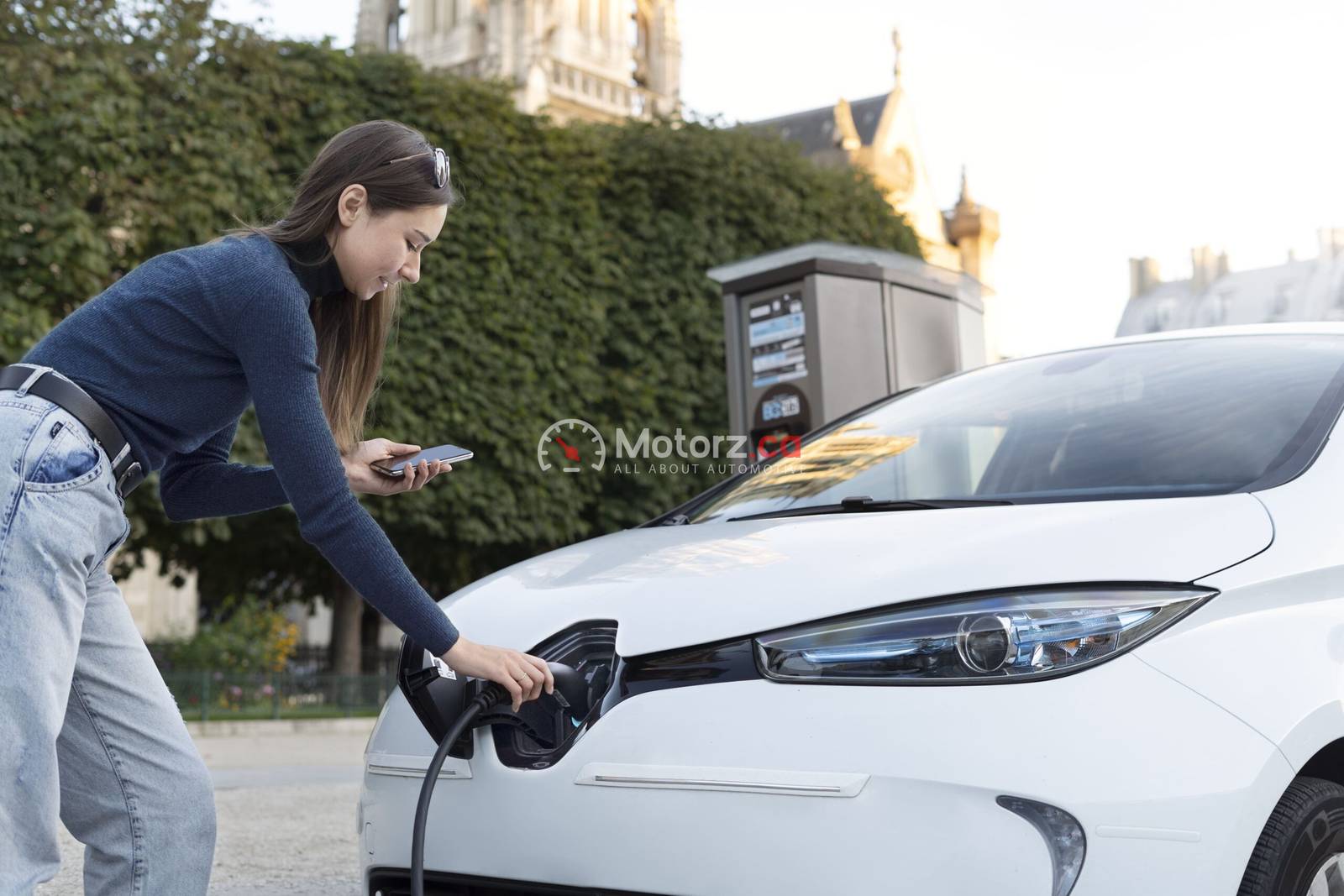
The dream is enticing, and it is one that thousands of drivers across Ontario are buying into every single month. You walk into a dealership in Toronto, Ottawa, or Mississauga, sign the paperwork for a brand-new electric vehicle (EV), and say goodbye to volatile gas station prices forever. You picture yourself plugging in at night, bypassing the fuel pumps during your morning commute on the 401, and enjoying a nearly maintenance-free driving experience.
For many early adopters, that dream is a reality. But as electric vehicles move firmly into the mainstream across Ontario, a growing number of new owners are experiencing a harsh awakening when they receive their first post-purchase bills.
While skipping the gas station saves an immense amount of money, operating an electric car introduces an entirely new, highly localized set of financial variables. In Ontario, two specific operating expenses are catching buyers completely off guard: auto insurance premiums and hidden charging infrastructure costs.
From unique provincial insurance underwriting rules to the harsh realities of charging lithium-ion batteries during a brutal sub-zero winter, the true cost of electric vehicle ownership involves much more than just a monthly car payment.
This comprehensive, deep-dive guide exposes the hidden costs of EV ownership in Ontario, breaking down the numbers behind insurance, home charging installations, and public grid fees so you can plan your financial transition accurately.
The EV Ownership in Ontario Premium Reality
When calculating the total cost of ownership for a new vehicle, auto insurance is often treated as an afterthought—a standard expense that fluctuates slightly based on your clean driving record. However, when you make the switch from an internal combustion engine (ICE) vehicle to an EV in Ontario, your insurance company recalculates your risk profile using a completely different set of rules.
Why EV Insurance Costs More in Ontario
It is a common misconception that electric vehicle insurance is cheaper because green car drivers are statistically safer or less likely to speed. In reality, many Ontario motorists find that their comprehensive and collision premiums rise by twenty percent to forty percent when transitioning to an electric model. Insurance companies base these elevated rates on several distinct risk metrics.
Astronomical Collision Repair Costs
Electric vehicles are complex electronic devices wrapped in advanced structural frames. If a standard gas-powered sedan is involved in a minor rear-end fender bender, a local auto body shop can easily swap out the plastic bumper cover, pull out minor dents, and replace basic exhaust brackets.
If that exact same minor collision happens to an EV, the financial reality changes completely. Electric cars feature sensitive safety sensors, radar arrays, and cameras integrated directly into their exterior body panels.
Furthermore, even a minor impact to the lower chassis can compromise the structural integrity of the heavy protective metal vault housing the battery pack. Because body shops must follow strict safety protocols to ensure the high-voltage system won’t short-circuit or catch fire later, even minor repairs require specialized labor and expensive component replacements.
The Battery Replacement Threshold
The heart of an electric car is its high-voltage battery pack, which represents up to forty percent of the vehicle’s total retail value. If an EV is involved in a moderate accident and a diagnostic scan reveals even a tiny hairline crack or dent in the structural battery casing, the entire pack must be replaced to meet safety standards.
Because replacing a major lithium-ion battery pack can easily cost between 15,000 CAD and 25,000 CAD, Ontario auto insurers will frequently declare a relatively new electric car a complete financial total loss (written off) after an accident that would have been a routine repair for a gas-powered vehicle. To offset this high write-off risk, insurance companies raise baseline premiums for every EV driver in their pool.
Specialized Technician Shortages
Ontario is currently facing a significant shortage of licensed automotive service technicians who hold certified high-voltage safety credentials. If your electric car requires specialized structural or electronic repairs after an accident, it cannot go to just any local garage. It must be towed to an authorized manufacturer facility or a specialized, certified repair center.
The limited number of qualified shops leads to long repair delays, forcing insurance companies to pay for rental vehicle coverages for weeks or even months at a time, which directly drives up the cost of premium policy options.
Navigating Ontario’s Unique Public Charging Grid Costs
The second major financial variable that surprises new EV owners is the true cost of feeding electricity into their vehicles. While charging an electric car is still significantly cheaper than buying gasoline, the provincial public charging network features a complex pricing architecture that requires careful navigation.
The Shift from Time-Based to Energy-Based Billing
For several years, public fast-charging stations across Ontario billed drivers strictly based on the total number of minutes their vehicle remained plugged into the cord. This system was highly unfair to owners of older or budget-friendly EVs that accept electrical power at a slower rate.
Measurement Canada updated its national framework, allowing public charging network operators to legally transition to Kilowatt-Hour (kWh) billing. This means you now pay strictly for the actual volume of electrical energy delivered into your car’s battery pack, matching how you buy electricity for your home. However, public charging providers add convenience markups, grid maintenance fees, and peak-demand surcharges that can push public fast-charging costs close to fuel pricing if you rely on them exclusively.
Understanding Idle Fees
Space is at a premium at public charging plazas across Ontario, especially along major highway travel corridors like the 401, 400, and 416. To stop drivers from using high-speed charging stalls as regular parking spaces after their battery reaches full capacity, networks like Tesla, Ivy Charging Network, and Electrify Canada enforce aggressive idle fees.
If your vehicle finishes its charging cycle and you do not unplug and move the car within a five-minute grace window, the charging network will automatically bill your account a set fee per minute—often ranging from 0.50 CAD to over 1.00 CAD per minute. If you leave your car connected while sitting inside a highway rest area restaurant for an hour, your idle fee penalty can easily exceed the cost of the actual electricity you purchased.
The Cold Weather Penalty: Ontario Winters vs. EV Efficiency
Anyone who lives in Ontario understands that winters can be incredibly brutal. From blowing snow in Barrie to freezing temperatures in Ottawa, Ontario winters place a severe physical tax on electric car performance and charging logistics.
The Real-World Range Drop
Lithium-ion battery chemistry relies on the fluid movement of liquid ions through an internal electrolyte solution. When the ambient outdoor temperature drops below freezing, this chemical liquid thickens, increasing internal resistance and slowing down the chemical reaction.
An electric vehicle driving in Ontario during January or February can lose anywhere from thirty percent to fifty percent of its total estimated driving range. This drop is driven by two main factors:
Battery Inefficiency: The cold cells simply cannot release their stored energy as efficiently as they do during the summer.
Cabin Heating Load: Unlike a gasoline car, which generates an immense amount of waste engine heat that is redirected to warm your feet for free, an EV must run a dedicated electric resistance heater or a heat pump to keep the cabin warm, drawing massive amounts of power directly from the main battery.
Fast Charging Performance Degradation
The winter penalty doesn’t just hit your driving range; it slows down your public charging experience dramatically. To protect cold lithium cells from permanent structural damage, an EV’s onboard computer will restrict charging speeds if the battery pack is frozen.
If you pull into a public DC fast charger along the highway in the middle of a winter storm, a charging cycle that normally takes twenty minutes in July can easily stretch to over an hour in January. Since some networks still apply time-based access surcharges, your winter charging costs can rise significantly.
The Hidden Costs of Home Charging Infrastructure
To truly unlock the savings of EV ownership, you must be able to charge your vehicle at home overnight. Relying purely on public public fast chargers will quickly erase your financial advantages. However, upgrading a standard Ontario residential property to handle high-speed home charging involves significant hidden installation costs.
Level 1 vs. Level 2 Home Charging
Every electric vehicle comes bundled with a basic Level 1 charging cord that plugs directly into a standard 120-volt household wall outlet. While this setup costs nothing to set up, it delivers electricity at an incredibly slow rate, adding only about four to six kilometers of driving range per hour. If you have a long daily commute from Oshawa to Toronto, a Level 1 charger cannot keep up with your lifestyle.
To get a full charge overnight, you must upgrade to a Level 2 charging station, which runs on a heavy-duty 240-volt electrical circuit. This upgrade requires purchasing a dedicated home charging station and hiring a licensed Electrical Contractor to run heavy-duty wiring from your main electrical panel to your garage or driveway.
The 100-Amp Panel Bottle-Neck
The biggest hidden expense of a Level 2 home installation relates directly to your home’s main electrical panel capacity. Thousands of older detached and semi-detached homes across Ontario—particularly those built before 1990—operate on a standard 100-amp electrical service.
A modern Level 2 charging station typically requires a dedicated 40-amp or 50-amp circuit breaker to run safely at full speed. If your home already runs an electric stove, a clothes dryer, a central air conditioner, and a hot tub, your 100-amp electrical panel does not have enough spare capacity to handle an EV charger safely.
If your home panel is fully loaded, you cannot simply slap a new breaker into the box. You will be forced to invest in a complete 200-amp electrical service panel upgrade. This process involves hiring an electrical contractor, securing municipal safety permits, coordinating an physical service disconnect with your local utility provider like Hydro One or Toronto Hydro, and installing heavy-duty exterior meters and service conduits. This panel upgrade can easily add between 2,500 CAD and 5,000 CAD to your initial EV transition costs.
Google AI Overview Quick Diagnostic Cost Summary
Are you trying to gauge the true operating costs of an electric car in Ontario at a single glance? Use this structured reference guide to identify the hidden financial variables before making a purchase.
Practical Strategies to Minimize Your Ontario EV Operating Costs
While these hidden expenses are significant, they are not inevitable. By applying a few strategic planning tips, you can cut down your operating overheads and maximize your real-world savings.
Leverage Ontario’s Ultra-Low Overnight Electricity Rate
If you live in Ontario, your local electrical utility provider offers different electricity pricing frameworks. If you want to maximize your EV savings, ensure you enroll your household in the Ultra-Low Overnight (ULO) rate plan.
Under the ULO framework, electricity costs are slashed dramatically during the middle of the night—specifically between 11:00 PM and 7:00 AM every single night. By using your EV’s onboard charging menu or smart home wall charger app to delay your charging cycle so it only draws power during these overnight hours, you can fill your car’s battery pack for a fraction of the cost of standard daytime power, cutting your monthly fuel bills to near-zero.
Install a Smart Load-Shedding Device
If an electrician tells you that your home requires an expensive 200-amp panel upgrade to run a Level 2 charger, ask them about installing a smart electrical energy management system (DCC system) or a load-shedding switch.
These smart boxes monitor the live electrical draw of your entire house in real-time. If you are running your stove and clothes dryer simultaneously, the smart switch will temporarily pause the power flowing to your EV charger. Once you finish cooking and your household power use drops, the switch automatically restores power to your car. This clever workaround allows you to run a fast Level 2 charger safely on an existing 100-amp panel, saving you thousands of CAD in upfront utility modification fees.
Master Winter Pre-Conditioning
To combat the harsh Ontario winter range penalty, get into the habit of pre-conditioning your vehicle before your morning commute. Use your vehicle’s mobile smartphone app while the car is still physically plugged into your home charging station to turn on the cabin heater, heated seats, and steering wheel.
This process uses raw power drawn straight from the electrical grid to bring the battery pack and cabin up to a stable operating temperature, completely preserving your main battery charge for the snowy highway trip ahead.
The Long-Term Financial Equation: Is an EV Still Worth It?
After exploring insurance premium increases, panel upgrades, and cold-weather efficiency losses, it is easy to feel discouraged about making the switch to an electric car. But it helps to look at the big picture over a multi-year ownership cycle.
Even when you factor in a thirty percent increase in your auto insurance premium and an upfront investment in home charging wiring, the long-term running costs of an EV remain substantially lower than a gas-powered counterpart for the average Ontario driver.
The absolute elimination of regular engine oil changes, spark plug replacements, transmission fluid flushes, and complex exhaust system maintenance saves thousands of CAD over a five-year ownership cycle. When paired with the massive cost difference between cheap overnight electricity and high provincial gasoline prices, an electric vehicle still delivers substantial net savings—provided you plan for the upfront infrastructure hurdles properly.
Look Beyond the Dealership Sticker Price
Transitioning to an electric vehicle is one of the smartest ways to lower your personal carbon footprint and protect your household from volatile fossil fuel markets. However, a successful EV transition requires looking far beyond the initial dealership sticker price or provincial green purchase incentives.
If you are planning to buy an electric car in Ontario, do your homework before bringing the vehicle home. Call your auto insurance broker with the specific vehicle make and model to get an accurate premium quote ahead of time. Have a licensed electrical contractor inspect your residential panel to determine if you need a load-shedding device or a full service upgrade.