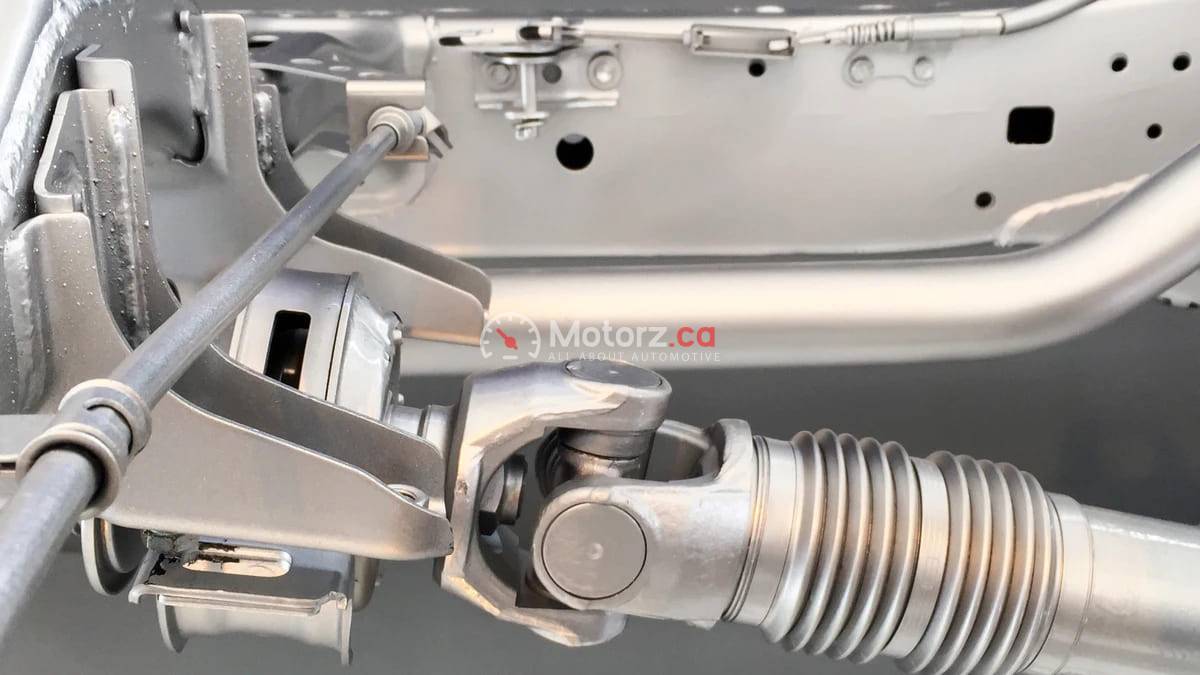
It is one of the most distinct and CV Joint Maintenance in the automotive world: a rhythmic “click-click-click” that gets louder every time you turn the steering wheel. You might feel a slight shudder through the floorboards or notice a strange grease splatter on the inside of your front rims. While it might seem like a minor annoyance, these are the early warning signs that your vehicle’s drivetrain is about to “give you the shaft”—literally.
In the world of “The Corner Wrench,” we deal with drive axles and CV (Constant Velocity) joints daily. These components are the unsung heroes of your vehicle, responsible for transferring power from the transmission to the wheels while allowing your suspension to bounce and your wheels to turn. In 2026, with the high torque output of modern electric vehicles (EVs) and turbocharged engines, these shafts are under more stress than ever before.
At Motorz, we want to keep you moving forward without the drama of a roadside breakdown. Today, Lorraine Explains how your drive axles work, how to spot a failing CV joint before it snaps, and the simple maintenance tricks that will help you avoid “getting the shaft” at the repair shop.
Understanding the CV Joint Maintenance: The Power Bridge
To keep your drivetrain healthy, you first need to understand the anatomy of a drive axle. In most front-wheel-drive and all-wheel-drive vehicles, the power travels through a CV Axle Shaft.
What Is a CV Joint?
A Constant Velocity (CV) joint is a marvelous piece of engineering. Unlike a standard U-joint found on old trucks, a CV joint allows the axle to bend in any direction while maintaining a constant rotating speed. This is essential for front-wheel-drive cars because the front wheels must be able to move up and down over bumps and turn left and right for steering—all while receiving power from the engine.
The Inner and Outer Joints
Every axle shaft typically has two joints:
The Inner Joint: Located closest to the transmission. It primarily handles the up-and-back “plunging” motion as your suspension compresses.
The Outer Joint: Located behind the wheel hub. This joint handles the extreme angles required for steering. It is usually the first to fail because it undergoes the most physical stress.
The CV Boot: The 10-Unit Part That Saves a 500-Unit Axle
If there is one thing we stress at “The Corner Wrench,” it is the importance of the CV boot. This is the flexible, ribbed rubber “accordion” sleeve that covers the CV joint.
Keeping the Good Stuff In
The CV joint is packed with a very specific, high-pressure molybdenum grease. The boot’s primary job is to keep this grease sealed inside the joint. Without lubrication, the metal bearings inside the joint will overheat and grind themselves to pieces within a few hundred kilometers.
Keeping the Bad Stuff Out
The boot also acts as a shield. It keeps road salt, sand, water, and dirt away from the precision bearings. In the Canadian climate, road salt is the number one “axle killer.” Once a boot tears, salt spray enters the joint and acts like sandpaper, destroying the smooth surfaces of the bearings almost instantly.
Warning Signs: How to Tell Your Axle Is Failing
Your car will almost always give you a heads-up before an axle completely snaps. Learning to recognize these symptoms can be the difference between a planned repair and an emergency tow.
The “Click of Death”
The most common symptom of a worn outer CV joint is a loud clicking noise that occurs when you turn the steering wheel while accelerating. If the clicking disappears when you are driving straight, the joint is likely worn but hasn’t failed yet.
The High-Speed Shudder
If you feel a vibration or shudder during acceleration at highway speeds (80 to 110 kilometers per hour), your inner CV joint might be failing. Because the inner joint handles the “plunge” of the suspension, wear here causes the axle to become unbalanced, leading to a vibration that feels like a tire is out of balance.
The Grease Splatter
Next time you wash your car, take a look at the inside of your front wheels. If you see thick, dark green or black grease sprayed in a circle around the wheel well, your CV boot has torn. Centrifugal force is spinning the grease out of the joint. At this stage, you might be able to save the axle by simply replacing the boot and repacking it with grease, but you must act fast.
Maintenance Tips: Avoiding the Costly Replacement
Replacing an entire axle assembly in 2026 can be expensive, especially with the labor rates at many dealerships. Here is how to extend the life of your shafts.
Inspect the Boots Regularly
Every time you have your oil changed or your tires rotated, ask your technician to physically grab the CV boots and check for cracks or small “pinhole” leaks. Rubber naturally dry-rots over time, and catching a crack before it becomes a tear can save you hundreds of units.
Be Gentle on the Steering
Full-lock turns (turning the wheel until it hits the “stop”) put the maximum amount of stress on the CV joint. If you are maneuvering in a tight parking lot, try to back off the steering wheel just a fraction of a centimeter from the full-lock position. This reduces the pressure on the bearings and the tension on the rubber boot.
Watch Out for “Lift Kits” and Modifications
If you modify your vehicle’s suspension by lifting or lowering it significantly, you are changing the angle at which the axles operate. This “extreme angle” causes the joints to run hotter and the boots to wear out much faster. If you modify your ride, expect to replace your axles more frequently.
Stay Ahead of the Drivetrain Drama
At Motorz, we believe that “getting the shaft” should only happen when you’re talking about a healthy, well-greased drivetrain. By staying proactive, you keep your repair costs down and your safety levels high.
Listen for the click: It is the primary indicator of an outer joint failure.
Check for grease: A torn boot is the beginning of the end for any axle.
Don’t ignore vibrations: Inner joint issues can lead to transmission damage if left unchecked.
Protect the boot: It is the most important defensive layer in your drivetrain.
Whether you are driving a high-torque EV or a reliable daily commuter, your axles are the bridge between your engine’s power and the road beneath you. Treat them with respect, keep them clean, and they will keep you rolling for years to come.