We have all been Car with a Low Battery. You are already running five minutes late, you hop into the driver’s seat, turn the key or push the start button, and… nothing. Or perhaps you hear that dreaded, rhythmic clicking sound—the universal language of a dying car battery. In the high-stakes world of 2026, where our vehicles are more reliant on electronics than ever, a low battery can feel like a total roadblock.
But a weak battery doesn’t always mean you are stuck waiting for a tow truck. Whether you are dealing with the aftermath of a Canadian polar vortex or you accidentally left an interior light on overnight, there are several “pro-level” techniques to coax an engine to life when the voltage is low.
In this comprehensive guide, we will cover everything from the “cycling” trick and the science of “jump-starting” to modern portable power solutions. We will also help you identify the subtle warning signs so you can replace a failing battery before it leaves you stranded in a dark parking lot.
Diagnostics First: Is Your Car with a Low Battery or Completely Dead?
Before you try to start the car, you need to understand the situation. A “low” battery still has some chemical energy left, whereas a “dead” battery has essentially become a heavy paperweight.
The Dashboard Litmus Test
Turn your key to the “On” position without trying to crank the engine. Look at your dashboard lights. Are they bright, or are they flickering and dim? If the lights vanish the moment you try to start the engine, your battery is struggling to provide the “Cold Cranking Amps” (CCA) required to move the heavy internal components of the motor.
The Headlight Check
If you are unsure, turn on your headlights. If they appear yellow and weak instead of a crisp white, your voltage has likely dropped below the 12.4-volt threshold needed for a reliable start. In 2026, many modern cars will display a “Low Battery” warning on the infotainment screen, but older models require this manual detective work.
The “Cycling” Secret: Waking Up the Chemistry
If your battery is just on the edge of Car with a Low Battery, you might be able to start it using a technique known as “cycling” or “priming.”
How to Priming the Battery
Turn off everything: Ensure the radio, air conditioning, seat heaters, and interior lights are all completely off. You need every single milliamp for the starter motor.
Cycle the lights: Turn your headlights on for about 15 to 30 seconds, then turn them off.
Wait: Give it a minute of rest.
The Logic: Drawing a small, steady amount of current actually generates a tiny bit of internal heat within the battery’s lead plates. This heat thaws the chemical reaction just enough to give you one “big” surge of power. It sounds like magic, but it is pure electro-chemistry.
The Proper Jump-Start: A Step-by-Step Safety Protocol
If cycling the battery doesn’t work, you will need an external power source. While jump-starting is a basic automotive skill, doing it incorrectly in 2026 can fry expensive car computers (ECUs).
Step 1: Positioning
Position the “donor” car so the batteries are as close as possible without the vehicles touching. Ensure both engines are off and parking brakes are engaged.
Step 2: The “Red to Dead” Sequence
Follow this specific order to prevent electrical surges:
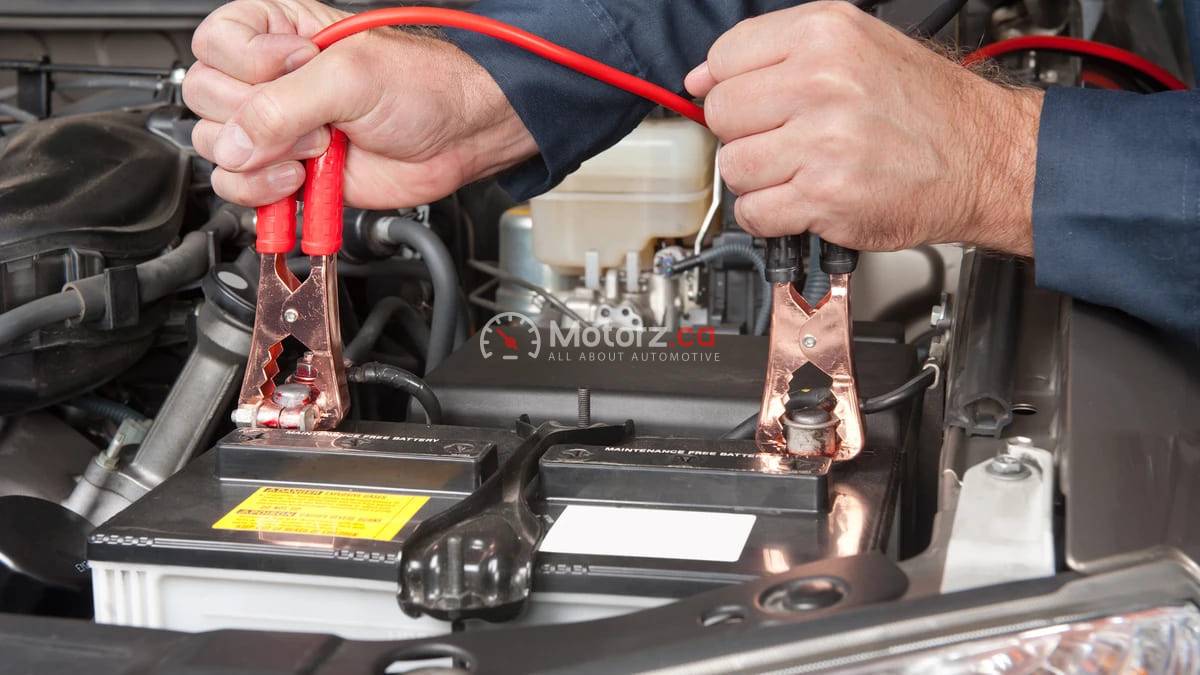
Connect the Red (Positive) clamp to the positive terminal of the dead battery.
Connect the other Red (Positive) clamp to the positive terminal of the good battery.
Connect the Black (Negative) clamp to the negative terminal of the good battery.
The Safety Ground: Connect the final Black (Negative) clamp to an unpainted metal surface on the engine block of the dead car.
Pro Tip: Avoid connecting the final black clamp directly to the negative terminal of the dead battery. This can cause a spark that could ignite hydrogen gas escaping from the battery.
Step 3: The Charge and Crank
Start the donor car and let it run at a high idle for about five minutes. This “trickle charges” the low battery. Finally, try to start the dead car. Once it fires up, remove the cables in the exact reverse order.
The 2026 Alternative: Portable Lithium Jump Starters
If you don’t want to rely on the kindness of strangers, a portable lithium-ion jump starter is the most important tool you can own. These devices have become incredibly powerful in recent years.
Why They are Better
Modern “booster packs” are about the size of a thick smartphone but can deliver 2,000 peak amps. Unlike car-to-car jumping, these packs have built-in “spark-proof” technology and reverse-polarity protection. If you hook them up backwards, the device simply won’t turn on, protecting your car’s sensitive electronics.
Using a Portable Pack
Simply attach the clamps, turn on the device, and wait for the “Ready” green light. These packs are especially useful for owners of Electric Vehicles (EVs) that still use a small 12-volt battery to run the onboard computers. If that 12-volt battery dies, the whole EV is “bricked,” and a portable pack is the easiest way to wake it up.
Starting a Manual Transmission: The “Bump Start”
If you are driving a car with a manual gearbox (a rarity in 2026, but still common among enthusiasts), you have a mechanical advantage. You can use the car’s momentum to turn the engine over instead of the battery.
The Roll-and-Dump Method
You need a downhill slope or a couple of strong friends to push.
Turn the ignition to the “On” position.
Put the car in second gear (first gear is often too jerky).
Keep the clutch depressed while the car gains speed (at least 10 to 15 km/h).
Quickly release (dump) the clutch.
The spinning wheels will force the engine to rotate, usually causing it to fire up instantly. Once it starts, push the clutch back in immediately so you don’t stall.
Post-Start Protocol: Don’t Turn it Off!
Once you get the car started, your job isn’t done. The alternator now has to work overtime to refill that “hole” in the battery’s energy reserve.
Drive for 30 Minutes: Simply idling in the driveway isn’t enough. You need the higher RPMs of a drive to provide a steady charge.
Avoid “Short Trips”: If you turn the car off after only five minutes, there won’t be enough energy to start it a second time.
The “One-Strike” Rule: A battery that has been drained once is permanently weakened. If your battery is more than three years old and has left you stranded, consider this its “retirement notice.” Head straight to a shop to have it load-tested.
Preparation Prevents the “Click”
Dealing with a low battery is a test of patience and technique. By understanding how to cycle the battery, safely jump-start from another vehicle, or use a modern lithium booster, you can turn a potential disaster into a minor delay.
However, the best way to start a car with a low battery is to never have one in the first place. In 2026, take advantage of “Smart Chargers” or “Battery Tenders” if you plan to leave your car sitting for more than a week. A little bit of preventative maintenance is worth a thousand jump-start cables.