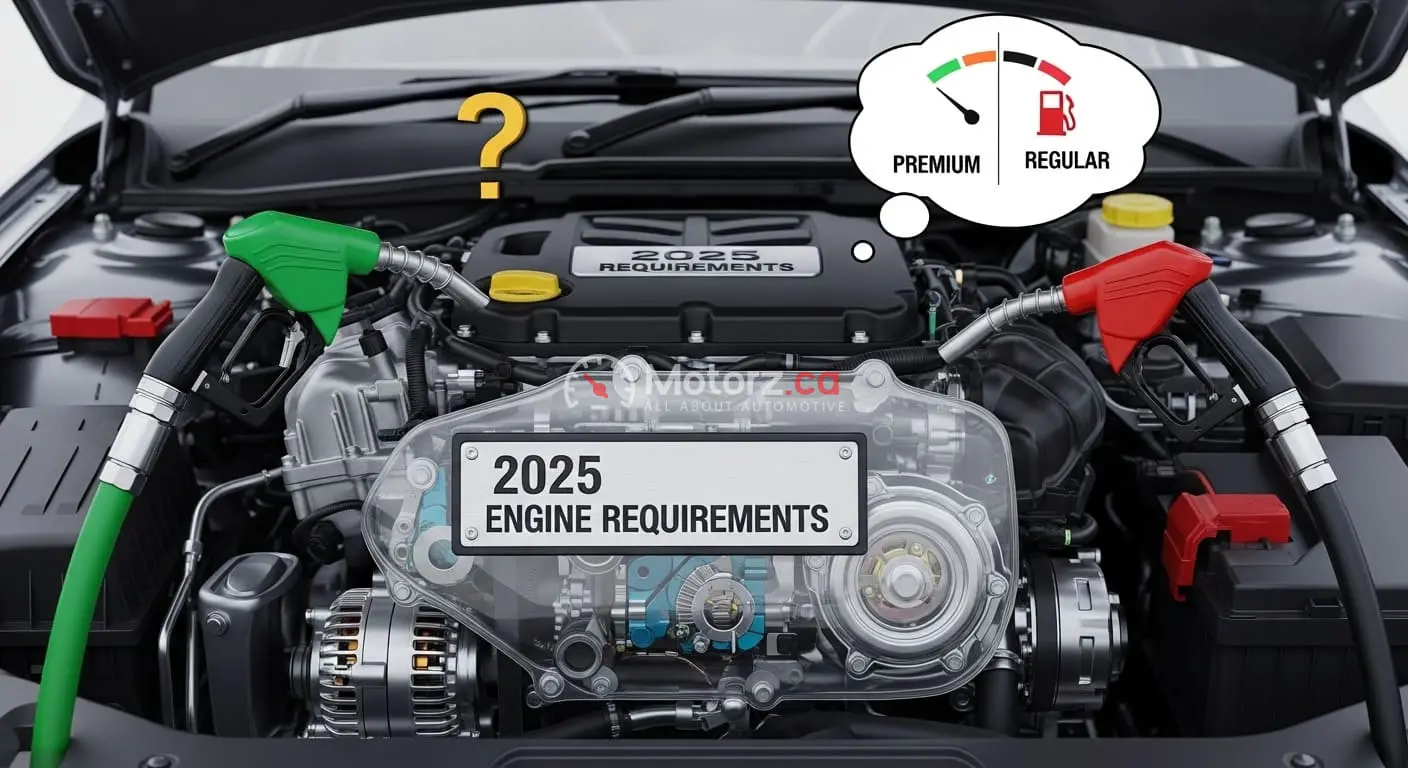
The ritual is familiar to every driver: pulling up to the fuel pump and facing the choice between the cheapest regular unleaded and the pricier premium fuel. The price difference can add significantly to the total cost of ownership, often prompting the age-old question: Is premium gasoline still worth the extra cost in 2025?
The answer, once Engine Requirements simple, has become increasingly complex due to a massive engineering shift in the modern automotive world. To meet stringent emissions standards and simultaneously deliver better fuel efficiency and startling horsepower, car manufacturers have universally adopted two key technologies: turbochargers (or superchargers) and significantly higher compression ratios. These advancements change the conversation around octane rating from a simple cost decision into a crucial technical consideration for engine health and maximum performance.
This comprehensive guide decodes the Engine Requirements, explains the science of engine knock, and provides a clear breakdown of when you are saving money with regular gas, and when you are jeopardizing your vehicle’s optimal operation by skipping premium.
The Science of Octane: Engine Requirements
Before we debate the cost, we must understand the chemistry. Premium fuel is not “better” or “cleaner” than regular; it simply has a higher octane rating.
What Octane Actually Measures
The octane number (typically 87 for regular, 89 for mid-grade, and 91/93 for premium in North America) measures the fuel’s resistance to premature ignition, or auto-ignition, when compressed.
Low Octane (87): Ignites easily under Engine Requirements. Ideal for low-compression, naturally aspirated engines.
High Octane (91+): Resists ignition under intense pressure and heat. Required for high-compression engines and forced induction (turbo/supercharging).
The Danger of Engine Knock
Engine knock, or detonation, is the uncontrolled, premature explosion of the air-fuel mixture before the spark plug fires. This occurs when the pressure and heat in the cylinder are too high for the fuel’s octane rating. When detonation occurs, shockwaves slam Engine Requirements the piston and cylinder walls, creating the audible “pinging” sound.
If persistent, engine knock can cause severe, long-term damage, including cracked pistons and damaged rod bearings. This is the primary reason why high-performance engines require premium fuel.
The Engine Technology Driving Premium Fuel Demand
The modern engine landscape, particularly in 2025, features sophisticated engineering that naturally elevates the need for higher-octane fuel.
The Turbocharger Effect
The overwhelming majority of new Engine Requirements, even in economy models, use turbochargers. A turbocharger compresses massive amounts of air and forces it into the combustion chamber.
Increased Pressure: Compressing air dramatically raises the pressure and temperature inside the cylinder.
Knock Risk: This higher pressure environment is exactly where lower-octane fuel is most likely to self-ignite, leading to engine knock.
Performance Trade-off: By using premium fuel, the engine can safely operate with higher boost pressure and more aggressive ignition timing, directly translating to the advertised peak horsepower and torque figures.
High Compression Ratios
Automakers are designing naturally aspirated (non-turbo) engines with increasing compression ratios (the ratio between the largest and smallest volume in the cylinder). A higher ratio improves thermal efficiency and fuel economy. However, this high compression similarly increases the pressure inside the cylinder, often necessitating a fuel with a Engine Requirements octane rating to prevent knock, even without a turbocharger.
Decoding Your Fuel Cap: Required vs. Recommended
The most common source of confusion lies in the language used by manufacturers on the fuel-filler door or in the owner’s manual. Understanding the difference between “Required” and “Recommended” is key to making the right choice.
Premium Fuel REQUIRED
When the manufacturer states that premium fuel is required (often 91 or 93 octane), there is no debate.
Engineering Necessity: The engine is specifically Engine Requirements for performance parameters (boost pressure, ignition timing) that only high-octane fuel can safely support.
Consequences of Skipping: Using regular fuel in a required engine will immediately be detected by the Electronic Control Unit (ECU) via knock sensors. The ECU will rapidly retard the ignition timing and reduce boost pressure to protect the engine. The results are a definite loss of power, compromised fuel economy, and reduced engine responsiveness. Prolonged use of low-octane fuel could potentially lead to premature wear and void a portion of your powertrain warranty.
Common Candidates: High-performance models (Nissan Z, Honda Civic Type R), dedicated luxury brands (INFINITI, higher-trim European models), and some high-output turbocharged engines (like the 540-hp High-Output Ram Hurricane engine).
Premium Fuel RECOMMENDED
This is the largest and most nuanced category in the 2025 market, encompassing many popular turbocharged SUVs and sedans.
Octane Flexibility: These modern engines feature sophisticated ECUs that are designed to operate safely on regular 87 octane but are optimized for 91+ octane.
The Power Penalty: If you choose regular fuel, the ECU will safely adjust to prevent knock. However, this adjustment involves sacrificing performance. You will not hit the manufacturer’s advertised horsepower and torque figures, which are typically achieved using premium fuel.
The Usability Test: For the typical commuter who rarely maxes out the engine, the difference may be “slightly noticeable” at most, as noted by engineers for vehicles like the Ram 1500. However, drivers who frequently tow, climb steep grades, or demand aggressive acceleration will clearly feel the power reduction.
Common Candidates: Many mainstream turbocharged vehicles (some Mazda 2.5T models, standard-output twin-turbo engines). The choice here is a personal calculation of cost versus performance.
The ECU: The Great Octane Arbitrator
The engine’s onboard computer, the ECU, is the reason why using the wrong fuel in a modern car is not the catastrophic event it was decades ago.
Knock Sensors and Retardation
Modern ECUs are equipped with highly sensitive knock Engine Requirements. These sensors constantly listen for the faintest signs of detonation. If knock is detected, the ECU instantly and automatically adjusts the ignition timing (retards it) and often reduces the turbo boost pressure. This protects the engine from damage, essentially neutering its performance until the risk of knock passes. This is the car’s safety mechanism.
Performance Mapping
The ECU has two or more performance maps:
Maximum Performance Map: Utilizes highly advanced timing and boost, only accessible when the ECU detects premium, high-octane fuel.
Safe Economy Map: Uses conservative timing and lower boost, making the engine safe for use with regular 87 octane, albeit with reduced power and potentially lower miles per gallon (MPG).
The ECU automatically switches between these maps based on the octane rating it senses, which is why premium fuel does not offer any benefit to an engine specifically designed only for regular 87 octane (like a 2025 Toyota Camry).
Is Premium Fuel Cleaner or Better Quality? The Detergent Myth
A common misconception is that premium fuel is somehow cleaner or contains more beneficial detergent additives than regular fuel. This is largely a myth in 2025.
Top Tier Standards
In North America, all grades of gasoline—regular, mid-grade, and premium—must meet strict Environmental Protection Agency (EPA) standards. More importantly, Top Tier Gasoline (a performance standard adopted by many major brands) ensures that all octane grades contain the proper amount of detergent additives necessary to prevent carbon deposits on fuel injectors and valves, contributing to engine longevity.
Key Takeaway: If you fill up at a Top Tier station (like Shell, Chevron, ExxonMobil, etc.), you are getting the required cleaning agents, regardless of whether you choose 87 or 93 octane. Higher octane does not inherently mean “cleaner burn” or more protection.
The Cleaning Exception (Premium Diesel)
One notable exception to the Engine Requirements is Premium Diesel fuel. Premium diesel typically contains additional anti-foaming and cleaning agents specifically designed to clean diesel injector deposits, which can be critical for the health of complex diesel particulate filters (DPF) and injection systems.
The Verdict: The 2025 Financial Decryption
Ultimately, the choice comes down to the math and your driving habits. Here is the final breakdown for the 2025 driver:
If Premium is REQUIRED
Verdict: DO NOT SKIP PREMIUM.
Why: You risk damaging your engine in the long run and will definitely experience significant power loss and potential warranty issues. The minor savings are not worth the major repair risk. This is a non-negotiable part of the total cost of ownership for these vehicles.
If Premium is RECOMMENDED
Verdict: Test it Yourself.
Why: For many drivers, the loss of a few horsepower in daily driving (below 4,000 RPM) will not be noticeable. The savings may outweigh the slight drop in MPG.
Action Plan: Try running three full tanks of premium and carefully track your fuel economy and note the engine performance. Then, switch to regular for three tanks and track the same. If the performance difference or MPG change does not justify the 60 to 80 cent price difference per gallon, stick with regular. If you hear any pinging or knocking under hard acceleration, switch back to premium immediately.
If Regular is REQUIRED/Recommended
Verdict: NEVER Use Premium.
Why: Putting premium in a car designed for 87 Engine Requirements is quite literally wasting money. The ECU is not mapped to take advantage of the higher octane rating, so you gain zero extra power, no better fuel efficiency, and no cleaner engine.
The core lesson for the 2025 driver is simple: trust the engineering. Modern cars are built to run best on the fuel specified. For maximum engine performance and to utilize every advertised horsepower of your new turbocharged vehicle, stick with premium. For sensible savings in a premium-recommended car, you can safely choose regular, knowing your sophisticated ECU is managing the risk for you.