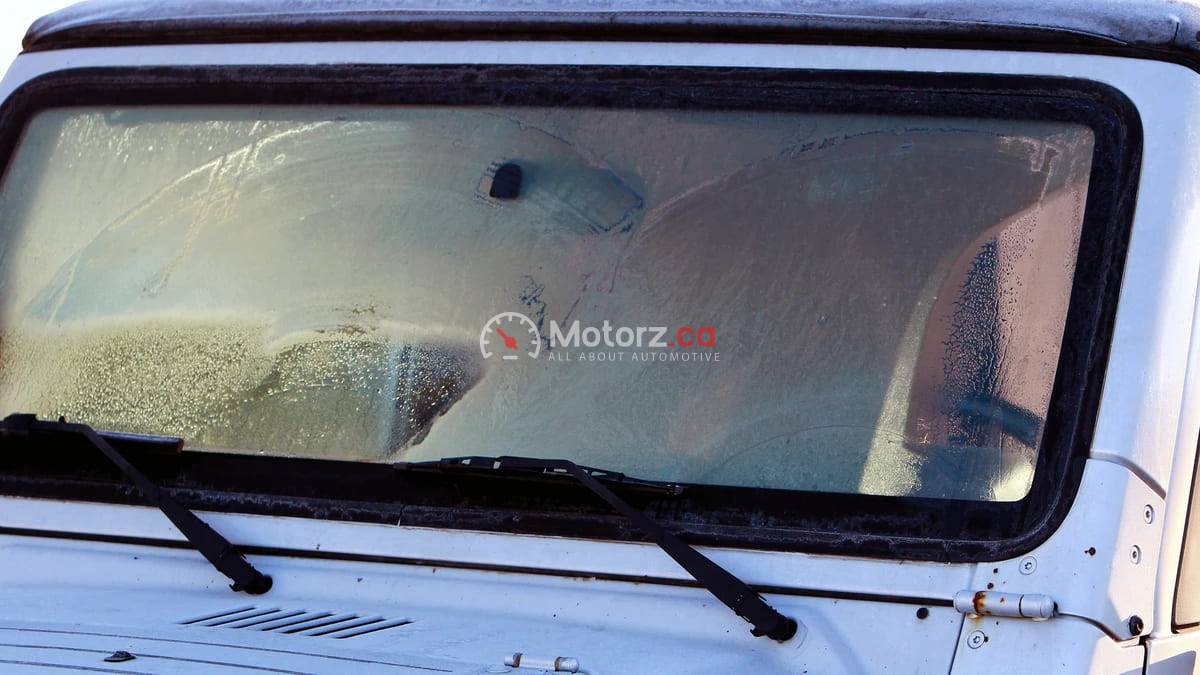
It happens to Windshield Faster and Safer. You are already five minutes late for work, you dash out to the driveway with your travel mug in hand, and there it is: a thick, opaque sheet of frost covering every square inch of your glass. In the Canadian winter, your windshield is the frontline of the battle against the elements. You want that ice gone, and you want it gone now.
But wait! Before you reach for that kettle of boiling water or start hacking away with a credit card, you need to understand the science of the thaw. In this edition of “Lorraine Explains,” we are cutting through the icy myths to show you how to clear your vision without cracking your glass or burning through a tank of gas.
At Motorz, we know that winter driving is stressful enough. Mastering the art of the defrost isn’t just about comfort; it is about safety and protecting your vehicle’s most important structural component: the windshield. Let’s dive into the fastest, safest ways to get moving when the temperature drops.
The Windshield Faster and Safer: Why Does It Happen?
To beat the frost, you have to understand your enemy. Frost forms when water vapor in the air hits a surface that is below the freezing point. On a clear, cold night, your windshield radiates heat into the sky, becoming colder than the surrounding air. This causes moisture to transition directly from a gas to a solid—a process called sublimation.
The Interior Fog Problem
Have you ever noticed that sometimes the “frost” is on the inside? This is usually caused by moisture you brought into the car on your boots (melting snow) or even your own breath. When that humid air hits the freezing glass, it creates a layer of interior frost that is even harder to clear because you can’t use an ice scraper on the delicate interior plastic and sensors.
The Golden Rules of Defrosting: What NEVER to Do
Before we get to the “how-to,” we must address the “how-not-to.” These are the mistakes that keep auto glass shops in business.
Never Use Boiling Water
It is the most tempting “shortcut” in the world. You think, “Hot water melts ice, right?” While true, the thermal shock of pouring boiling water onto a frozen windshield can cause the glass to shatter instantly. Windshields are made of laminated glass—two layers of glass with a plastic interlayer. When one side expands rapidly while the other stays frozen, the stress is too much for the glass to handle.
Avoid the “Peep-Hole” Drive
We have all seen that driver on the highway with a tiny, six-inch circle cleared in front of their eyes while the rest of the car is covered in snow. This is not only incredibly dangerous but also illegal in most provinces. You need 180 degrees of clear vision to see pedestrians, cyclists, and changing traffic lights.
The Step-by-Step “Flash Thaw” Method
If you want to clear your glass in record time in 2026, follow this proven sequence to maximize your car’s climate control system.
Step 1: Start the Engine and Set to Defrost
Turn your engine on and set the climate control to the “Defrost” setting. This directs all the air to the base of the windshield.
Pro Tip: Turn the temperature to full heat, but turn the fan speed to a medium setting initially. If the fan is on high immediately, it might actually cool down the engine coolant, making it take longer for the heater core to get warm.
Step 2: Use the Air Conditioning (AC) Button
This sounds counter-intuitive, but turn the AC on. In most modern cars, the defrost setting does this automatically. The AC compressor acts as a dehumidifier. It pulls the moisture out of the air inside the cabin, which is the fastest way to stop the interior fogging and clear any inside frost.
Step 3: Turn Off “Recirculate”
Make sure your car is pulling in fresh outside air. Recirculation mode just traps your breath and the moisture from your wet boots inside the cabin, which makes the fogging worse. Fresh air is much drier in the winter and will clear the glass faster.
Step 4: Crack a Window
If you are dealing with heavy interior fogging, crack a side window by half an inch. This creates a pressure differential that helps flush the humid air out of the car.
High-Tech Helpers: 2026 Solutions
In 2026, technology has given us some incredible tools to bypass the morning scrape entirely.
Remote Start and Smartphone Apps
If your vehicle has a factory remote start or a connected app, use it! Setting your car to “pre-condition” ten minutes before you leave allows the engine (or the electric heater in an EV) to warm the glass to a point where the ice simply slides off with one swipe of the wipers.
Heated Windshields and Wiper Parks
Check if your car has “hidden” heating elements. Some cars have tiny wires embedded in the glass (like a rear defroster), while others have heating elements specifically where the wipers sit to prevent them from freezing to the cowl.
The DIY De-Icer Spray
If you are in a rush, you can make your own “liquid scraper.” Mix two parts rubbing alcohol (isopropyl alcohol) with one part water in a spray bottle. Because alcohol has a much lower freezing point than water, it will melt the frost almost instantly without the risk of thermal shock.
Maintenance: Preparing Your Glass for the Big Freeze
A little bit of “Corner Wrench” prep in the autumn goes a long way toward an easy winter.
Apply a Water Repellent: Using a glass treatment like Rain-X makes it much harder for ice to “bond” to the surface of the glass. The frost will be “crunchy” and easy to brush away rather than being a solid sheet.
Check Your Wiper Blades: If your wipers are streaking or torn, they won’t be able to clear the slush. Replace them with “winter blades” that have a protective rubber boot to prevent the framework from freezing up.
Keep the Cowl Clear: That area at the base of your windshield where the wipers live is where your car breathes. If it is full of leaves or snow, your defroster won’t be able to pull in enough air to clear the glass.
The Lorraine Explains Cheat Sheet
Don’t let the frost get the best of you. To clear your glass like a pro:
Start early: Give the car five to ten minutes to warm up.
AC On, Recirculate Off: Dry air is the secret to clear vision.
No hot water: Protect your glass from thermal shock.
Clear everything: Don’t forget the side mirrors and the roof!
At Motorz, we want you to see and be seen. Winter is hard enough on your vehicle; don’t make it harder by rushing the thaw. Use the science, use the tools, and stay safe on those icy roads.