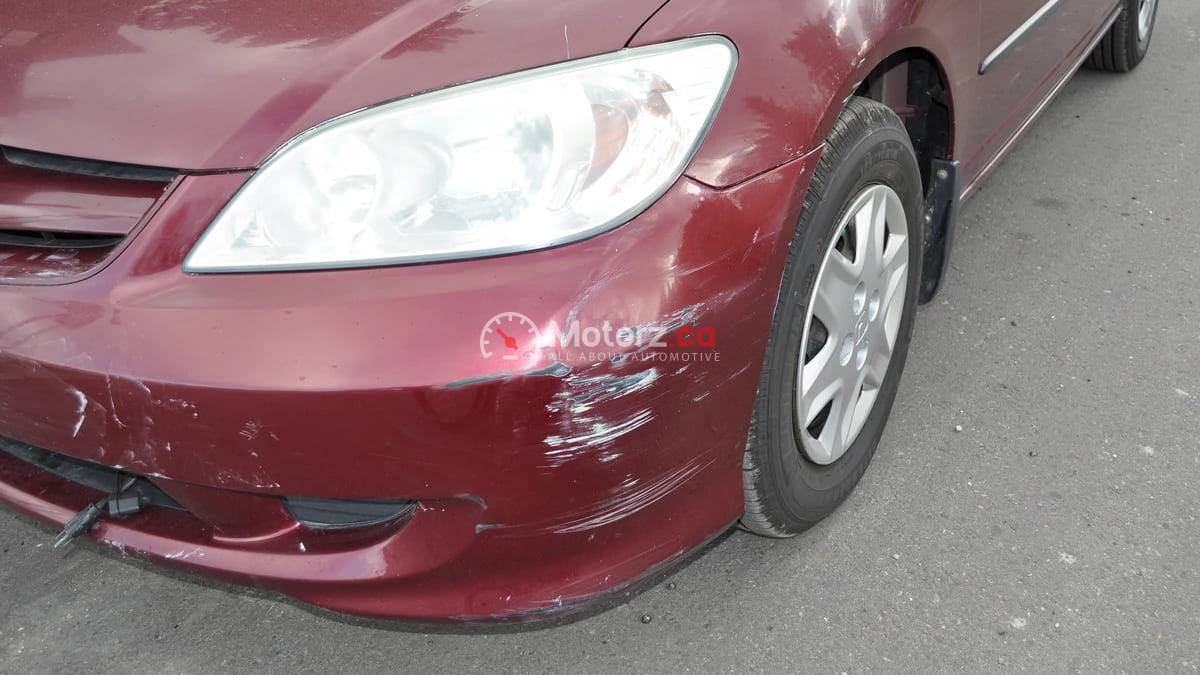
We rarely give them a second Evolution of Safety. We use them to display political stickers, we accidentally scuff them against high curbs in parking garages, and we lament the cost of replacing them after a minor “fender bender.” The bumper is perhaps the most misunderstood and overlooked component of the modern automobile. Often dismissed as a mere plastic fairing, the humble bumper is actually a sophisticated piece of safety engineering that has evolved more in the last twenty years than almost any other part of your car.
In the world of “The Corner Wrench,” we don’t just see bumpers as decorative trim; we see them as the first line of defense in a complex energy-management system. In 2026, a bumper is no longer just a “bump guard.” It is a housing for advanced sensors, a critical player in pedestrian safety, and a sacrificial shield designed to save your engine—and your life—from the laws of physics.
At Motorz, we believe that understanding the “why” behind your car’s parts makes you a better owner. Today, Lorraine Explains the history, the hidden technology, and the future of the automotive bumper.
From Steel Bars to Evolution of Safety: A Brief History
The earliest cars didn’t have bumpers at all. If you hit something in a 1905 horseless carriage, the first thing to take the impact was your radiator or your lanterns.
The Era of Chrome and Steel
By the 1920s, bumpers became Evolution of Safety, but they were essentially just decorative steel bars bolted directly to the frame. While they looked beautiful when polished to a mirror finish, they were terrible at managing energy. Because they were rigid, the force of a collision was transmitted directly through the frame to the passengers. It was “protection” for the car, but not for the people inside.
The 5-MPH Impact Revolution
In the 1970s, safety regulations changed the face of the bumper forever. The “5-MPH Rule” required that cars be able to withstand a low-speed impact without sustaining damage to critical safety components like headlights or fuel lines. This led to the era of massive, protruding rubber-and-steel bumpers that moved on hydraulic shocks. They were heavy and often considered ugly, but they saved consumers thousands in minor repair costs.
Anatomy of a Modern Bumper: What’s Under the Plastic?
If you were to peel back the painted plastic “skin” of a 2026 vehicle, you would find a multi-layered sandwich of engineering. The part you see is actually called the bumper cover or fascia.
The Fascia
The outer layer is usually made of Thermoplastic Olefin (TPO) or a similar flexible plastic. Its job is purely aerodynamic and aesthetic. It is designed to flex during minor impacts and resist cracking in the extreme cold of a Canadian winter.
The Energy Absorber
Behind the plastic is a thick layer of high-density expanded polystyrene (EPS) or a honeycomb plastic structure. This is the “crumple zone” of the bumper. It is designed to crush and deform, absorbing as much kinetic energy as possible before that energy can reach the metal structure of the car.
The Impact Bar
At the very core is a heavy-duty beam made of high-strength steel, aluminum, or even carbon fiber. This bar is what actually stops the “big” impacts. It is bolted to the vehicle’s frame rails, often using “crush cans”—specialized metal boxes designed to fold like an accordion during a high-speed crash.
The Digital Bumper: Sensors, Radars, and AI
In 2026, the bumper has become the “eyes and ears” of the car. It is no longer just a physical shield; it is a high-tech sensory organ.
Ultrasonic Parking Sensors
Those small, circular dots you see on your bumper are ultrasonic sensors. They emit high-frequency sound waves that bounce off obstacles, allowing your car to beep or vibrate the seat as you get closer to a wall. These have virtually eliminated the “parking lot scuff” for modern drivers.
Radar and LiDAR Housing
Most modern Adaptive Cruise Control and Automated Emergency Braking systems hide their radar sensors behind the front bumper. Some even use specialized plastic in the bumper cover that allows radar waves to pass through unobstructed. This is why a simple bumper repair on a new car now involves “recalibration” of the sensors—a task we frequently perform at “The Corner Wrench” to ensure the car’s safety systems still “see” the road correctly.
Pedestrian Protection Systems
Modern bumpers are designed with “soft” lower sections. In the event of a collision with a pedestrian, the bumper is engineered to strike the legs in a way that sweeps the person onto the hood rather than under the wheels. Some high-end 2026 models even feature “pop-up” hoods triggered by sensors in the bumper to provide a cushion of air for a pedestrian’s head.
Maintenance and Repair: Why a “Scuff” Matters
At Motorz, we often get asked: “It’s just a scratch on the plastic, do I really need to fix it?” The answer depends on what is happening behind the scenes.
Hidden Damage: Because plastic bumpers “pop back” into shape after an impact, the outer skin might look fine while the energy-absorbing foam underneath is crushed. A crushed absorber cannot protect you a second time.
Sensor Misalignment: Even a minor tap can knock a radar sensor out of alignment by just one or two units. This could cause your car to “slam on the brakes” for a shadow or fail to detect a vehicle in front of you.
Rust and Corrosion: If a bumper scuff exposes the underlying metal impact bar, salt and moisture can cause it to rust. A rusted impact bar is a weakened bar, and it will not perform as intended in a crash.
Respect the Shield
The bumper has come a long way from a chrome-plated steel bar. It is a masterpiece of materials science that works silently to keep you safe, improve your fuel economy through aerodynamics, and help your car navigate tight spaces.
It is a System: Remember that the bumper is a multi-layered safety device, not just a plastic cover.
Watch the Sensors: If you have an impact, ensure your ADAS (Advanced Driver Assistance Systems) are recalibrated.
Respect the Crumple: The fact that a bumper “destroys itself” in a crash is a feature, not a bug. It is dying so that you don’t have to.
Winter Care: In extreme cold, plastic becomes more brittle. Be extra careful with snowbanks and frozen slush, which can crack a bumper cover that would normally be flexible in the summer.
At Motorz, we want you to look at your car with a new sense of appreciation. The next time you walk past your front grille, give that humble bumper a nod of thanks. It’s doing a lot more than just holding your license plate.