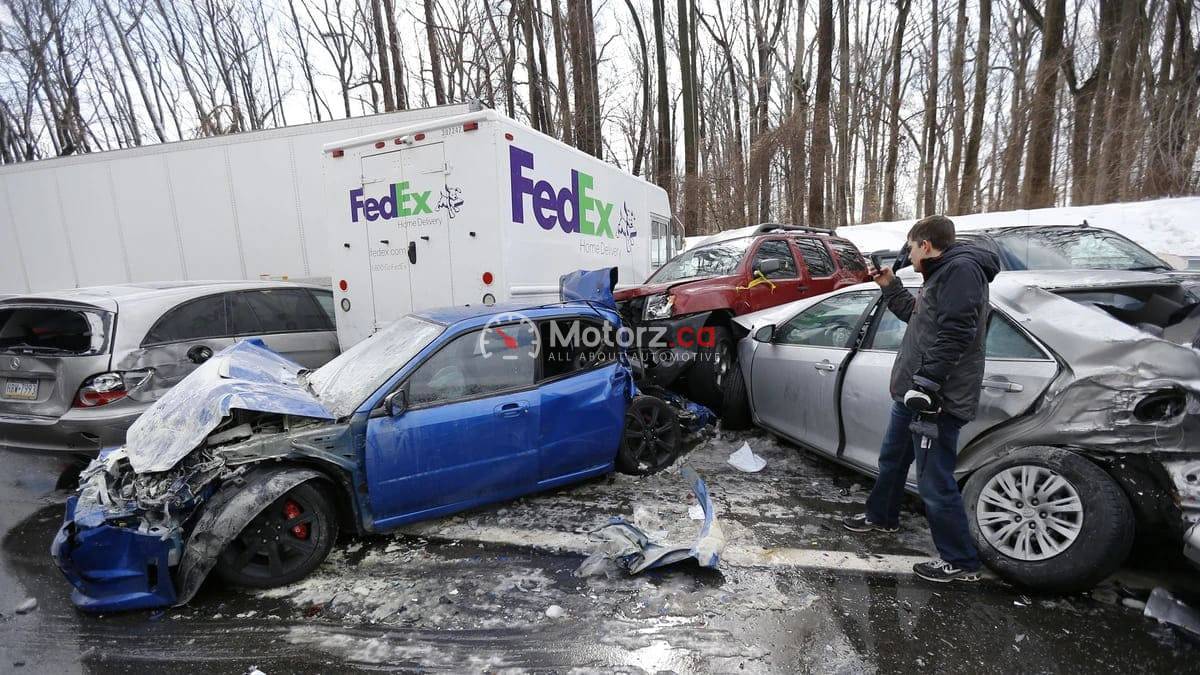
For decades, we have used a single word to describe everything from a Car Crashes and Collisions lot fender-bender to a multi-car highway catastrophe: the “accident.” It is a word that rolls off the tongue easily, often used to comfort victims or explain away a moment of chaos. But in the world of modern road safety, insurance law, and mechanical forensics, that word is increasingly being scrubbed from the vocabulary.
In the hallways of “The Corner Wrench,” we see the physical aftermath of these events every day. We see the bent frames, the deployed airbags, and the sheared bolts. When we look at the data, we realize that “accident” implies a stroke of bad luck—an unavoidable act of fate. However, the reality of 2026 is much more sobering: nearly every road incident is the result of a specific, identifiable failure.
At Motorz, we are joining the global movement to change how we talk about road safety. Today, Lorraine Explains why the term “accident” is being replaced by “crash” or “collision,” how this shift in language changes driver responsibility, and why understanding the “chain of events” is the first step toward a future with zero fatalities.
The Car Crashes and Collisions: Accident vs. Crash
The word “accident” implies that no one is at fault. It suggests that despite everyone doing their best, something went wrong. Think about a child spilling milk—it’s an accident. But a two-ton vehicle moving at 100 kilometers per hour is a different matter entirely.
The Shift in Law Enforcement and Media
Major organizations, including the Associated Press and various National Highway Traffic Safety administrations, have officially pivoted away from the “A-word.” When a police officer arrives at the scene of a smashed vehicle, they aren’t looking for “bad luck.” They are looking for a cause. Was there a mechanical failure? Was a driver distracted by a mobile device? Was the speed inappropriate for the weather conditions?
Why Words Matter for Safety
If we label every collision as an “accident,” we subconsciously tell ourselves that these events are inevitable. By using the word “crash” or “collision,” we acknowledge that there was a physical interaction caused by a specific set of circumstances. This shift in mindset encourages drivers to take more ownership of their behavior behind the wheel.
The Chain of Events: Identifying the Real Cause
In aviation, investigators use a concept called the “Swiss Cheese Model.” It suggests that for a disaster to happen, several “holes” in safety layers must align. Road collisions work the same way. What looks like a random event is usually the final link in a chain of human or mechanical errors.
Human Error: The 94 Percent Factor
Statistical data consistently shows that approximately 94 percent of all road collisions are caused by human choices. This includes:
Distraction: Looking at a screen for just two seconds at highway speeds means traveling the length of a football field blind.
Impairment: This isn’t just about alcohol; it includes fatigue, which can impair reaction times as severely as legal intoxication.
Speed: Speeding doesn’t just make crashes more likely; it makes them more violent by increasing the kinetic energy involved.
Mechanical Neglect
The remaining percentage often falls into the category of mechanical failure, but even these are rarely “accidents.” If a tire blows out because the tread was worn down to the metal wires, that is a failure of maintenance, not a random act of the universe. If brakes fail because the fluid was never changed, that is a predictable outcome of neglect.
Preventable vs. Unavoidable: A New Way to Drive
To become a better driver, you have to move away from the idea that “accidents happen” and toward the idea that “collisions are prevented.”
Proactive Maintenance as a Safety Tool
At “The Corner Wrench,” we view every oil change and tire rotation as a safety inspection. When we find a bulging sidewall on a tire or a frayed serpentine belt, we are breaking the “chain of events” that could lead to a highway stall or a crash. Maintenance is the silent hero of road safety.
The Myth of “Act of God”
Even weather-related incidents are often mislabeled. If a car slides off an icy bridge in the middle of a Calgary winter, people call it a “weather-related accident.” However, if the driver was traveling at the summer speed limit or was using worn-out all-season tires instead of proper winter rubber, the weather was simply the environment—the choices were the cause.
How Technology is Eliminating the “Accident”
In 2026, the cars we drive are smarter than ever. Advanced Driver Assistance Systems (ADAS) are specifically designed to catch the human errors that lead to collisions.
Automated Emergency Braking (AEB)
This technology doesn’t get distracted. It doesn’t look at a phone or get sleepy. By using radar and cameras to monitor the distance to the car ahead, AEB can intervene when a human fails to react. It turns what would have been a high-speed crash into a “near miss” or a low-speed bump.
Lane Keep Assist and Blind Spot Monitoring
These systems address the “human” blind spots—both physical and mental. They provide the extra layer of protection that prevents “accidents” caused by a simple lapse in concentration during a lane change. As these technologies become standard, the “accidental” nature of driving continues to shrink.
Changing the Culture of the Road
The goal of removing the word “accident” from our vocabulary isn’t to be pedantic or to point fingers. It is about creating a culture where we value life enough to look for the truth behind every event.
Language Impacts Behavior: Calling it a “crash” reminds us of the stakes involved in driving.
Focus on Cause: Most collisions are the result of specific choices, such as speed, distraction, or maintenance neglect.
Empower the Driver: When you realize crashes are preventable, you gain the power to stay safe by making better choices.
Technology as a Partner: Use modern safety features not as a replacement for attention, but as a backup for human fallibility.
At Motorz, we want to change the way people think about their time behind the wheel. Driving is the most dangerous thing most of us do every day. By acknowledging that there is no such thing as a “car accident,” we can finally start working toward a world where no one has to lose a loved one to a “mistake” that could have been prevented.