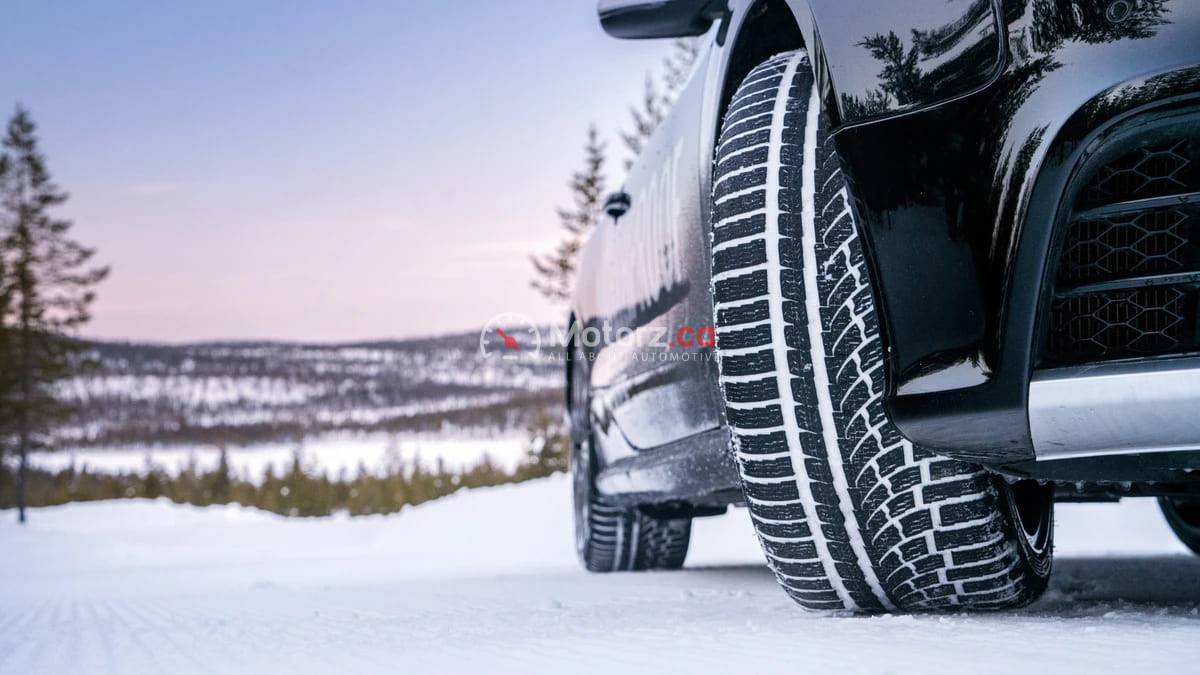
Every Canadian Drivers shares a common winter ritual. The leaves fall, the morning air turns crisp, and the local weather forecasts begin to warn of the first impending snowfall. For millions of motorists, this seasonal shift triggers an immediate rush to the local auto shop to swap out their summer or all-season rubber. While some people still view cold-weather tires as an unnecessary seasonal expense, a massive majority of those who invest in them tell a completely different story.
According to extensive national traffic safety surveys, a striking eighty percent of Canadian motorists who equip their vehicles with dedicated winter tires state that their seasonal rubber has actively saved them from a potentially catastrophic loss of control or a serious road collision. This overwhelming consensus highlights a critical reality: cold-weather tires are not a marketing gimmick; they are an essential piece of safety equipment.
Whether you are navigating the heavy, wet slush of coastal regions, facing the frozen black ice of urban highways, or dealing with the deep, unplowed drifts of rural routes, your tires serve as the only connection between your vehicle and the road. This comprehensive guide breaks down the data behind this major safety statistic, explores the physical mechanics of why seasonal rubber works so effectively, and explains how making the switch can protect your family, your vehicle investment, and your peace of mind all winter long.
Analyzing Canadian Drivers: The Real-World Impact of Winter Rubber
To truly understand why eighty percent of Canadian Drivers credit their winter tires with preventing an accident, it helps to examine the broader safety landscape. Across the country, regional driving data consistently shows a dramatic drop in traffic accidents, personal injuries, and insurance claims in areas where cold-weather tires are widely adopted.
Consider the real-world proof from regions that have implemented specific safety mandates. Decades ago, Quebec became the first province to pass a law requiring all passenger vehicles to be equipped with certified winter tires from early December through mid-March.
The historical data following the implementation of this safety regulation speaks volumes. Traffic safety researchers noted a marked, immediate decrease in wintertime road accidents across the province. Serious injuries resulting from cold-weather collisions dropped by double-digit percentages. The proof is undeniable: when an entire driving population adopts proper seasonal rubber, the roads become significantly safer for everyone.
Outside of mandated regions, the voluntary adoption rate continues to climb because drivers experience the safety benefits firsthand. When four out of five motorists state that their tires saved them from a dangerous slide, a near-miss at an intersection, or a multi-vehicle highway pileup, the data reflects a profound psychological shift. Drivers who make the switch transition from feeling vulnerable on the snow to driving with predictable, calculated control.
The Cold Science: Why All-Season Tires Fall Short
A persistent myth in the automotive world prevents some drivers from maximizing their on-road safety: the belief that all-season tires are perfectly adequate for Canadian winters. The name “all-season” implies that a tire is engineered to handle every type of weather condition imaginable, from hot summer asphalt to freezing winter blizzards. In reality, all-season tires are a compromise design, and their capabilities drop off drastically when the temperature plunges.
The critical factor that determines tire performance is the chemical compound of the rubber. All-season tires are manufactured with a firm rubber blend designed to retain its shape and durability during hot summer commutes. However, when the ambient temperature drops below seven degrees Celsius, a physical transformation occurs. The rubber blocks in all-season tires begin to stiffen, harden, and lose their flexibility. This hardening effect turns your tires into hard plastic rollers that cannot mold to the texture of the road, severely reducing your available grip.
Dedicated winter tires are engineered with entirely different chemical recipes. They utilize advanced high-silica rubber compounds that remain soft, pliable, and incredibly flexible even in extreme, sub-zero temperatures.
Because the rubber blocks remain soft, the tire footprint can spread out evenly across the road surface. This flexibility allows the tire to actively grab onto the micro-irregularities of snow and ice, ensuring consistent traction when you need to brake, accelerate, or turn a corner suddenly.
Anatomy of a Winter Tire: Three Design Features That Prevent Accidents
The safety provided by cold-weather tires is the direct result of deliberate, advanced engineering. When you look closely at a premium winter tire, you will notice three specific architectural differences that allow it to outperform standard rubber on frozen surfaces.
Intricate Siping Technology
If you examine a winter tire tread block, you will see thousands of tiny, wavy slits cut across the surface. These specialized channels are known as sipes. As your vehicle rolls forward and the tire weight presses down onto snow or ice, these microscopic sipes flex and open up wide.
This flexing action creates thousands of sharp biting edges that dig directly into the slick surface. More importantly, when driving over snow, these sipes actively pack loose snow into their grooves. Because snow sticks to snow much more effectively than rubber sticks to snow, this packed snow-on-snow contact generates immense mechanical traction that helps stabilize your vehicle.
Deep, Directional Tread Grooves
Standard all-season tires feature tread patterns designed to minimize road noise and provide a smooth, quiet highway ride. Winter tires, by contrast, feature aggressive, deep tread blocks often arranged in a distinct V-shaped or directional pattern.
These wide, deep grooves are specifically engineered to pump heavy slush, water, and deep snow away from the center of the tire footprint. By rapidly expelling this material to the outer shoulders of the tire, the tread prevents a dangerous layer of slush from building up underneath the wheel, effectively eliminating the risk of slush-planing and keeping you firmly in control.
Hydrophobic Pores and Water Absorption
When a heavy vehicle travels across a sheet of ice, the sheer friction and pressure generated by the tires instantly melts a microscopic layer of water on top of the frozen surface. This invisible film of moisture is what actually causes a car to experience catastrophic skidding. It acts as a slippery lubricant between the tire and the ice.
Premium studless ice and snow tires incorporate specialized hydrophobic or multi-cell compounds into the rubber matrix. These materials feature millions of microscopic, sponge-like pores that actively draw the microscopic film of water away from the ice surface for a brief millisecond, expelling it as the tire rotates. This action allows the solid rubber tread blocks to make direct, dry contact with the ice, providing braking power that all-season alternatives simply cannot match.
Real-World Scenarios: How Winter Tires Prevent Common Collisions
To appreciate why eighty percent of drivers credit their winter tires with saving them from a collision, it is helpful to look at specific, everyday winter driving scenarios where the right rubber makes a definitive difference.
The Panic Stop at a Red Light
Imagine you are driving down a busy city avenue at fifty kilometers per hour when a traffic light ahead suddenly turns yellow and then red. An all-season tire, hardened by the sub-zero air, will struggle to find purchase on the snow-packed asphalt. When you step on the brake pedal, the anti-lock braking system will engage immediately, pulsing rapidly as the hard rubber slides helplessly across the slick surface, potentially pushing you straight into the cross-traffic of the busy intersection.
A vehicle equipped with dedicated winter tires handles this exact scenario with predictable stability. The soft, flexible rubber and biting sipes clamp down onto the snow-packed road immediately.
Testing by independent automotive organizations proves that at identical winter speeds, a dedicated winter tire can stop a vehicle up to two full car lengths shorter than a standard all-season tire. That distance is the difference between stopping safely behind the crosswalk or causing a severe, front-end collision.
Navigating a Highway Curve with Black Ice
Black ice is one of the most feared hazards on Canadian roads because it is transparent and virtually impossible to spot from the driver seat. It frequently forms on bridges, highway overpasses, and shaded stretches of road where moisture freezes instantly on the dark asphalt.
If you enter a highway curve on all-season tires and strike a patch of black ice, the hard rubber will lose all lateral stability. The rear of the vehicle can quickly slide outward, causing you to enter a dangerous spin across multiple lanes of fast-moving traffic.
Winter tires, with their specialized water-absorbing compounds, maintain a degree of lateral grip even on smooth ice. While they cannot defy the laws of physics entirely, they provide the necessary traction for your vehicle’s electronic stability control system to intervene effectively, helping you steer through the slide and keep the nose of the car pointed safely within your lane.
Beyond Safety: The Financial and Structural Benefits
While the primary argument for installing winter tires is preserving human life and preventing injuries, making the switch also offers secondary practical and financial benefits that help offset the upfront cost of a secondary tire set.
Extending the Lifespan of Your Tires
Some drivers hesitate to purchase winter tires because they dislike the immediate cost of buying a secondary set of four wheels. However, it is important to remember that when your winter tires are on your vehicle, your summer or all-season tires are sitting safely in your garage or a storage facility, enduring zero wear and tear.
By splitting your annual driving distance between two dedicated sets of rubber, both sets will last twice as many calendar years. You are not actually wasting extra money on rubber over the long term; you are simply paying for your future tire usage upfront while ensuring you always have the safest possible tool for the current season.
Keeping Your Insurance Premiums Low
In Canada, automotive insurance providers understand the undeniable safety data associated with winter tires. Because motorists who use seasonal tires are statistically far less likely to file at-fault accident claims during the icy months, many insurance companies offer a dedicated winter tire discount.
Depending on your specific province and provider, updating your policy to confirm that you install certified winter rubber before the cold weather hits can result in a permanent reduction in your annual insurance premium. Over a few seasons, these combined savings can claw back a significant portion of your initial tire investment.
Avoiding Costly Mechanical Deductibles
Even a minor low-speed winter mishap can cause immense financial headaches. Sliding into a concrete curb at a mere fifteen kilometers per hour can easily bend your front steering knuckles, destroy your wheel bearings, shatter an aluminum rim, or crack your vehicle’s bumper cover.
The cost to repair this mechanical and cosmetic damage, combined with paying your insurance deductible and facing a future hike in your monthly insurance rates, quickly adds up to a sum far greater than the price of a high-quality set of winter tires. Investing in safety rubber is the ultimate form of preventative maintenance that protects your hard-earned bank account from unexpected collision costs.
Prioritizing Your On-Road Safety
The fact that eighty percent of Canadian drivers credit winter tires with saving them from a road accident is a powerful testament to the value of proper seasonal preparation. Winter driving in Canada presents some of the most challenging, unpredictable road environments on earth, and relying on a compromised all-season tire is an unnecessary gamble with your personal safety.
By making the commitment to install a dedicated set of four winter tires carrying the verified snowflake symbol, you strip away the dangerous unpredictability of cold-weather travel. You gain shorter stopping distances, predictable cornering stability, and the confidence required to handle the harshest blizzards safely. Do not wait until your vehicle is sliding helplessly toward an intersection to realize the value of proper traction. Join the vast majority of safe drivers who have secured their peace of mind on the winter roads.