For the better part of a century, the way we mixed fuel and air in our engines was relatively simple. We went from carburetors to port fuel injection, and for a long time, things were reliable. But as emissions regulations tightened and the demand for fuel economy skyrocketed, engineers turned to a technology once reserved for diesel engines: Gasoline Direct Injection (GDI).
If you have bought a vehicle in the last decade, there is a very high probability that it uses GDI. While manufacturers promise more horsepower and fewer trips to the gas station, many owners are finding themselves facing unique, expensive maintenance issues that didn’t exist twenty years ago. At “The Corner Wrench,” we spend a lot of time cleaning out the “gunk” that this technology leaves behind.
At Motorz, we are all about transparency. Today, Lorraine Explains the mechanical trade-offs of the GDI revolution. Is the extra efficiency worth the potential for carbon buildup and high-pressure fuel pump failures? Let’s dive into the oily details.
What is Direct Injection and How Does It Work?
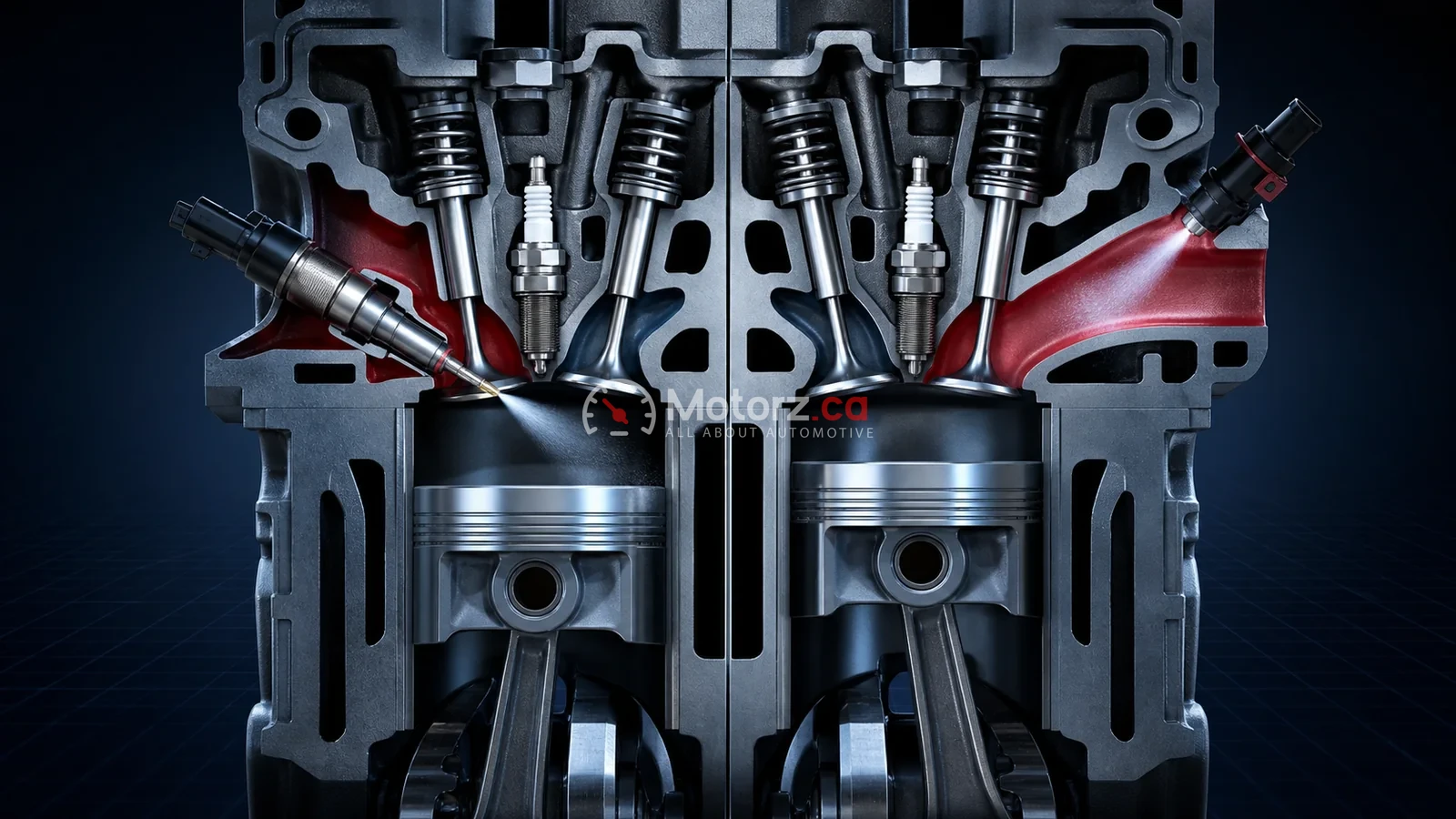
To understand the controversy, we first need to understand the mechanical shift. In a traditional “Port Injection” system, the fuel is sprayed into the intake manifold, behind the intake valve. There, it mixes with air before being sucked into the combustion chamber.
The GDI Difference
In a Gasoline Direct Injection (GDI) system, the fuel bypasses the intake valves entirely. The injectors are located directly inside the combustion chamber. Fuel is sprayed at incredibly high pressure—sometimes exceeding 2,000 PSI—directly into the cylinder during the compression stroke.
The Benefits: Why Engineers Love It
By spraying fuel directly into the cylinder, the evaporating fuel actually cools the combustion chamber. This allows the engine to run a higher compression ratio without “knocking.” The result is a smaller engine that can produce the power of a much larger one while using significantly less fuel. It is the reason why a modern 4-cylinder engine can often outperform a V6 from the early 2000s.
The Achilles’ Heel: Carbon Buildup on Intake Valves
If GDI is so efficient, why is it controversial? The answer lies in a hidden side effect: carbon “coking.”
The Missing “Cleaning” Effect
In older port-injected engines, the gasoline (which contains detergents) would wash over the back of the intake valves on its way to the cylinder. This constant bath of fuel kept the valves clean. Because GDI sprays fuel directly into the cylinder, the intake valves never touch a drop of gasoline.
The Role of PCV and Oil Vapors
Modern engines vent oily crankcase vapors back into the intake to be burned (via the PCV system). These hot oil vapors hit the dry, hot intake valves and bake onto the metal like burnt grease on a frying pan. Over 50,000 or 100,000 kilometers, this carbon buildup becomes thick and crusty, choking the engine’s airflow.
Symptoms of Carbon Coking
Loss of Power: The engine feels sluggish because it cannot “breathe” properly.
Rough Idling: The uneven carbon deposits cause turbulence in the air entering the cylinder.
Poor Fuel Economy: As the engine struggles to get Modern engines, the computer compensates by dumping more fuel.
Check Engine Lights: Codes for “random misfires” are common as the buildup interferes with the combustion cycle.
High-Pressure Hardware: Costs and Complexity
Beyond the carbon issues, GDI systems require much more robust—and expensive—hardware than their predecessors.
High-Pressure Fuel Pumps (HPFP)
While a standard fuel pump in the tank operates at about 60 PSI, a GDI engine requires a secondary mechanical pump on the engine to reach those 2,000-plus PSI levels. These pumps are driven by the camshaft and are under immense mechanical stress. When they fail, they can be significantly more expensive to replace than a traditional fuel pump.
Specialized Injectors
GDI injectors must survive the intense heat and pressure of being inside the combustion chamber. They are precision instruments that can become “clogged” by low-quality fuel much more easily than port injectors. If an injector leaks, it can quickly “wash” the oil off the cylinder walls, leading to catastrophic engine wear.
The Industry Fix: Dual Injection Systems
The automotive industry hasn’t ignored these problems. In fact, many manufacturers have moved to a “best of both worlds” solution called Dual Injection.
Combining Port and Direct Injection
Companies like Toyota and Ford have pioneered systems that use both sets of injectors. At low speeds and idle, the port injectors spray fuel to keep the valves clean and provide smooth operation. Under heavy load or highway cruising, the direct injectors take over to provide maximum power and efficiency.
Why Every Car Doesn’t Have It
Dual injection is the perfect fix for carbon buildup, but it adds cost and complexity. It requires two sets of injectors, two fuel rails, and a much more powerful computer to manage the hand-off between the two systems. For budget-conscious models, many manufacturers still stick to a “Direct Injection Only” setup.
How to Maintain a GDI Engine and Avoid Problems
If your current car is “Direct Injection Only,” you aren’t doomed to a broken engine. You just need to change your maintenance habits.
Frequent Oil Changes are Mandatory
Because oil vapors cause the carbon buildup, keeping your oil clean is your first line of defense. Dirty oil contains more contaminants that “off-gas” into the intake. At “The Corner Wrench,” we recommend changing oil every 8,000 kilometers rather than waiting for the 15,000-kilometer intervals often suggested by manufacturers.
Use Top-Tier Fuel and Induction Cleaners
While the fuel won’t touch the valves, using high-quality “Top Tier” gasoline ensures the injectors themselves stay clean. Additionally, using a specialized “GDI Intake Cleaner” spray every 20,000 kilometers can help dissolve light carbon deposits before they harden into “coke.”
Walnut Blasting: The Ultimate Solution
If your carbon buildup is severe, the only real fix is “Walnut Blasting.” A technician removes the intake manifold and uses pressurized air to spray crushed walnut shells at the valves. The shells are hard enough to clear the carbon but soft enough not to damage the metal. It is a specialized service, but it can make an old GDI engine feel brand new.
Does GDI Solve More Than It Causes?
The answer depends on what you value. If you value maximum fuel efficiency and low emissions, GDI is a massive success. It has allowed us to have 300-horsepower engines that still get great highway mileage.
However, if you value “old school” simplicity and 300,000-kilometer reliability without specialized cleaning, GDI can feel like a step backward. It has moved “engine cleaning” from an optional task to a necessary maintenance item.
GDI provides better power and efficiency but lacks the “self-cleaning” nature of port injection.
Carbon buildup is the primary issue, caused by oil vapors baking onto dry intake valves.
Dual injection is the modern solution, but it is not available on every vehicle.
Proactive maintenance is key: Clean oil and regular intake service can prevent the need for expensive repairs.
At Motorz, we believe that knowing your engine’s quirks is the key to a long-lasting relationship with your car. GDI isn’t a “bad” technology; it just requires a different kind of owner—one who is willing to be a little more proactive under the hood.


