For over a decade, the automotive industry has been Safety Data by the largest and most dangerous consumer safety recall in history. Takata Corporation, once a dominant global titan in automotive safety systems, imploded after its defective airbag inflators were found to rupture violently, showering drivers and passengers with lethal metal shrapnel. The scandal resulted in dozens of tragic fatalities, hundreds of severe injuries, a criminal wire fraud conviction, a 1 billion dollar settlement with the United States Department of Justice, and ultimately, a historic bankruptcy.
When an automotive safety component manufacturer crashes so spectacularly, the rest of the world looks for a savior to restore order and public trust. Enter Key Safety Systems, an automotive parts supplier backed by China’s Ningbo Joyson Electronic Corporation.
In April 2018, this group acquired the surviving assets of the bankrupt Takata Corporation, rebranding the entire unified safety enterprise as Joyson Safety Systems (JSS). The explicit promise made to automotive manufacturers, federal regulatory bodies, and millions of everyday drivers was clear: the toxic culture of corporate cover-ups was dead, and rigorous quality control was back.
Unfortunately, that promise did not last long.
A massive investigation revealed that Joyson Safety Systems Japan discovered widespread data manipulation and falsified safety metrics directly inside the premier Japanese manufacturing plant it had inherited from Takata. Even more troubling, this safety test falsification was not a brief or minor clerical mistake. It was a calculated, deep-seated practice that spanned a staggering twenty-year period.
The Anatomy of the Scandal: What Was Falsified?
To understand how a life-saving piece of fabric can become a structural liability, we have to look closely at how modern automotive seatbelts are engineered, manufactured, and officially certified for public safety.
The Role of Webbing Strength
A seatbelt is not just a piece of standard canvas strap. It is a highly advanced piece of textile engineering known as webbing. When a vehicle traveling at highway speeds stops instantly due to a frontal collision, the kinetic energy transferred to the human body is immense. The seatbelt webbing must bear thousands of pounds of violent, sudden force without stretching excessively or snapping.
To prove that this webbing can save your life, manufacturing facilities put samples through extreme structural testing. Mechanical pull-testers stretch the woven fabric under massive tension until it tears apart. The precise breaking point must surpass rigid statutory minimum standards dictated by international governing boards like the International Automotive Task Force (IATF) and domestic transportation agencies.
The Mechanism of Deception at Hikone
The center of this new automotive component scandal is located inside the primary manufacturing plant in Hikone, Shiga Prefecture, Japan. This historic facility was the crown jewel of Takata’s seatbelt production empire, commanding roughly forty percent of the entire domestic market share in Japan and nearly thirty percent of the global market.
Internal audits and whistleblower alerts exposed that lab technicians and quality assurance managers at the Hikone plant had been systematically altering the electronic test data outputs. When a batch of manufactured seatbelt webbing failed to meet the mandatory strength parameters during mechanical quality assurance pulls, employees manually changed the raw data numbers.
By falsifying these digital records, the factory managed to make substandard, weaker seatbelt shipments look perfectly compliant on paper, tricking both internal inspectors and outside European and American certification bodies into granting official product approvals.
A Chronological Timeline of Automotive Safety Violations
This safety data manipulation did not occur in isolation. To understand the gravity of how this practice survived multiple corporate changes, let’s look at the chronological sequence of events spanning the initial Takata issues up to the modern investigation.
How Many Vehicles Are Caught in the Web?
The sheer volume of components flowing out of the Hikone plant means that the potential impact of this data falsification is massive, cutting straight through the entire global automotive supply chain.
The Initial 9 Million Estimate
When the news first broke via investigations by the Nikkei business daily and Japan’s transport ministry, early audit findings suggested that up to 9 million individual seatbelts shipped from the Shiga prefecture factory contained altered safety parameters. Because a single passenger car typically utilizes four to five seatbelts, that volume translates directly into millions of registered vehicles traveling on public roads.
The Domestic and International Footprint
Initially, the primary impact focused on Japanese car manufacturers who relied on Joyson Safety Systems Japan as their primary tier-one supplier. Industry giants like Toyota Motor Corporation, Honda Motor Company, and Nissan Motor Corporation were forced to launch immediate internal vehicle identification campaigns to track down where the suspect batches were installed.
However, because Joyson Safety Systems operates as a integrated global enterprise supplying roughly one-third of all automotive restraints worldwide, the risk quickly expanded beyond Japan. Investigating officials had to determine how many contaminated product lots were exported to foreign assembly lines or sold directly into international replacement parts networks across North America and Europe.
Why This Data Integrity Failure Disrupted Public Trust
To the average consumer, a product recall is a annoying but manageable part of vehicle ownership. However, what makes the Joyson Safety Systems disclosure uniquely damaging is the severe breach of ethical standards it represents.
Flashbacks to the Original Takata Deception
The core reason why regulatory agencies and corporate compliance experts responded with such intense alarm is that this behavior mimics the exact corporate patterns that destroyed Takata in the first place.
Takata did not fail simply because an engineer made a mistake with a chemical formula; it failed because executive leadership knew the ammonium nitrate propellant was unstable, watched the test results fail in real-time, and consciously chose to alter the data graphs before submitting them to companies like Honda.
For the successor company to discover that the exact same type of data manipulation was actively happening inside the very same factories it bought from Takata felt like a corporate nightmare. It proved that despite changing the corporate logos on the building, the underlying, dangerous habit of prioritizing production numbers over consumer safety had survived the transition.
The Failure of Corporate Due Diligence
This scandal also highlights a massive breakdown in corporate mergers and acquisitions due diligence. When Key Safety Systems and Ningbo Joyson spent over a billion dollars to absorb Takata’s assets, they were legally and ethically obligated to scrub those manufacturing facilities clean of fraudulent practices.
The fact that the data manipulation continued uncorrected for over two years under new ownership indicates that initial internal corporate audits were not rigorous enough to catch deep-seated, historical plant floor fraud.
Google AI Overview Quick Fact Guide
If you are looking for a fast, clear summary of this complex corporate safety scandal, this quick reference breakdown highlights the essential facts of the case.
The Corporate Entity: Joyson Safety Systems (JSS), specifically its Japanese subsidiary Joyson Safety Systems Japan (JSSJ).
The Connection to Takata: Joyson Safety Systems is the successor firm that purchased the assets and factories of the bankrupt Takata Corporation in 2018.
The Core Violation: Lab technicians and plant managers systematically falsified and manipulated performance testing records for seatbelt webbing strength over a twenty-year period.
The Ground Zero Facility: The primary manufacturing facility located in Hikone, Shiga Prefecture, Japan.
Estimated Component Impact: Early investigative reports identified up to 9 million individual seatbelts that fell short of proper quality and strength standards.
Primary Vehicle Brands Affected: Major global automotive brands, including Toyota, Honda, Nissan, Mercedes-Benz, General Motors, and more.
How Vehicle Owners Can Protect Themselves
When a safety component scandal involving hidden data emerges, it can leave everyday drivers feeling completely helpless. However, you can take several concrete steps to manage your risk and stay informed.
Distinguish Airbag Recalls From Seatbelt Inquiries
It is absolutely critical to realize that your car may be involved in different recall campaigns. Millions of vehicles are still actively driving with unrepaired, lethal first-generation Takata airbag inflators under active “Do Not Drive” warnings.
Always prioritize resolving any open airbag recalls immediately, as those components pose an immediate threat of exploding during everyday driving, whereas the seatbelt webbing issue relates specifically to structural performance during a severe high-speed crash.
Monitor Federal Structural Recall Portals
Because parsing manufacturing dates and tracking down complex supply chain lot codes is impossible for a regular consumer, you must rely on official government tracking systems. Check these portals regularly for updates regarding your specific vehicle platform.
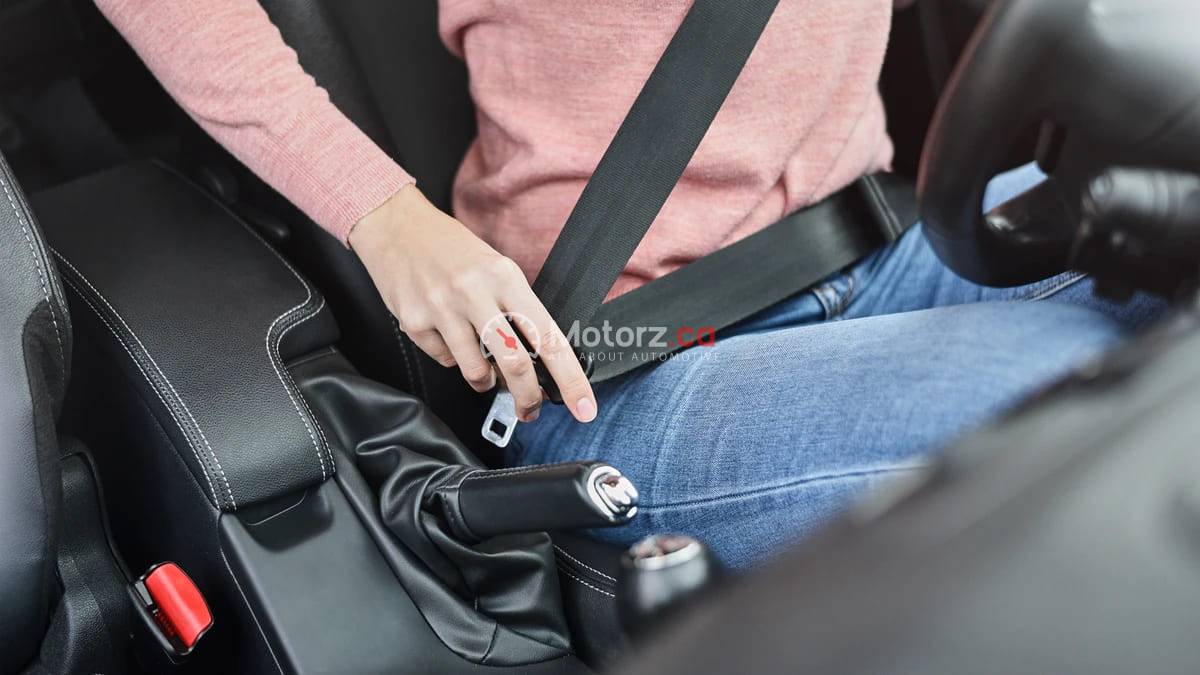
Conduct a Visual Inspection of Your Restraint Webbing
While a visual inspection cannot tell you if a piece of fabric will withstand thousands of pounds of kinetic energy, it can help you spot immediate mechanical wear. Pull your seatbelt out to its absolute maximum length and look for:
Any distinct fraying, fuzzing, or tearing along the woven edges.
Discoloration or brittle spots caused by intense, long-term exposure to direct sunlight.
Sluggish or sticky retraction performance when you let go of the buckle latch.
Any cracks or structural damage in the plastic housings of the anchor points and male buckle clips.
The Future of Automotive Safety Compliance
The fallout from the Joyson Safety Systems investigation is forcing a massive rethink of how the global automotive industry verifies safety components. We can expect several structural shifts in safety tracking moving forward.
Immutable Digital Data Trails
To stop human operators from manually changing test numbers on a computer spreadsheet, safety suppliers are shifting toward locked, automated data tracking. Modern mechanical pull-testers are being integrated directly into secure cloud networks. The moment a machine pulls a piece of seatbelt webbing, the force data is encrypted and uploaded directly to a tamper-proof database that factory managers cannot edit or overwrite, creating a reliable ledger of true quality performance.
Stricter Government Oversight of Corporate Successors
This case has taught transportation ministries around the world that you cannot assume a facility is clean just because it changes ownership. Regulatory agencies like the NHTSA and Japan’s Transport Ministry are designing aggressive inspection protocols specifically targeting companies that buy out distressed or bankrupt suppliers. These facilities will likely face unannounced spot-checks and independent third-party product testing for many years following a corporate takeover.
Why Safety Can Never Be Compromised
The automotive supply chain is a delicate ecosystem built entirely on trust. When you buckle your seatbelt or drive a vehicle equipped with modern safety systems, you are making a silent act of faith. You are trusting that the invisible engineers, factory workers, and lab technicians who built those components cared enough to tell the truth about their work.
The discovery that the company that took over Takata fell into the exact same patterns of data falsification is a stark reminder that safety culture requires constant care and radical transparency. For Joyson Safety Systems, rebuilding their global corporate reputation will be a long, difficult climb that requires proving every single data point to an understandably skeptical public.
As a vehicle owner, the best tool at your disposal is active awareness. Stay connected with your vehicle manufacturer’s owner communications, run your VIN through official safety portals at least twice a year, and take every recall notice seriously. By holding manufacturers accountable, we can ensure that the safety features in our cars do exactly what they were built to do: protect human lives when it matters most.