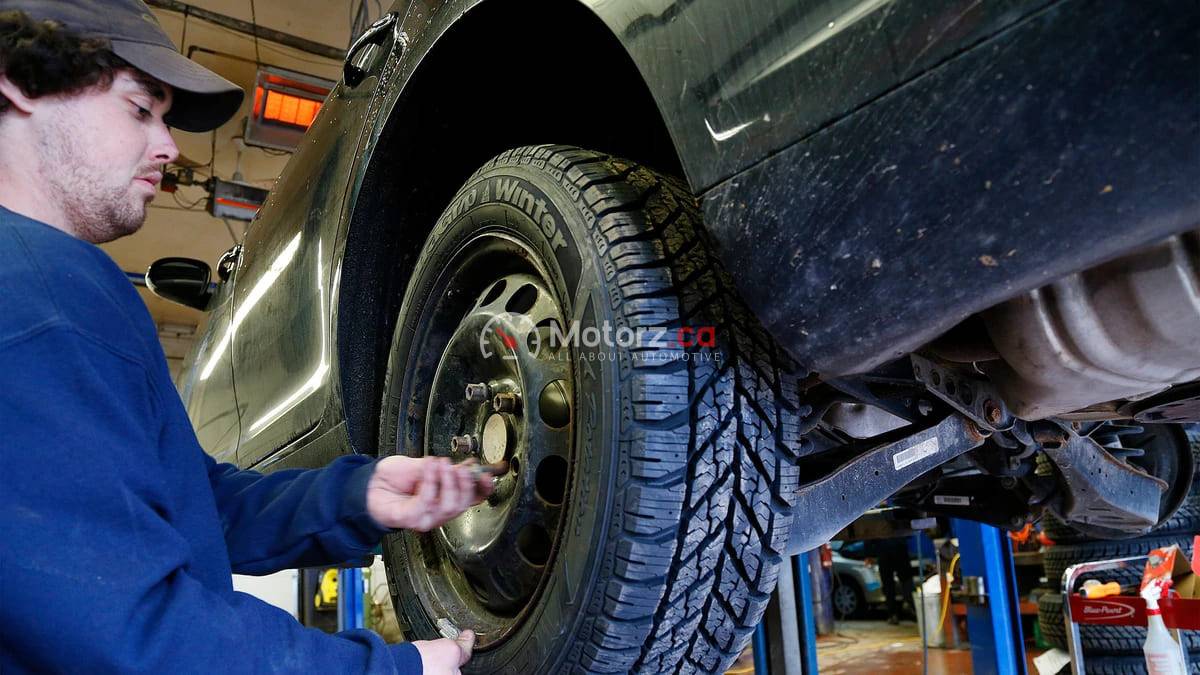
As the Winter Tire Gap to fall over cities like Calgary, Montreal, and Toronto, a familiar ritual begins: the frantic rush to the local tire shop. However, according to recent automotive industry data, a surprising number of drivers are choosing to sit this season out. A new 2026 survey has pulled back the curtain on driver psychology, revealing a significant disconnect between the proven safety of winter tires and the public’s perception of them.
It appears that despite decades of educational campaigns, many motorists still view specialized winter rubber as an “optional luxury” rather than a critical safety component. In the world of “The Corner Wrench,” we see the results of this mindset every time the temperature dips. From sliding through intersections to getting stuck in minor snowdrifts, the “all-season” gamble often results in avoidable accidents and expensive repair bills.
At Motorz, we want to bridge this information gap. Today, Lorraine Explains the results of the latest survey, debunks the most persistent myths about cold-weather traction, and highlights why changing your mindset is just as important as changing your tires.
The Survey Results: A Divide in winter tires Confidence
The latest research indicates that while tire technology has advanced significantly in 2026, consumer perception hasn’t quite kept pace. The survey, which polled thousands of drivers across North America’s “snow belt,” highlighted three major areas where work remains to be done.
The All-Season Misconception
A staggering 40 percent of respondents believed that “All-Season” tires are sufficient for all winter conditions. This is perhaps the most dangerous perception gap. In reality, the rubber compound in all-season tires begins to harden and lose its grip once the temperature drops below 7 Celsius. At this point, the tire becomes more like a hard plastic hockey puck than a pliable safety tool.
The “All-Wheel Drive” Security Blanket
The survey found that owners of SUVs and trucks with All-Wheel Drive (AWD) or Four-Wheel Drive (4WD) were significantly less likely to invest in winter tires. Many drivers believe that because their vehicle can “go” in the snow, it can also “stop” and “turn.”
The Reality Check: AWD only helps with acceleration. When it comes to braking and cornering on ice, a heavy SUV on all-season tires will almost always be outperformed by a front-wheel-drive compact car on proper winter rubber.
The Financial Barrier
Cost remains the primary reason cited for skipping winter tires. However, the survey suggests drivers are only looking at the “upfront” price. They often fail to realize that by using two sets of tires, each set lasts twice as long, effectively neutralizing the cost over the life of the vehicle.
The Science of the “Seven-Degree” Rule
To change perception, we must understand the chemistry of the road. Winter tires aren’t just about “tread depth”—they are about the chemical composition of the rubber.
Hydrophilic Rubber Compounds
Winter tires are made with a high silica content and specialized polymers that remain soft in extreme cold. This allows the tire to deform and wrap around the microscopic imperfections in the pavement, even when it is 20 below.
Insight: Think of a winter tire like a soft winter boot and an all-season tire like a hard-soled dress shoe. One provides a “grip” while the other provides a “slide.”
Sipes and the “Biting Edge”
If you look closely at a winter tire, you will see thousands of tiny slits in the tread blocks. These are called sipes. As the tire rotates, these sipes open up to “bite” into snow and ice. More importantly, they help move the thin film of water that sits on top of ice—which is the actual cause of hydroplaning and sliding—away from the contact patch.
Debunking Persistent Winter Tire Myths
The 2026 survey highlighted several myths that continue to circulate in online forums and at coffee shops. Let’s set the record straight.
I don’t need winter tires because it doesn’t snow that much here.
Fact: Winter tires are for cold, not just snow. Even on dry pavement, a winter tire provides better stopping distances than an all-season tire once the temperature is consistently low. If your breath is visible in the air, your car should be on winter tires.
I’ll just put two winter tires on the drive wheels.
Fact: This is a recipe for disaster. Mixing winter tires types creates a massive traction imbalance. If you put winter tires only on the front of a front-wheel-drive car, the rear will have no grip, leading to a “spin-out” or “fishtail” during braking or cornering. Always replace all four tires to keep the vehicle’s handling predictable.
Winter tires are too noisy and ruin my fuel economy.
Fact: While older winter tires were loud and “chunky,” 2026 tire technology has drastically reduced road noise. Furthermore, while there is a slight impact on fuel economy due to increased rolling resistance, it is far less expensive than the insurance deductible you would pay after a winter fender-bender.
The Hidden Benefits: Why It’s a Smart Investment
Beyond the obvious safety benefits, there are several practical reasons to join the “winter tire club.”
Insurance Discounts: Many insurance providers across Canada and the northern US offer a 2 to 5 percent discount on your premiums if you can prove you have four winter tires installed.
Longevity of Summer Tires: By switching to winters, you are keeping your high-performance summer or all-season tires away from the damaging road salt and potholes of winter, extending their lifespan significantly.
Resale Value: When it comes time to sell your vehicle, including a second set of tires on dedicated rims is a massive selling point that can add hundreds to the final price.
Closing the Perception Gap
The survey is clear: we have work to do in educating the public. Moving forward, the goal is to shift the conversation from “Do I need these?” to “How soon can I get them on?”
Remember the 7-degree rule: If it’s below 7 Celsius, your all-seasons are losing their effectiveness.
Don’t trust AWD alone: AWD helps you move; winter tires help you stop.
Think long-term: A set of winter tires is an investment in your safety and the longevity of your vehicle.
Look for the Snowflake: Always look for the “Three-Peak Mountain Snowflake” symbol on the sidewall to ensure the tire meets true winter traction standards.
At Motorz, we want to see every driver reach their destination safely, regardless of the weather. Don’t let a “perception gap” become a “safety gap.” Check your local forecasts, book your appointments early, and give your car the grip it deserves this winter.