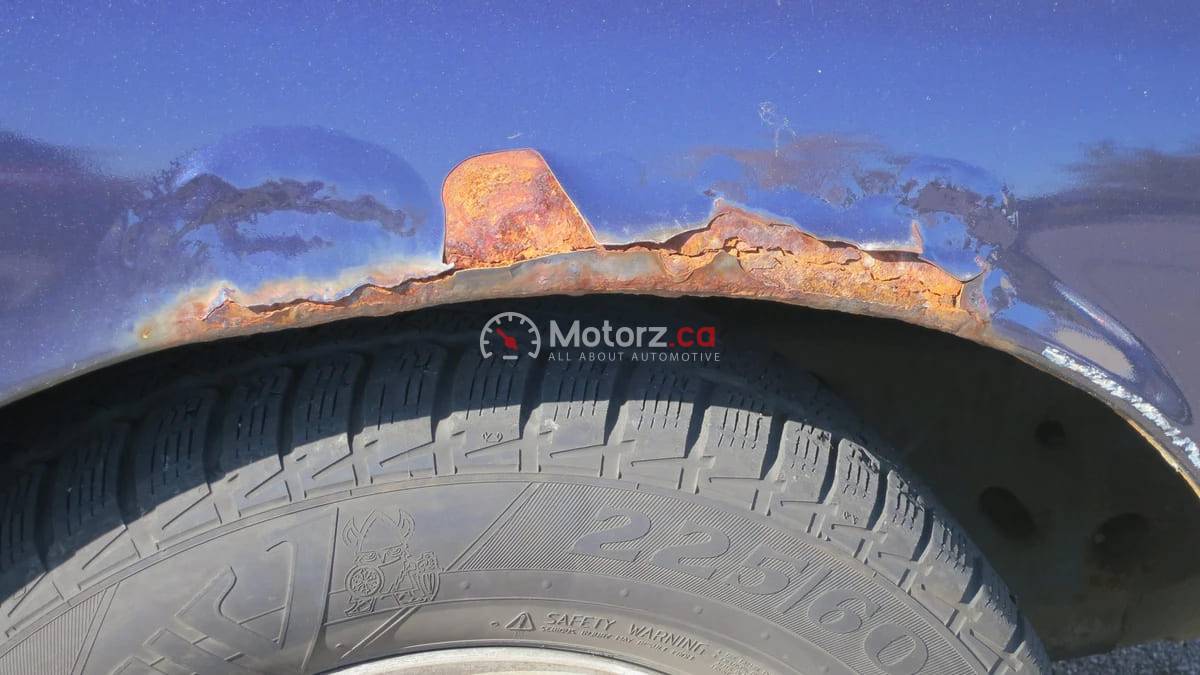
Imagine walking out to your driveway on a bright, sunny morning. You look down at the hood of your vehicle, expecting that deep, mirror-like reflection you love, but instead, you notice something off. There is a faint, chalky haze spreading across the clear coat, or perhaps a tiny, jagged speck of orange rust flowering near the wheel arch. It looks minor—hardly worth a trip to a body shop.
But automotive paint issues are rarely stationary. What begins as a microscopic scratch or a subtle dull patch is often the first warning sign of a progressive mechanical breakdown. Left unchecked, the elements will slowly compromise your vehicle’s protective outer shell, leading to deep structural corrosion, a plummeting resale value, and a repair bill that could easily have been avoided.
In the service bays at “The Corner Wrench,” we see the ultimate consequences of neglected exterior maintenance every single day. Your vehicle’s paint isn’t just there for aesthetics; it is a highly engineered defense mechanism designed to seal out oxygen, moisture, and road salt. In 2026, modern automotive finishes are thinner and more environmentally friendly than ever, meaning they require a watchful eye to stay preserved.
At Motorz, we believe that prevention is always more affordable than a cure. Today, Lorraine Explains the science of automotive paint degradation. Here is how to identify the early warning signs of surface damage, differentiate between minor blemishes and catastrophic clear coat failure, and take proactive steps to safeguard your vehicle’s finish for years to come.
The Anatomy of Modern Automotive Paint
To catch paint problems early, it helps to understand what you are actually looking at when you scan your vehicle’s body panels. Modern vehicles do not just receive a single layer of colored lacquer. Instead, they feature a sophisticated, multi-layered coating system engineered to balance durability, flexibility, and visual depth.
The Primer Layer
Applied directly over the bare stamped steel or aluminum body panels, the primer is the foundational anchor of the finish. Its job is twofold: it chemically bonds to the metal to provide an initial layer of corrosion resistance, and it creates a smooth, uniform surface for the subsequent paint layers to adhere to.
The Base Coat
This is the layer that gives your vehicle its visual identity. The base coat contains the pigments, metallic flakes, or pearlescent additives that create your car’s color. Interestingly, the base coat itself is incredibly thin and inherently fragile; it possesses a matte or semi-gloss texture and has almost no built-in resistance to physical scratches or ultraviolet (UV) radiation.
The Clear Coat
The clear coat is the unsung hero of your vehicle’s exterior. This is a non-pigmented, transparent layer of glossy urethane applied directly over the base coat. The clear coat acts as a sacrificial shield. It provides the deep, glossy shine, seals out moisture, and contains specialized UV inhibitors that prevent the underlying color from fading. When you spot a minor surface scratch, you are usually looking at damage confined strictly to this transparent top layer.
Early Warning Signs: Identifying Surface Defects Early
Many drivers do not notice paint degradation until large flakes of clear coat are peeling away like a bad sunburn. By that point, the repair requires sanding the panel down to the bare metal and completely repainting it. Catching defects when they are microscopic allows you to use simple, non-invasive detailing techniques to rectify the issue.
Swirl Marks and Spiderweb Scratches
If you look at your vehicle’s paint under direct sunlight or a bright LED flashlight and see a pattern of fine, circular scratches that resemble a spiderweb, you are looking at swirl marks.
The Cause: Swirl marks are almost always introduced during the washing and drying process. Using dirty sponges, stiff automatic car wash brushes, or wiping down a dusty car with a dry towel drags microscopic grit across the clear coat, carving tiny trenches into the surface.
The Risk: While purely cosmetic initially, a dense network of swirl marks scatters light, making your paint look dull and hazy. Over time, these micro-scratches thin out the clear coat, weakening its structural integrity.
Industrial Fallout and “Rail Dust”
Have you ever washed your car, run your bare hand across the paint, and noticed it feels rough like fine sandpaper? If so, your vehicle is suffering from industrial fallout or rail dust.
The Cause: These are tiny, airborne metallic particles generated by factory smokestacks, train brakes, or nearby construction sites. They drift through the air, land on your hot clear coat, and become embedded in the surface.
The Risk: Once these metallic iron particles are stuck in the clear coat, exposure to rain and ambient humidity causes them to oxidize. They begin to rust right inside your paint, creating tiny orange pinpricks that will slowly eat through the clear coat if not removed with a dedicated clay bar or chemical iron remover.
Water Spots: Chemical Etching
Parking near a lawn sprinkler or allowing rainwater to dry naturally on a hot afternoon leaves behind unsightly white rings known as water spots.
Stage One Water Spots: These are simple mineral deposits (calcium and magnesium) left behind after the water evaporates. They sit on top of the paint and can be washed away easily.
Stage Two Water Spots (Etching): If mineral-heavy water is left to bake under intense summer sunlight, the water intensifies the heat, causing the minerals to turn highly alkaline. This alkaline solution chemically burns its way into the clear coat. If you run your fingernail over a water spot and feel a distinct crater or depression, the paint has etched, requiring professional machine polishing to level the surface.
Advanced Degradation: The Point of No Return
If surface defects are ignored, they evolve into systemic paint failures. Recognizing these advanced stages will help you determine if your vehicle needs a simple detail or a full-scale body shop intervention.
Oxidation and Fading
Oxidation occurs when the oxygen molecules in the air chemically react with the polymers in your vehicle’s paint, a process severely accelerated by prolonged exposure to solar UV radiation.
What it looks like: The paint will lose its glossy reflection, turning dull, milky, or chalky. This problem typically shows up first on flat, horizontal surfaces that catch the most direct sunlight, such as the hood, roof, and trunk lid. White and red vehicles are historically the most susceptible to noticeable cosmetic oxidation.
The Remedy: Mild oxidation can often be corrected by using a dual-action machine polisher paired with a cutting compound to shave away the dead, oxidized layer of clear coat, revealing the fresh, glossy paint hidden beneath.
Clear Coat Delamination (Peeling)
This is the most severe stage of paint degradation short of structural rust. Delamination occurs when the chemical bond between the transparent clear coat and the underlying base coat completely fails.
What it looks like: It starts as a small, cloudy bubble or a white, flaky patch. Before long, the clear coat begins to peel away in large, paper-thin sheets, leaving the dull, unprotected color coat completely exposed to the elements.
The Remedy: Once delamination occurs, it cannot be polished out, waxed over, or reversed. The clear coat has physically detached. The only permanent fix is to have the affected body panels professionally sanded down, primed, and resprayed.
Bird Droppings and Tree Sap: The Silent Killers
Many drivers view a bird dropping or a dollop of sticky tree sap as a minor cosmetic nuisance that can wait until the next weekend car wash. This is a critical mistake.
The Chemistry: Bird droppings are highly acidic, possessing a ph level that can quickly eat through automotive finishes. Furthermore, as your vehicle’s paint warms up under the sun, the clear coat expands. When it cools down at night, it contracts around the dried, hardened bird dropping, creating a wrinkled, fractured texture known as a “heat-induced fracture.”
The Insight: Tree sap operates similarly, hardening into a crystalline structure that bonds aggressively to the clear coat. Attempting to scrape it off dry will instantly tear the paint away from the panel. These biological contaminants should always be neutralized and wiped away immediately using a quick-detailer spray and a soft microfiber cloth.
The Ultimate Threat: Surface Rust and Bubbling
The absolute worst-case scenario for automotive paint is when moisture manages to bypass all three layers of protection and reaches the underlying metal panel.
Paint Bubbling
If you notice a small raised blister or bubble beneath the surface of your paint that feels hard or crunchy when pressed, you are looking at a severe structural issue. This is not a surface scratch; this is rust that has started on the backside of the metal panel and is eating its way outward.
How it happens: Road salt and moisture accumulate in hidden cavities, such as the inside of the rocker panels or the bottom edges of the doors. The metal oxidizes from the inside out, lifting the primer and paint away from the surface. By the time you see a paint bubble on the outside, the structural integrity of that metal panel is already compromised.
Rock Chips and Micro-Rust
When a small stone is kicked up by a tire on the highway, it acts like a miniature chisel, punching a tiny hole through your clear coat, base coat, and primer.
The Progression: If the impact exposes bare silver steel, the atmospheric humidity will turn that spot brown within days. If left unprotected, moisture will creep beneath the edges of the surrounding paint, causing it to lift and allowing the rust spot to expand continuously like a spreading virus.
Proactive Protection: Preserving Your Finish in 2026
At “The Corner Wrench,” we believe that a solid maintenance routine is the best way to keep your vehicle looking factory-fresh while avoiding the high costs of auto body reconstruction. Here is how to build a modern defensive shield around your paint:
Implement the Two-Bucket Wash Method
Never use a single bucket to wash your car, and stay away from automatic car washes that utilize heavy, spinning nylon brushes. Instead, use the two-bucket system:
Bucket 1: Filled with clean water and a grit guard at the bottom to rinse your wash mitt.
Bucket 2: Filled with car shampoo suds.
By rinsing your microfiber mitt in the clean water bucket before dipping it back into the soap suds, you ensure that dirt and grit are deposited safely at the bottom of the rinse bucket rather than being ground back into your delicate clear coat.
Upgrade to Ceramic Coatings or Paint Protection Film
Traditional carnauba waxes are great for a temporary shine, but they break down within a few weeks of exposure to heat and rain. In 2026, long-term protection relies on advanced chemical technology:
Ceramic Coatings: These are liquid polymer coatings that chemically bond to your clear coat on a molecular level. Once cured, they form a hydrophobic, glass-like layer that repels water, prevents chemical etching from bird droppings, and offers robust UV protection for years.
Paint Protection Film (PPF): If you commute frequently on gravel-strewn winter highways, consider installing a clear polyurethane wrap (PPF) over your vehicle’s front bumper, hood, and side mirrors. This thick, self-healing film physically absorbs the kinetic energy of flying rocks, completely preventing stone chips from penetrating your paint layers.
A Watchful Eye Saves Your Shine
At Motorz, we know that your vehicle is one of the largest financial investments you will make. While it is easy to focus on mechanical components like engines, gearboxes, and brake pads, your car’s exterior finish deserves the same regular inspection and preventative care.
By learning to spot the early warning signs of clear coat stress—such as industrial fallout roughness, micro-swirl marks, and mineral water etching—you can intervene with simple corrective measures before irreversible clear coat delamination or deep structural rust takes hold. Keep your vehicle clean, protect the surface with modern ceramic sealants, and address stone chips the moment they appear. Your car will look stunning on the road, and its long-term resale value will remain firmly protected.