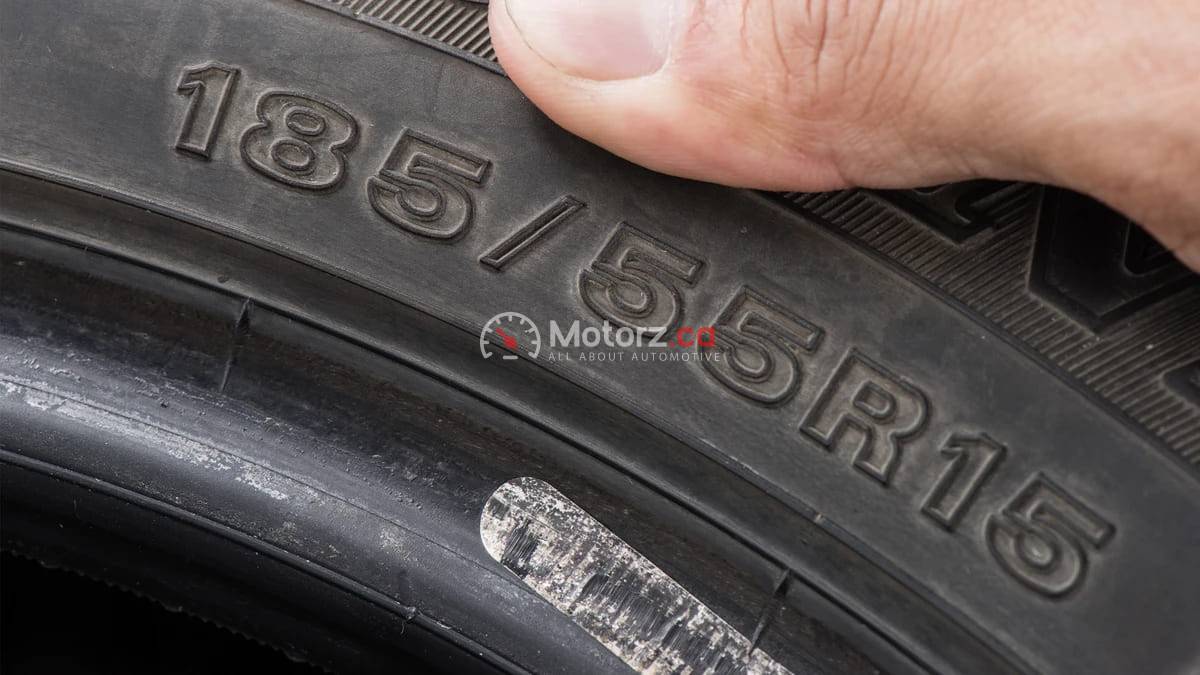
The next time you walk to your Decoding Your Tires, take a close look at the outer edge of your tires. Beyond the brand name and the tread pattern, you will see a cryptic string of letters and numbers like. To the average driver, this looks like a secret code or a random sequence from a VIN. But in the world of the “Corner Wrench,” those numbers are the most important specifications on your entire vehicle.
Your tires are the only point of contact between your car and the road. Understanding what those sidewall markings mean is the difference between buying the perfect set of rubber for your commute and accidentally installing tires that compromise your safety, fuel economy, or hauling capacity. As we move through 2026, with heavier electric vehicles (EVs) and high-performance hybrids becoming the norm, knowing your tire specs is more critical than ever.
In this comprehensive guide, we are breaking down every digit, letter, and symbol etched into your tire’s sidewall. From the basic dimensions to the hidden “date of birth” code, here is everything you need to know to speak the language of tires.
The Main Sequence: Breaking Down the Tire Size
The largest and most prominent string of text on your tire is the size designation. Let’s use a common example found on many modern sedans and SUVs.
The Service Type (P or LT)
The first letter tells you what kind of vehicle the tire was designed for.
P (Passenger): These are intended for cars, minivans, and small SUVs. They are engineered for comfort and efficiency.
LT (Light Truck): These are built with more reinforced sidewalls for heavy-duty pickups and large SUVs that carry heavy loads or tow trailers.
No Letter: If there is no letter at the start, it is likely a “Euro-Metric” tire, which has slightly different load capacities than P-metric tires.
Section Width (225)
The first three-digit number is the width of the tire in millimeters, measured from sidewall to sidewall. In our example, the tire is 225 millimeters wide. A wider tire generally provides more grip but may slightly decrease fuel efficiency due to increased rolling resistance.
Aspect Ratio (45)
The two-digit number after the slash is the aspect ratio. This is a percentage that tells you the height of the tire’s sidewall relative to its width. A 45 means the sidewall height is 45 percent of 225 millimeters.
Low Profile (45 and lower): These offer better handling and a sporty look but a stiffer ride.
High Profile (60 and higher): These offer more “cushion” and a smoother ride, common on trucks and luxury cruisers.
Construction (R)
The R stands for Radial. This refers to the way the internal plies (layers of fabric and wire) are laid out. Almost every tire on the road in 2026 is a radial tire because they provide better stability and fuel economy than the old “bias-ply” designs.
Rim Diameter (18)
The final number in this sequence tells you the size of the wheel the tire fits. This tire is designed to be mounted on an 18-inch wheel. It is physically impossible to mount a 17-inch or 19-inch tire on an 18-inch rim—even if they “look” similar.
The Decoding Your Tires: Load Index and Speed Rating
Directly following the size sequence, you will usually see a two-digit number and a letter, such as 95W. These are the “Performance Specs” that define the tire’s limits.
Load Index (95)
The load index tells you how much weight a single tire can support when properly inflated. A rating of 95 translates to 690 kilograms. If you have a heavy Electric Vehicle or a truck used for towing, you must ensure your new tires have a load index that meets or exceeds the manufacturer’s original specification. Installing a tire with a lower load index can lead to a dangerous blowout.
Speed Rating (W)
The letter at the very end tells you the maximum speed the tire can safely maintain over time.
H: Up to 210 km/h (Standard sedans/SUVs)
V: Up to 240 km/h (Performance sedans)
W/Y: Up to 270 or 300 km/h (Sports cars/Exotics)
Q: Up to 160 km/h (Winter tires)
Even if you never plan to drive 240 km/h, a higher speed rating usually indicates a tire that can dissipate heat better, which is a major factor in tire longevity.
The “Born On” Date: The DOT Code
One of the most important “Corner Wrench” secrets is the tire’s age. Tires are made of rubber, and rubber degrades over time regardless of how much tread is left.
Look for the letters DOT followed by a series of characters. The only part you care about is the last four digits.
Example (1225): The first two digits (12) indicate the week of the year, and the last two (25) indicate the year. This tire was manufactured in the 12th week of 2025.
If your tires are more than six years old, you should have them inspected for “dry rot” (cracking in the sidewalls). Most manufacturers recommend replacing tires once they reach ten years of age, even if they have never been used.
Uniform Tire Quality Grading (UTQG)
You will often see three words printed on the sidewall followed by numbers or letters: Treadwear, Traction, and Temperature.
Treadwear (e.g., 400)
This is a relative rating based on testing. A tire rated 400 should theoretically last twice as long as a tire rated 200. However, because each manufacturer conducts their own tests, it is best used to compare tires within the same brand.
Traction (AA, A, B, C)
This measures the tire’s ability to stop on wet asphalt and concrete. AA is the highest rating, while C is the lowest. This is a critical metric for safety in rainy climates.
Temperature (A, B, C)
This indicates the tire’s resistance to heat generation. A is the best. High temperatures are the number one cause of tire failure on highways, so always look for a tire with an A rating if you do a lot of long-distance driving.
Specialty Markings: Winter, EV, and Run-Flat
As automotive technology evolves, new symbols are appearing on tires to help drivers navigate specialized needs.
The Mountain Snowflake (3PMSF)
If you see a symbol of a snowflake inside a three-peaked mountain, that tire is officially rated for “Severe Snow Service.” This is more advanced than the standard M+S (Mud and Snow) rating. If you live in a region with heavy winter snow, the Mountain Snowflake is the standard you want.
EV-Specific Markings
Many manufacturers are now adding an “EV” or “Elect” logo to tires. These are specifically designed to handle the heavy weight of battery packs and the instant torque of electric motors. They also feature foam liners inside the tire to reduce the “road hum” that is more noticeable in quiet electric cars.
RFT or SSR (Run-Flat)
If you see RFT (Run-Flat Tire) or SSR (Self-Supporting Run-flat), your tires are designed to be driven for a short distance (usually 80 kilometers) at a reduced speed after a puncture. These tires have extremely stiff sidewalls and are common on vehicles that do not carry a spare tire.
Knowledge is Traction
Your tire sidewall is a technical manual for your vehicle’s most important safety component. By understanding these numbers, you can avoid the mistake of buying “cheap” tires that aren’t rated for your car’s weight or speed capabilities.
Next time you are at the shop, use your “Corner Wrench” knowledge to verify the DOT date and the load index. Your tires are an investment in your safety and your car’s performance—make sure you’re buying exactly what your vehicle needs to stay grounded.